
The Russian Tax System: What Expats Need to Know
Taxation is one of the most consequential — and frequently misunderstood — aspects of life as a foreign resident in Russia. The good news is that Russia's personal tax system is relatively straightforward compared to many Western countries. The flat income tax rate is low by international standards, there are no municipal or state income taxes, and the filing process is simpler than in the United States or France. The complication lies in the details: the critical distinction between tax resident and non-resident status, the interaction with your home country's tax system, and the evolving rules around remote work and digital income.
This guide covers the essential tax obligations for foreign nationals living and working in Russia, with practical guidance on compliance, planning, and the most common pitfalls.
Tax Residency: The 183-Day Rule
The single most important concept in Russian taxation for expats is tax residency. Your tax residency status determines the rate at which your income is taxed and the scope of your tax obligations.
How It Works
Under Russian tax law (Article 207 of the Tax Code), you are a tax resident of Russia if you are physically present in the country for at least 183 days within a consecutive 12-month period. This is calculated on a rolling basis, not by calendar year.
Key points:
- Days of arrival and departure both count as days of presence in Russia
- Short trips abroad (vacations, business trips) of less than six months do not interrupt the 183-day count, but the days spent outside Russia are not counted toward the total
- The 183-day threshold is assessed at the time each payment is made, so your status can change mid-year
- There are no exceptions for weekends, holidays, or transit days — only physical presence on Russian territory matters
Why It Matters
| Status | Income Tax Rate | Taxable Income |
|---|---|---|
| Tax resident | 13% (15% above 5M RUB/year) | Worldwide income |
| Non-resident | 30% | Russian-source income only |
The difference is stark. A non-resident earning 200,000 rubles per month pays 60,000 rubles in income tax. A resident earning the same amount pays 26,000 rubles. Over a year, this amounts to a difference of over 400,000 rubles ($4,200).
The Transition Period
When you first arrive in Russia, you are classified as a non-resident and taxed at 30%. Once you cross the 183-day threshold, your status retroactively changes to resident for the entire calendar year, and you are entitled to recalculate and reclaim the excess tax paid during the non-resident period.
Important exception: Highly Qualified Specialists (HQS) — foreign workers earning at least 2.8 million rubles per year — are taxed at 13% from the first day of employment, regardless of residency status. This is a significant benefit and one reason why many foreign professionals structure their employment through HQS contracts.
Income Tax (NDFL)
Rates
The Russian personal income tax — known as NDFL (Nalog na Dokhody Fizicheskikh Lits) — has the following rates as of 2026:
- 13% on annual income up to 5 million rubles (approximately $52,600)
- 15% on annual income exceeding 5 million rubles
- 30% for non-residents (on Russian-source income only)
This progressive element was introduced in 2021, replacing the pure flat tax that had been in place since 2001. In practice, only those earning above approximately 415,000 rubles per month are affected by the 15% rate — primarily senior managers, IT specialists, and financial professionals in Moscow.
What Is Taxable
For tax residents, the following income is subject to NDFL:
- Employment income: Salary, bonuses, allowances, and benefits in kind
- Self-employment and freelance income: Business profits, consulting fees
- Investment income: Dividends (taxed at 13/15%), interest on deposits (above the exempt threshold), capital gains from securities
- Rental income: Income from renting out property in Russia or abroad
- Foreign income: For residents, worldwide income is taxable in Russia, including income earned abroad
For non-residents, only income derived from Russian sources is taxable.
Dividends
Dividends received by Russian tax residents are taxed at:
- 13% on dividends up to 5 million rubles per year
- 15% on dividends exceeding 5 million rubles per year
- 15% for non-residents (or the rate specified in the applicable double taxation treaty)
Interest on Bank Deposits
Since 2023, interest earned on bank deposits is partially taxable. The exempt amount is calculated as 1 million rubles multiplied by the maximum CBR key rate during the year. With the key rate at 21% in late 2024, this means up to 210,000 rubles of interest income is tax-free. Given that deposit rates range from 15-20%, this exemption covers deposits of approximately 1-1.4 million rubles. Interest above the exempt threshold is taxed at 13/15%.
For more on managing your finances in Russia, see our banking guide for expats.
A non-resident earning 200,000 rubles a month pays 60,000 rubles in NDFL at 30%; a tax resident on the same salary pays 26,000 rubles at 13%. Over a year, that is a gap of more than 400,000 rubles — the single most expensive mistake expats make when they fail to track the 183-day threshold carefully.
Double Taxation Treaties
The France-Russia Treaty
Russia has signed double taxation avoidance agreements with over 80 countries. For French nationals — a significant portion of the expatriate community in Moscow — the France-Russia Double Taxation Treaty (Convention du 26 novembre 1996) is particularly relevant.
Key provisions:
- Employment income: Taxed in the country where the work is performed. If you work in Russia, your employment income is taxed in Russia. France provides a credit for taxes paid in Russia to avoid double taxation.
- Dividends: Withholding tax is limited to 10% in the source country (5% for significant holdings above 10%)
- Interest: Withholding tax is limited to 0%
- Royalties: Withholding tax is limited to 0%
- Pensions: Taxed only in the country of residence
- Real estate income: Taxed in the country where the property is located
Important note: Since 2022, there have been discussions about Russia suspending or modifying certain provisions of double taxation treaties with "unfriendly countries" (including France and most EU/NATO members). As of early 2026, the Russia-France treaty remains technically in force, but its practical application has become uncertain. Some provisions regarding reduced withholding rates on dividends and interest have been suspended by a Russian presidential decree. Consult a tax advisor for the latest status.
Treaties with Other Countries
Other treaties commonly relevant to expats in Russia include those with:
- United Kingdom: Similar structure to the France treaty, but also subject to potential suspension
- Germany: Comprehensive treaty, same caveats regarding "unfriendly country" modifications
- United States: Russia has a tax treaty with the US, but enforcement and practical application have become complex. US citizens remain subject to US worldwide taxation regardless
- CIS countries: Treaties with Kazakhstan, Uzbekistan, Armenia, and other CIS states generally function without disruption
Filing Obligations
Who Must File
If your only income is employment income and your employer withholds NDFL correctly, you are generally not required to file a personal tax return. Your employer acts as your tax agent and handles withholding and reporting.
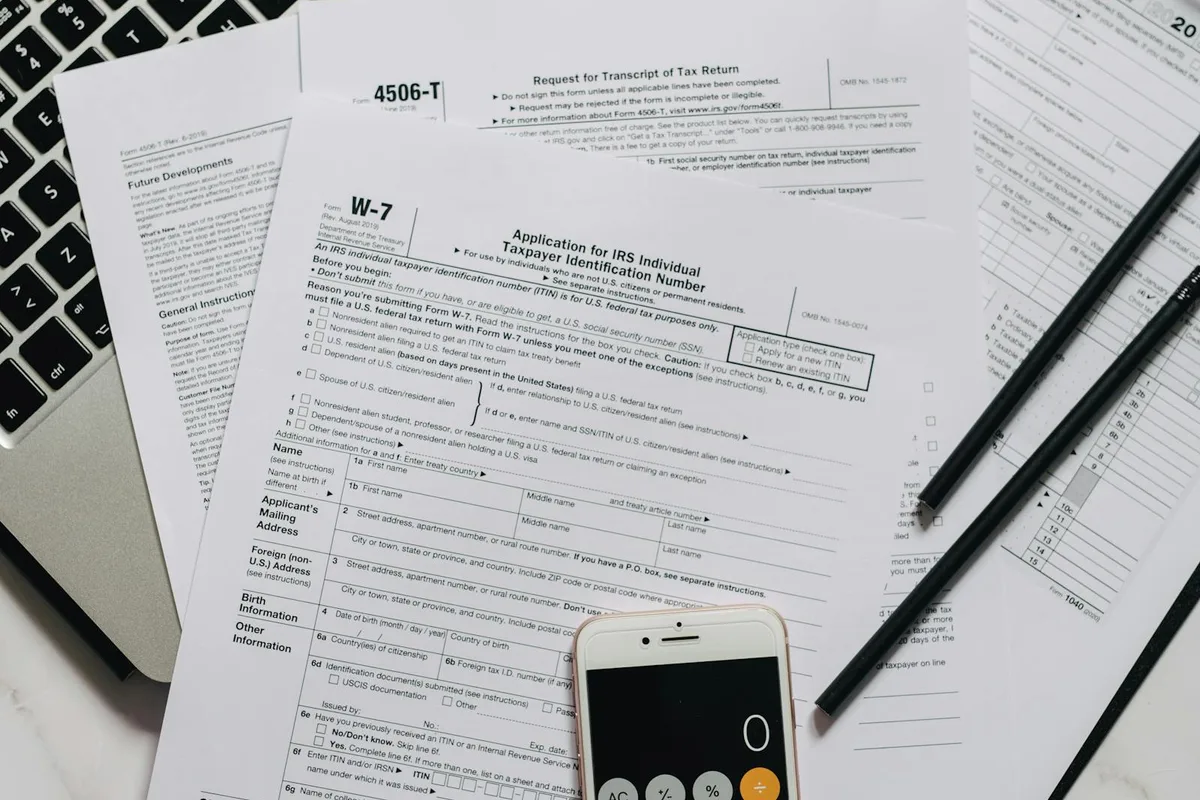
You must file a tax return (Form 3-NDFL) if:
- You have income from sources other than your employer (rental income, freelance work, foreign income, etc.)
- You received income from foreign sources (as a tax resident)
- You are claiming tax deductions (property deduction, education, medical expenses)
- You sold property during the tax year
- You received gifts exceeding exempt thresholds from non-family members
- Your employer did not withhold the correct amount of tax
Filing Deadlines
- April 30: Deadline for filing Form 3-NDFL for the previous tax year
- July 15: Deadline for paying any additional tax owed
How to File
Filing can be done:
- Online via the FNS personal account (lk.nalog.ru): Requires registration, which can be done in person at any tax office with your passport. The online system is functional but entirely in Russian.
- In person at the local tax office (IFNS): Bring your passport, INN, and completed Form 3-NDFL
- Through a tax consultant: Recommended for expats with complex situations. Fees typically range from 5,000-20,000 rubles ($53-210) for a straightforward filing
Key Tax Deductions and Benefits
Russian tax residents are entitled to several deductions that can significantly reduce their tax liability:
Standard Deductions
- Child deduction: 1,400 rubles per month for the first and second child, 3,000 rubles for the third and subsequent children (applied to income up to 350,000 rubles cumulative in the year)
- Disabled child: 12,000 rubles per month for parents
Social Deductions (annual limits)
- Education expenses: Up to 150,000 rubles per year for own education, 110,000 rubles per child
- Medical expenses: Up to 150,000 rubles per year (unlimited for expensive treatments listed in the government decree)
- Pension contributions: Up to 150,000 rubles per year for voluntary pension programs
- Combined limit: 150,000 rubles per year for all social deductions combined (excluding expensive medical treatment)
Property Deduction
- Home purchase: Deduction of up to 2 million rubles from taxable income (yielding a tax saving of up to 260,000 rubles at 13%) — available once in a lifetime
- Mortgage interest: Additional deduction of up to 3 million rubles in interest payments (yielding up to 390,000 rubles in tax savings) — available once in a lifetime
- Property sale: Income from selling a home owned for more than five years (or three years in certain cases) is exempt from NDFL
These deductions are only available to tax residents. Non-residents cannot claim them.
The property deduction alone delivers up to 260,000 rubles of tax savings on a home purchase, plus up to 390,000 rubles more on mortgage interest — both available once in a lifetime and only to tax residents. Missing this is the single biggest unclaimed benefit for foreign homebuyers in Russia.
Specific Situations
Remote Workers and Digital Nomads
The rise of remote work has created tax complexities. If you are physically present in Russia working remotely for a foreign employer:
- You are subject to Russian tax on this income if you are a Russian tax resident
- Your foreign employer may not withhold Russian tax, making it your responsibility to file and pay
- The country where your employer is based may also claim taxing rights, depending on the applicable treaty
Russia introduced new rules effective January 2024 that explicitly tax the income of Russian tax residents from remote work for Russian companies, regardless of where the work is performed. Similar provisions may extend to work performed on Russian territory for foreign companies.
Business Owners
If you own an OOO (LLC) in Russia, you face both corporate and personal tax obligations:
- The OOO pays corporate profit tax (20% under OSNO, or the applicable USN rate)
- Salary paid to you as director is subject to NDFL (13/15%) and social contributions
- Dividends distributed to you are subject to NDFL (13/15%)
- The total effective tax rate on distributed profits (corporate tax + dividend tax) is approximately 31-32%
For a complete guide to business structures and their tax implications, see our guide to starting a business in Russia.
Cryptocurrency
Russia has been developing its regulatory framework for cryptocurrency. As of 2026:
- Income from cryptocurrency transactions is taxable as part of your general income
- Mining income may be classified differently depending on whether it is registered as a business activity
- Reporting requirements are evolving, and the rules may change further
Foreign Assets Disclosure
Russian tax residents are required to disclose foreign bank accounts and financial assets to the tax authorities annually (by June 1 of the following year). This applies to accounts in any foreign country and includes bank accounts, brokerage accounts, and other financial accounts. Failure to report can result in fines of up to 20,000-40,000 rubles per violation.
Common mistakes and practical tips
Common Mistakes Expats Make

- Ignoring the 183-day transition: Arriving in Russia and not tracking your days carefully can lead to months of overpayment at 30% that takes effort to reclaim
- Failing to file for foreign income: Tax residents must declare worldwide income, including rental income from property abroad, freelance income, and investment gains
- Not claiming deductions: The property deduction alone (260,000 rubles for a home purchase) is substantial and widely overlooked by expats
- Assuming treaty protection: Double taxation treaties provide relief but do not eliminate filing obligations in either country. You must still file in Russia and claim the treaty benefit.
- Neglecting foreign account reporting: The requirement to disclose foreign bank accounts is strictly enforced, with fines for non-compliance
Practical Tips
- Get an INN immediately: Your tax identification number is needed for virtually all financial activity in Russia
- Keep records: Maintain copies of all employment contracts, payment confirmations, and tax documents for at least four years
- Use the FNS personal account: Register at nalog.ru — it provides access to your tax history, payment status, and online filing
- Hire a tax consultant: For your first year in Russia, the investment of 10,000-20,000 rubles for professional advice can save you multiples in avoided mistakes
- Plan your travel carefully: If you are close to the 183-day threshold, the timing of trips abroad can have significant tax consequences
- Understand the broader economic context: Russia's tax policy is evolving, and rates and rules may change. Stay informed through our economy overview
Conclusion
Russia's tax system for individuals is, in many respects, simpler and more favorable than that of most Western countries. The headline rate of 13% (15% for high earners) is competitive, the filing process is manageable, and the available deductions — particularly the property deduction — can provide meaningful savings. The critical factor is residency status: crossing the 183-day threshold unlocks the lower rate and access to deductions, while failing to reach it means a punitive 30% rate with no recourse.
For expatriates, the keys to tax compliance are awareness, planning, and professional advice. Understand your obligations in both Russia and your home country, track your residency status carefully, and do not neglect the filing deadlines. The penalties for non-compliance are real, but for those who manage their affairs properly, the Russian tax environment is one of the more attractive in Europe.
Frequently Asked Questions
What is the definition of a tax resident in Russia?
Under Article 207 of the Russian Tax Code, a tax resident is any individual physically present in Russia for at least 183 days within a rolling 12-month period, regardless of citizenship or visa type. Arrival and departure days both count as days of presence, and short trips abroad pause the count without resetting it.
What is the tax year in Russia?
The Russian tax year is the calendar year, January 1 to December 31. The personal tax return (Form 3-NDFL) for a given year is due by April 30 of the following year, and any additional tax owed must be paid by July 15.
What is the income tax rate in Russia for an expat?
13 percent for Russian tax residents (over 183 days present in any rolling 12-month period), 30 percent for non-residents. Since 2025, a progressive 15 percent bracket applies above 5 million RUB of annual income.
When do I become a Russian tax resident?
After accumulating 183 days of presence over the preceding 12 rolling months. Residency status is assessed on December 31. The HQS (Highly Qualified Specialist) status grants the 13 percent resident rate from day one of salary.
Do I need to declare French income in Russia?
Yes if you are a Russian tax resident. The 1996 France-Russia tax treaty (still in force in 2026 despite tensions) prevents double taxation through tax credit. French real estate income remains taxable in France at French rates.
Does HQS status give the same advantages as a tax resident?
HQS benefits from the 13 percent rate without waiting 183 days, a renewable 3-year work permit and a simplified hiring process. 2026 threshold: minimum annual salary of 2 million RUB (about 20,000 EUR) or 1 million RUB in specific zones and sectors.
Is there a wealth tax in Russia?
No. Russia does not levy any wealth tax or IFI. Real estate is taxed through a local property tax (0.1 to 2 percent of cadastral value, capped). Dividends are taxed at 13 percent for residents, 15 percent for non-residents.