
Overview
On June 30, 2025, Russia implemented a mandatory biometric registration system for all foreign nationals entering the country. The system, established by Federal Law No. 579-FZ "On State Control (Supervision) in the Field of Migration" (signed December 25, 2023, with provisions phased in through 2025), requires travelers to download and register through the RuID (Russian Identification) mobile application and to submit biometric data — fingerprints and facial photographs — at the point of entry.
The rollout marks the most significant change to Russia's border procedures in over a decade. It applies to all categories of foreign visitors: tourists, business travelers, students, workers, and transit passengers remaining longer than 24 hours.
What the RuID App Requires
Pre-Arrival Registration
Foreign nationals are now expected to download the RuID application (available on iOS and Android) before traveling to Russia. The app requires the following information during registration:
- Passport data: Full name, date of birth, nationality, passport number, and expiration date.
- Travel details: Expected date and point of entry, purpose of visit, and intended duration of stay.
- Accommodation information: Address of hotel, host, or rental property in Russia.
- Photograph: A selfie taken within the app that serves as the initial facial biometric reference.
- Contact information: Phone number and email address.
Upon completing registration, the app generates a QR code that must be presented to border control officers at the point of entry. Travelers who arrive without the app installed and registered face delays at the border, as officers will need to process their data manually using terminal kiosks.
At the Border
At the physical border crossing — whether at an airport, land border post, or seaport — the following biometric data is collected:
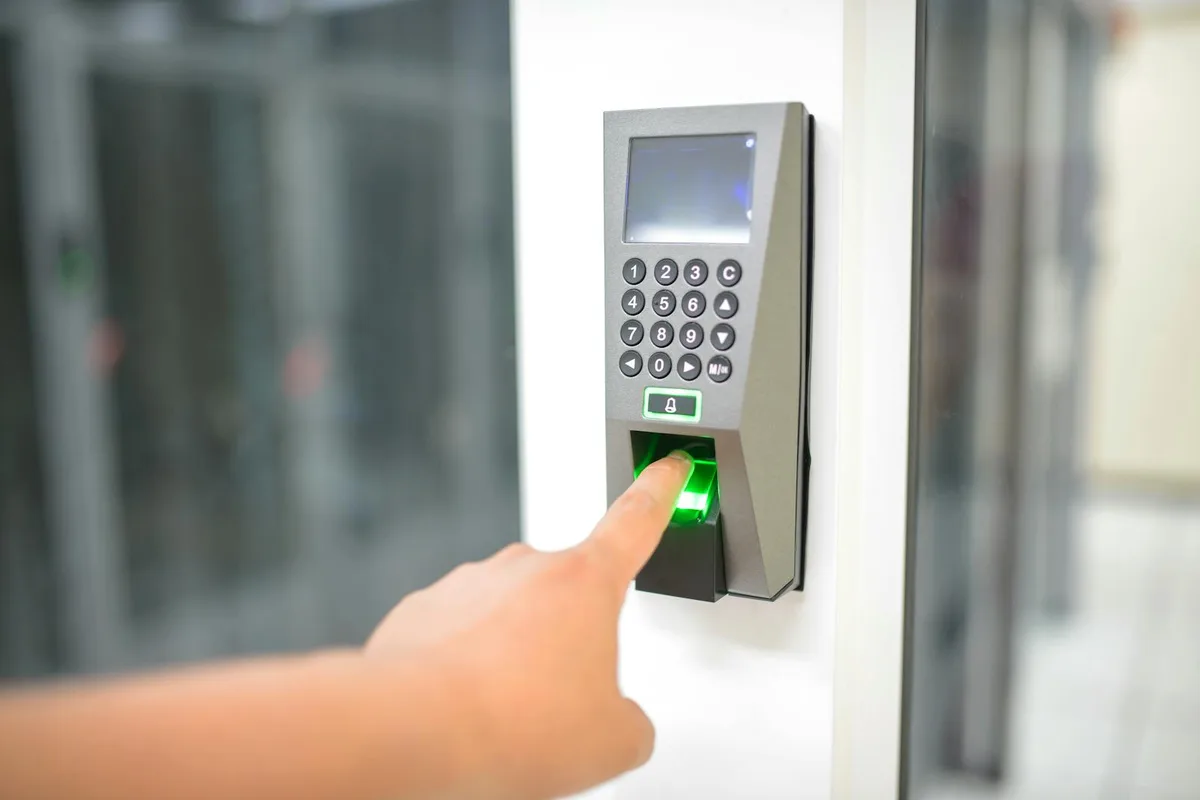
- Fingerprints: All ten fingers are scanned using electronic readers. The process takes approximately two to three minutes per person.
- Facial scan: A high-resolution photograph is taken by border control equipment and cross-referenced with the selfie submitted through the app.
The biometric data is stored in the Unified Migration Database (Edinaya migratsionnaya baza dannykh), managed by the MVD. According to Federal Law No. 579-FZ, the data is retained for a minimum of five years after the foreign national's last departure from Russia, or for the duration of any valid immigration status, whichever is longer.
Who Must Comply
The biometric requirement applies to virtually all foreign nationals. The categories include:
- Visa holders of all types (tourist, business, work, student, humanitarian).
- Visa-free travelers from countries with bilateral visa-free agreements (e.g., Turkey, Israel, Argentina, Serbia, and others).
- E-visa holders from the 64 eligible countries.
- Holders of residence permits (VNZh) and temporary residence permits (RVP) who travel abroad and re-enter Russia.
Limited Exemptions
Exemptions are narrow and include:
- Diplomatic passport holders accredited to Russia, covered by the Vienna Convention on Diplomatic Relations.
- Aircraft and ship crew members who do not leave the transit zone.
- Children under 6 years of age, who are exempt from fingerprinting but still require RuID registration through a parent's account.
- Transit passengers who remain in the international transit zone for less than 24 hours without formally entering Russian territory.
Download RuID at least a week before departure, complete the 15-20 minute registration, and carry a printed PDF backup of the QR code — arriving without it forces manual processing with waits of 30 minutes or more.
Technical Infrastructure
Airport Implementation
Russia's major international airports — Sheremetyevo (SVO), Domodedovo (DME), Vnukovo (VKO) in Moscow, and Pulkovo (LED) in St. Petersburg — have installed dedicated biometric collection terminals since early 2025. Each terminal is equipped with fingerprint scanners, facial recognition cameras, and QR code readers. According to the Federal Agency for Air Transport (Rosaviatsia), processing time per passenger is estimated at four to seven minutes, compared to one to two minutes under the previous system.
Land Border Crossings
Land borders with Finland, the Baltic states, Georgia, Azerbaijan, Kazakhstan, Mongolia, and China have been equipped with portable biometric devices. However, infrastructure at some smaller crossings remains limited, and travelers at these points may experience significantly longer processing times during the initial implementation phase.
Data Security
Federal Law No. 579-FZ includes provisions on data protection, stating that biometric data is classified as personal data under Federal Law No. 152-FZ "On Personal Data." The law requires that the data be stored on servers physically located within Russia and that access be restricted to authorized MVD and FSB (Federal Security Service) personnel.
The law does not, however, provide foreign nationals with a mechanism to request deletion of their biometric data, nor does it establish an independent oversight body for the biometric database. Foreign nationals who wish to challenge the collection or use of their data would need to file a complaint with a Russian court.
Practical Considerations for Travelers
Before Your Trip
- Download the RuID app well in advance. The app is available in Russian, English, Chinese, Turkish, Arabic, and French. Registration takes approximately 15 to 20 minutes.
- Ensure your phone is charged and functional at the border. Without the QR code, you will be directed to a manual processing lane, which may involve wait times of 30 minutes or more.
- Carry a printed backup of your QR code. The app allows you to generate a printable PDF version.
- Prepare accommodation details. The app requires a specific address. Hotel bookings, rental agreements, or a letter from a Russian host are accepted.
At the Border
- Expect longer processing times than previous visits, particularly during the initial months of implementation. Airlines and travel agencies have been advised to inform passengers of potential delays.
- Fingerprinting is non-negotiable. Refusal to provide biometric data results in denial of entry. There is no appeals process at the point of entry.
- If you have injuries or conditions affecting your fingerprints (burns, skin conditions), inform the border officer immediately. Alternative identification protocols exist but require supervisor approval and additional documentation.
During Your Stay
The RuID app also functions as a digital migration card. Under previous rules, foreign nationals received a paper migration card (migratsionnaya karta) upon entry, which had to be kept throughout the stay and presented upon departure. The RuID app replaces this with a digital version, though paper cards remain available upon request.
The app also sends notifications regarding:
- Registration deadlines: Foreign nationals must register with the MVD within seven business days of arrival (or one business day for certain nationalities). The app provides reminders.
- Stay expiration warnings: Alerts are sent as the authorized stay period approaches its end.
- Regulation changes: Updates to immigration rules are pushed through the app.
Impact on Border Wait Times
Early reports from the first months of implementation indicate significant increases in processing times at major entry points. At Sheremetyevo Airport, average immigration processing times increased from approximately 10 minutes to 25-35 minutes per passenger during peak hours in July 2025. The MVD stated that processing times are expected to normalize as staff gain familiarity with the new systems and as more travelers complete pre-registration.
Land borders with Kazakhstan — by far the busiest, with over 10 million crossings annually — have experienced the most acute congestion. Reports from the Orenburg and Chelyabinsk border crossings described wait times of three to five hours during the first two weeks of implementation.
Broader Context
Russia is not the first country to implement mandatory biometric collection at borders. The European Union's Entry/Exit System (EES), scheduled for full implementation in 2025, similarly requires fingerprints and facial photographs for third-country nationals entering the Schengen zone. The United States has collected fingerprints and photographs from most foreign visitors since the implementation of US-VISIT in 2004.
What distinguishes the Russian system is the mandatory smartphone application requirement, which goes beyond what most countries demand. The app effectively requires travelers to share real-time location and contact data with Russian authorities throughout their stay — a feature that has drawn attention from privacy advocates and foreign government advisory services.
Key Legal References
- Federal Law No. 579-FZ of December 25, 2023, "On State Control (Supervision) in the Field of Migration."
- Federal Law No. 115-FZ of July 25, 2002, "On the Legal Status of Foreign Citizens in the Russian Federation."
- Federal Law No. 152-FZ of July 27, 2006, "On Personal Data."
- Government Decree No. 1042 of June 15, 2025, "On the Procedure for Collecting, Processing, and Storing Biometric Data of Foreign Citizens."
Foreign nationals planning travel to Russia should verify the latest requirements through their country's foreign affairs advisory service or the Russian consulate in their jurisdiction.