Banya vs sauna: the fundamental confusion
For English speakers, the banya is often equated with the Finnish sauna. They differ on three points:
- Humidity. The classic Finnish sauna is dry (10-20 percent humidity). The Russian banya runs in saturated steam at 80-100 percent thanks to water regularly thrown on hot stones. You sweat more, faster, and the heat feels more intense at a measurably lower temperature.
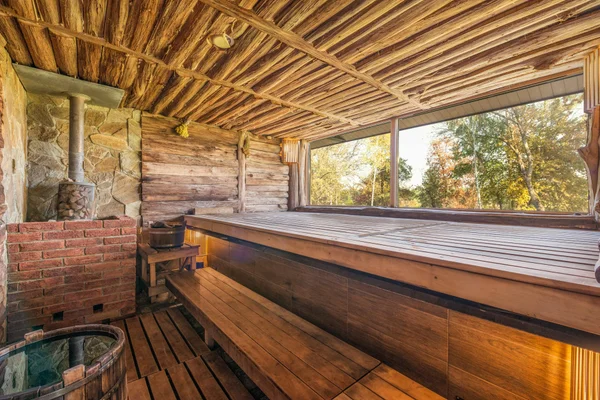
- Temperature. Finnish sauna: 80-100°C. Russian banya: 60-80°C in the steam room (parnaya), sometimes less. The effect is more enveloping than burning.
- Social ritual. The sauna tends to be meditative and silent. The banya is convivial, talkative, organized in successive passes through the steam room interspersed with breaks, cold dips, and often a shared meal.
Beyond hygiene: banya as therapy
The most common Western mistake is to reduce the banya to a wellness routine. A century ago, yes, it was first and foremost a hygiene tool. That is no longer the case. Russians have had running water at home for decades. If the banya has survived, it is because it fills a function the bathroom does not: a guided psychological decompression chamber.
In a properly run banya, the pármaster (банщик) — steam master — is not a mere operator. He reads the client's emotional state on arrival, asks two questions only ("what do you want today? what do you not want?"), and composes a path alternating heat, cold contrasts, ventilation and venik massage. The goal is not sweating — it is the state regular guests describe as "the cosmos": a deep release comparable to coming out of a long meditation, sometimes likened by Russians to an intra-uterine memory.
the contemporary Russian banya is a body-oriented therapy disguised as leisure. The real product is not the heat, it is what happens in the 30 minutes after you leave.
The steps of a complete session
A well-run banya session lasts 2 to 4 hours and follows a precise pattern:
- Lukewarm shower on arrival to rinse the skin.
- First pass in parnaya (5-10 minutes): enter to acclimate, no venik strikes. Leave before suffering.
- Break: 10-15 minutes, water, tea, conversation outside or in the rest room.
- Second pass with venik (5-7 minutes): a companion gently strikes you with a bundle of birch (most common), oak (more tonic) or eucalyptus (respiratory) branches. Not a spanking but a rhythmic beating that opens pores and stimulates circulation.
- Cold plunge: cold pool (4-15°C), bucket of ice water dumped over your head, or — in extreme climate — a roll in the snow. The thermal shock is intentional.
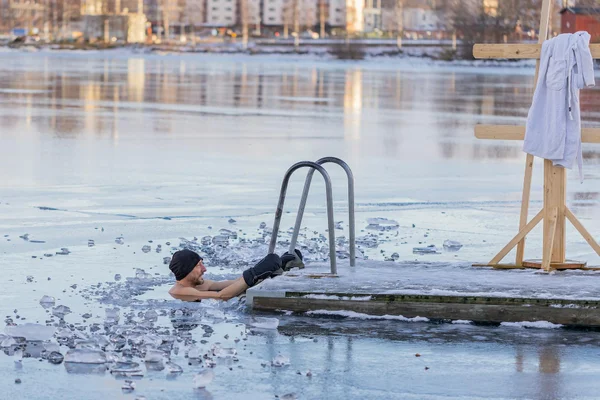
- Long break: 15-20 minutes, honey, tea, dried fruit.
- Third and fourth passes: rising intensity, more pronounced venik strokes, longer plunges.
- Recovery phase: 30-60 minutes in the rest room, light meal, herbal infusion.
the Russian banya is lived in several short passes interspersed with long breaks. Four 5-minute passes beat one 20-minute pass.
The venik: the central instrument
The venik (веник) is a bundle of leafy branches, tied together, the signature tool of the banya. Five common varieties:
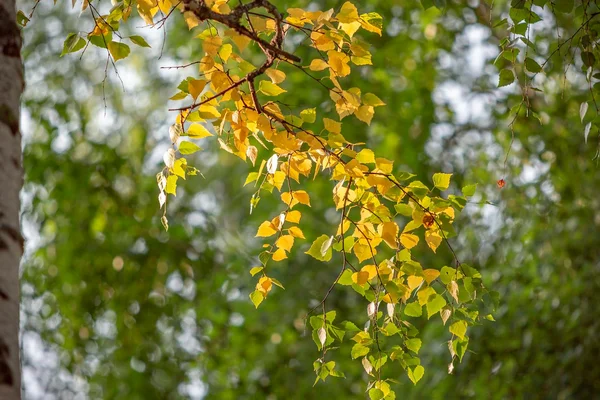
- Birch (березовый): the most universal, for skin and breathing. Ideal for beginners.
- Oak (дубовый): denser, broader, recommended for fan-style massage. Catches steam well and applies it to the body.
- Eucalyptus (эвкалиптовый): releases respiratory essential oils, perfect in winter.
- Fir / pikhta (пихтовый): used mostly to cover the head and line the bench, rarely to strike directly.
- Juniper (можжевеловый): "the Russian hedgehog" — very intense sensations, ask for it as a complement, never as a main tool for a beginner.
The venik is prepared (not "soaked"): a quick rinse in lukewarm water, then 10-15 minutes in a plastic pouch resting on the bench in the parnaya so it regains suppleness and essential oils. The companion — often a friend, sometimes a professional pármaster — strikes the body with slow, firm motions, starting from the feet and moving up. The recipient lies on a wooden bench.
Bad sign: an operator waving the branches without dialogue. Russians call them a venikotryas ("broom-shaker"). A real pármaster asks questions, adjusts, monitors your breathing, and never moves mechanically.
Social codes and etiquette
The banya in Russia is rarely a solo experience: people go as families, with friends, with colleagues. A few non-negotiable rules of etiquette:
- Separate rooms by sex. Mixed couples banyas exist in private rentals but not in public Russian banyas.
- Swimsuits rare in traditional banyas: nudity or towel. Ask on arrival. Tourist-oriented commercial banyas tolerate swimwear.
- Felt hat mandatory (войлочная шапка): protects the scalp and hair from heat. Available for rent or purchase (300-1,000 RUB).
- No phones, no metal jewelry in the parnaya (heat).
- Greet other bathers on entry with "с лёгким паром" ("with a light steam"). Same phrase on exit.
- Drink a lot. Water, kvass, tea. Never alcohol in the parnaya, and with moderation between passes — heat amplifies its effects and dehydration.
The family banya: a husband's act of care for his wife
In Russian culture, inviting your wife to the banya is not trivial: it is one of the most codified and most appreciated forms of attention. The Slavic tradition traces it to a pre-marital rite: the bride was led to the banya by her mother and aunts to "die as a maiden, be reborn as a wife". Before childbirth, the woman was also accompanied — same intentions of purification and transition.
The contemporary form is simpler but keeps the symbolic dimension: a husband who books a private banya for his wife — not a public complex, not a mixed-couples afternoon, just the two of them for two or three hours — reads as a strong attention. According to operators of family banyas around Moscow, two hours in this configuration bring a couple closer than a standard weekend trip: no screens, no background tasks, no third party, just mutual attention mediated by the ritual.
For a Western partner of a Russian woman, this is a powerful cultural integration signal. The reverse — refusing to go to the banya, or going as an anecdotal tourist — is read as disinterest in her world.
Banya and character: why Russians take business partners there
A saying circulates in Russian banyas: "In the banya there are no generals" (в бане генералов нет). Once clothes are in the locker, status markers collapse. That is precisely why Russian men use the banya as an informal test of a future partner.
Three mechanisms operate:
- The mask drops or it doesn't. A man who maintains his authority posture in the parnaya, who cannot relax, who does not joke — that is exploitable behavioral data. Russians read it as stiffness or excessive control.
- No surveillance. No banya tolerates phones in the parnaya, and heat rules out recorders. A low-voiced conversation in the steam room is, by default, confidential. It is one of the few Russian social spaces where this property holds.
- The relation to heat. The candidate who demands "120°C or nothing" is often the one chasing cheap attention and performance. The candidate who knows when to step out before suffering, and says so calmly, is read as someone who knows their limits — a quality valued in Russian commerce.
Practical consequence for an English speaker on a business mission: if a Russian partner invites you to the banya, it is never purely social. It is a profile test and a strategic discussion frame.
Banya culture after 1990: the "pravilnaya banya" break
The Soviet banya of the 1980s-90s carried a poor reputation: private saunas, excess alcohol, "entertainers" in upmarket complexes. That culture has largely disappeared from the contemporary Russian market. In its place rose the "pravilnaya banya" (правильная баня — "the correct banya"), normalized from the 2010s around a few major hubs:
- Krasnaya Polyana (Sochi) — post-2014 banya innovation pole, sector reference.
- Tatarstan region — strong Tatar-Russian tradition, family banyas.
- Chelyabinsk region — Urals, intact popular banya culture.
- Moscow suburbs — since 2018, multiplication of upscale family banya complexes 20-50 km from the center, "banya day" model of 4 to 8 hours.
Three markers distinguish a "correct" banya from an "old-style" one:
| Criterion | 90s banya | Pravilnaya banya |
|---|---|---|
| Target temperature | 100-120°C, dry | 45-70°C, humid |
| Central argument | Endurance, performance | Relaxation, depth of release |
| Ventilation | Weak, closed parnaya | Full air change 3 times/hour |
| Pármaster's role | Stone-heater | Therapeutic guide |
| Target audience | Men in groups | Families, couples, individuals |
A foreign visitor arriving in Moscow in 2026 and choosing a "pravilnaya banya" complex has a radically different experience from a 1990s visitor. It is this new standard that this guide aims at.
Benefits and medical precautions
Regular banya use is associated with several documented benefits: improved blood circulation, reduced stress, better sleep quality, refreshed skin, decreased muscular tension. Finnish studies (transposable to the banya for these effects) suggest a correlation between regular frequency and cardiovascular health.
Important precautions:
- Unstable cardiac condition, untreated hypertension: medical advice required. Tell the doctor it is a 50-70°C humid banya, not a 100°C dry sauna — the recommendation often changes.
- Pregnancy: medical advice, and very short passes if authorized.
- Alcohol before or during: forbid. The combination alcohol + heat + dehydration causes serious cardiovascular accidents in Russian banyas every year. A cold beer after the last pass, in the rest room, remains tolerated.
- First pass: leave before suffering. The banya is built, not proven.
- Heavy meal in the 2 hours before: causes malaise and nausea.
- Children: very short passes (3-5 minutes), low temperature (40-50°C), plenty of water, toys allowed. Forcing a child to "endure" is the best way to make them hate the banya for life. No competition, no records.
Where to try it in Moscow and Saint Petersburg
In Moscow, three reference addresses for a first try:
- Sandunovskie banya (Сандуновские бани) — opened in 1808, historic monument, neo-rococo interiors, high prices (3,000-7,000 RUB per session depending on category). The patrimonial experience par excellence.
- Selezniovskie banya (Селезнёвские бани) — modern institution, clean, decent welcome to foreigners, 1,500-3,500 RUB.
- Vorontsovskie banya (Воронцовские бани) — popular, authentic, 1,000-2,000 RUB entry, for those who want unfiltered Russian atmosphere.
In Saint Petersburg:
- Egorova banya (Бани Егорова) — heritage institution, carved wood interiors.
- Yamskie banya (Ямские бани) — modern and clean, good entry point for beginners.
Private banya rentals
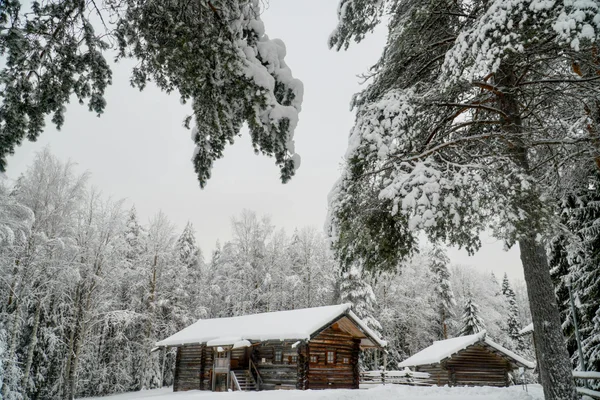
For an experience among friends or family, private rental of a banya in an izba (wooden house) or spa complex is widespread. Plan 3,000-8,000 RUB per hour for 4-8 people, optional meal basket. Platforms: Avito, Yandex, specialized agencies. Plan at least 2-3 hours to enjoy fully.
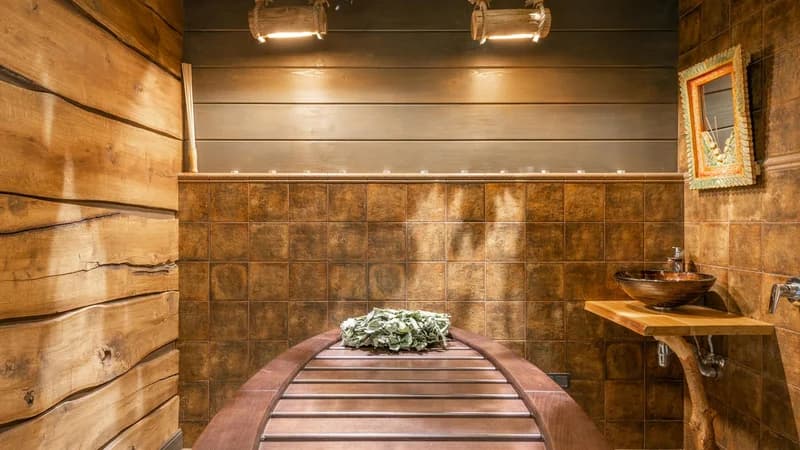
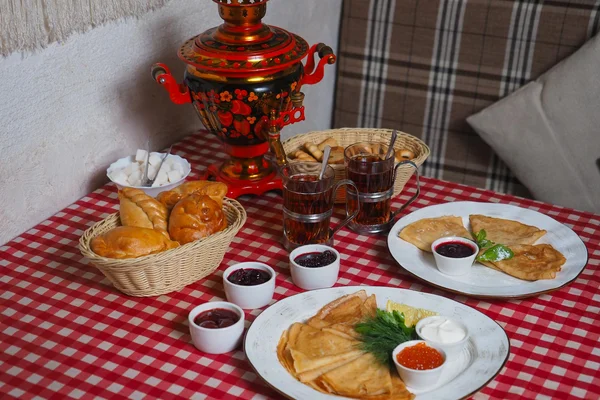
It is in this format that the therapeutic and family dimensions of the banya — described above — unfold best. The Moscow suburb complexes (Rublevskoye highway, Mozhaysk highway, Dmitrov direction) offer banya apartments with private parnaya, kupel, rest room with samovar, and pármaster bookable by the hour.
Bottom line
The Russian banya is less a thermal spa than a social, bodily and therapeutic ritual anchored in national culture. Going once during a stay in Moscow or Saint Petersburg, respecting the codes (hat, prepared venik, steam-cold alternation, hydration, moderation), provides direct access to an essential part of Russian daily life — and remains one of the best sensory memories an attentive traveler brings home.
For a Western visitor, the test of good use fits in one sentence: if you leave the banya speaking loudly, laughing, and feeling lighter than when you arrived, you were well guided. If you leave breathless, dizzy or uncomfortable, you were in the wrong banya — not in the wrong ritual.