Vodka as a social device
In Russia, vodka is not drunk for itself. It is drunk in company, around a meal or an event, always accompanied by a toast and solid food (zakuski, part of the broader Russian culinary tradition). Drinking it as a cocktail, with soda, or alone at a counter is culturally marginal — and read as problem drinking.
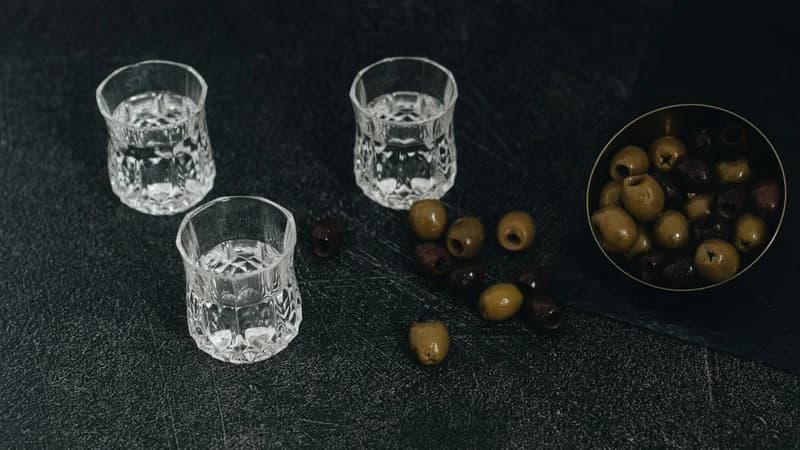
The standard glass is the shtof (стопка), a small 50 ml shot glass, not the Western stem glass. A 0.5 L bottle therefore serves about ten rounds among four guests, spread over 2-3 hours of dinner. Bottoms up (до дна, do dna) on early toasts, sipping from the fourth onward.
Toast order: the grammar of the table
Russian toasts follow a near-codified order — one of the deepest Russian traditions and social codes — at a traditional dinner:
- First toast: by the host, greeting to guests or to the occasion that motivated the gathering.
- Second toast: to women ("за женщин"). All men drink standing while looking at the women, who remain seated.
- Third toast: to parents, ancestors or — historically — to fallen soldiers. Silent toast, without clinking glasses, in remembrance.
- Subsequent toasts: to friendship, to love, to projects, to health, to the homeland. Improvisation takes over as the evening advances.
The Russian toast is a mini-speech: 2-4 sentences minimum, not a simple "cheers." A missing speech reads as shyness or lack of interest, a slip that other Russian etiquette and social codes also punish quietly. Russians appreciate toasts from foreigners speaking about their country, family, or impressions of Russia — sincerity prioritized over eloquence.
Zakuski: the technical foundation
Zakuski (закуски) are the appetizers that MANDATORILY accompany every shot of vodka. Drinking without zakuski is considered alcoholic behavior — formally and culturally. The most common zakuski:
- Salted cucumbers (солёные огурцы) — neutralize the burn
- Herring under fur coat (селёдка под шубой) — combines salt, fat and acid
- Black bread (черный хлеб) with smoked lard (сало) — fundamental Slavic tradition
- Caviar (red salmon or black sturgeon)
- Marinated mushrooms (маринованные грибы)
- Fresh cucumbers dipped in salt
- Pelmeni or vareniki hot, in a second round
The logic: fat and salt slow alcohol absorption, allowing you to last longer at the table without collapsing, and creating taste contrast.
How to drink correctly: the technique
The precise ritual:
- Raise the glass toward each guest, with eye contact.
- Listen to the toast delivered by whoever initiated it.
- Clink glasses with everyone (except toast 3, silent).
- Exhale deeply before drinking — the alcohol vapor is unpleasant.
- Bottoms up or generous sip depending on the time of evening.
- Inhale a piece of black bread or a cucumber immediately after, through the nose then the mouth. This breath on the zakuska absorbs residual alcohol.
- Eat a substantial bite of zakuski before putting the glass down.
Common Western mistakes:
- Mixing vodka with soda or juice → perceived as corrupting the product.
- Drinking between toasts, without reason → alcoholism marker.
- Refusing a toast without medical reason → offensive. Acceptable response: "За здоровье, но я воздержусь" ("To your health but I will abstain") with visible regret.
- Asking for ice → Russian vodka is always drunk frozen at -10 to -15°C (put it in the freezer 30 minutes ahead), never with ice cubes that dilute it.
- Sipping the glass in small swallows → fine for the 4th or 5th toast, badly viewed on early ones.
Brands and quality: what to know
The Russian market is full of brands. A few markers:
- Beluga (Белуга) — premium, globally exported, about 1,200-2,500 RUB per 0.5 L bottle.
- Russian Standard (Русский Стандарт) — modern standard, 600-1,200 RUB, omnipresent.
- Stolichnaya (Столичная) — Soviet classic, 500-900 RUB, reliable.
- Khortytsa — mid-range, good price-to-quality ratio.
- Putinka (Путинка) — popular, mid-range, 400-700 RUB.
To avoid: vodkas under 250 RUB (poorly distilled industrial alcohol), flavored vodkas (pepper, lemon, honey) outside traditional context — they exist but are seen as liqueurs, not pure vodka.
Authentic craft vodka: some regional distilleries (Siberia, Tatarstan, Kaliningrad) produce remarkable limited series. Ask at specialized wine shops.
Vodka in restaurants
In a restaurant — including the best Moscow restaurants and cafés — vodka is ordered by carafe (графин) of 100, 250 or 500 ml rather than by the bottle. Served frozen by default, in chilled shtofs. Average restaurant price: 200-500 RUB per 50 ml depending on brand.
Specialized vodka bars exist across Moscow's bar and club nightlife (Golubatnya, Karaoke Park) and Saint Petersburg (Vodka Room No. 1) with comparative tastings. Good entry for Westerners who want to grasp the nuances without committing to a full Russian evening.
Codes to know to not offend
- Refusing the first glass: offensive, avoid except for clear medical reason.
- Pouring your own vodka: avoid, tradition of mutual serving.
- Emptying the bottle: symbolically signaled by placing the empty bottle upside down on the floor near the chair (do not leave it on the table).
- The 13th toast exists in some traditions (to the future). Beyond that, improvisation prevails.
- Drinking alone at home without toast: symbol of alcoholism in Russian culture. If you are invited to a Russian's home and they drink alone, it is a worry signal.
Bottom line
Russian vodka is lived as a codified social ritual: frozen glass, mandatory zakuski, delivered toast, precise order of rounds. Westerners who master this minimum (3-4 toasts, bottoms up on early ones, breath on the black bread, polite refusal of vodka cocktails) gain a rare amount of cultural respect in just a few minutes. Conversely, treating vodka as a Western hard liquor quickly closes the doors to the serious conversations it is precisely meant to open.