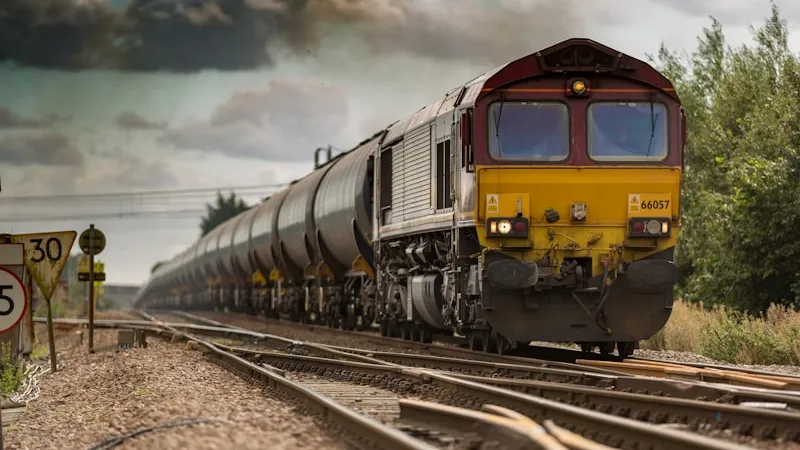
Russia's railway network is one of the most extensive on Earth. Operated primarily by Russian Railways (RZD, Российские Железные Дороги), it connects cities across eleven time zones, from Saint Petersburg on the Baltic to Vladivostok on the Pacific. Train travel remains deeply embedded in Russian culture and daily life: for many routes, the railway is not merely an alternative to flying but the natural, preferred, and sometimes only practical way to travel.
For visitors, Russian trains offer something genuinely special. The high-speed Sapsan whisks passengers between Moscow and Saint Petersburg in four hours. Overnight trains crisscross the country with a civilised rhythm that air travel cannot replicate. And the Trans-Siberian Railway, stretching 9,288 km from Moscow to Vladivostok, remains one of the world's great journeys. This guide covers everything you need to know about travelling by train in Russia in 2026.
Understanding the RZD Network
RZD operates approximately 85,000 km of track, making it the third-largest railway network in the world. The system carries over a billion passengers per year and connects every major city in Russia.
The network is divided into several categories of service:
- High-speed trains (Sapsan, Lastochka): Premium services on key corridors, comparable to Western European high-speed rail
- Long-distance passenger trains (Поезда дальнего следования): Overnight and multi-day services connecting cities across the country
- Suburban trains (Электрички/Elektrichki): Commuter services around major cities, cheap and frequent but basic
- Luxury tourist trains: Premium services like the Golden Eagle, targeting international tourists
All long-distance train schedules in Russia are displayed in Moscow time, regardless of the local time zone. This is a crucial detail that catches many travellers off guard. If your train departs from Novosibirsk at 15:00 as shown on the schedule, that means 15:00 Moscow time, which is 19:00 local time in Novosibirsk. Station clocks and electronic displays show Moscow time. Only when you board the train will announcements reference local time.
Buying Tickets
The Foreign Card Problem
The single biggest practical challenge for foreign travellers buying Russian train tickets is payment. The RZD website and app do not accept foreign-issued Visa or Mastercard. This has been the case since 2022, when international payment networks suspended operations in Russia.
Working solutions for buying tickets:
-
RZD ticket offices at stations: Every significant railway station has ticket offices (кассы) where you can buy tickets for cash in rubles. Bring your passport: it is required for all ticket purchases. Queue times vary; at major Moscow stations during peak periods, expect to wait 20-40 minutes.
-
RZD app with a Russian bank card: If you have a Russian bank card (from T-Bank, Sber, or another Russian bank), the RZD app works smoothly. It is available in Russian only, but the interface is fairly intuitive.
-
Travel agencies: Some Russian travel agencies can purchase RZD tickets on your behalf for a commission of 300-800 RUB per ticket. Online agencies like RealRussia and Tutu.ru (partial English interface) are options, though payment can still be problematic.
-
Hotel concierge: Many hotels, particularly those accustomed to foreign guests, will purchase train tickets for you. Expect a service charge.
-
Tutu.ru and other aggregators: Tutu.ru sometimes accepts UnionPay cards. It also offers a wider range of supplementary services like seat selection and meal pre-orders.
Booking Tips
- Book early for Sapsan: Popular departure times (Friday evening, Sunday evening) sell out one to two weeks in advance. Prices also rise as the departure date approaches: dynamic pricing means an early booking can save 30-50%.
- Passport required: Your passport number is linked to your ticket. You must show the same passport when boarding. No passport, no boarding.
- E-tickets: RZD issues electronic tickets that can be shown on your phone. However, for some trains and classes, you must exchange the e-ticket for a paper ticket at the station. The e-ticket will clearly state whether exchange is required.
- Cancellation: Tickets can be refunded up to 8 hours before departure for a full refund minus a small service fee. Within 8 hours, the refund decreases.
All long-distance Russian train schedules are in Moscow time, regardless of the station's local timezone: a Novosibirsk departure shown as 15:00 means 19:00 local, and missing this catches out countless travellers east of the Urals.
Moscow to Saint Petersburg: Three Options
The Moscow-Saint Petersburg corridor is Russia's busiest passenger rail route, and it exemplifies the range of options available. Moscow and Saint Petersburg are the two cities most visitors want to connect.
Option 1: Sapsan High-Speed Train
The Sapsan (Сапсан, named after the peregrine falcon) is Russia's flagship high-speed train, a Siemens Velaro RUS capable of 250 km/h. It runs between Moscow's Leningradsky Station and Saint Petersburg's Moskovsky Station.
Journey time: 3 hours 45 minutes to 4 hours 10 minutes, depending on the service Frequency: 10-13 departures per day in each direction Price range: 3,000-6,500 RUB (30-65 EUR) depending on class and booking timing
Classes:
- Economy (Эконом): Comfortable seats in a 2+2 configuration, power outlets, Wi-Fi. From 3,000 RUB.
- Economy+ (Эконом+): Wider seats, meals included, quieter carriages. From 4,000 RUB.
- Business (Бизнес): Spacious leather seats in 2+1 configuration, meals, drinks, newspaper, priority boarding. From 5,500 RUB.
- First Class (Первый): Individual seats with maximum legroom, premium meal service, lounge access. From 6,500 RUB.
The Sapsan experience is comparable to travelling on the French TGV or German ICE: clean, punctual, comfortable, and efficient. The trains depart precisely on time, the carriages are modern, and the ride is smooth. Wi-Fi quality is acceptable but not outstanding.
Practical tip: The Sapsan departs from Leningradsky Station in Moscow (not Moskovsky; that's in Saint Petersburg, confusingly). Take the metro to Komsomolskaya station, which serves three of Moscow's nine railway terminals.
Option 2: Night Train
For many travellers, the overnight train between Moscow and Saint Petersburg is the preferred option. You board in the evening, sleep in a comfortable berth, and arrive refreshed in the morning, saving both a night's accommodation and travel time from your day.
Journey time: 8-9 hours (typical departure 23:00-00:00, arrival 07:00-09:00) Frequency: Multiple departures nightly Price range: 2,000-7,000 RUB (20-70 EUR) depending on class and train
The most popular overnight services are:
- Red Arrow (Красная Стрела): Russia's most prestigious train, running since 1931. Departs Moscow at 23:55, arrives Saint Petersburg at 07:55. First class (SV) compartments are genuinely luxurious.
- Grand Express: A privately operated luxury night train with hotel-level service and beautifully appointed compartments.
- Firmenny trains: Various numbered services with different levels of comfort and pricing.
Option 3: Flying
For comparison, flights between Moscow and Saint Petersburg take approximately 1 hour 20 minutes in the air, with total journey time (including airport transfers and security) of 3-4 hours. Prices range from 2,500 to 8,000 RUB depending on the airline and booking timing. Pobeda (budget), S7, and Aeroflot all operate the route frequently.
The Sapsan is generally the best option for daytime travel: city centre to city centre, no airport hassle, and comparable total journey time. The night train wins for evening departures. Flying makes sense only if you are connecting to another flight or find a particularly cheap fare.
Train Classes Explained
Russian long-distance trains offer several classes of accommodation, each with a distinct character.
Platzkart (Плацкарт): Third Class / Open Berth
Platzkart is an open-plan sleeping carriage with 54 berths arranged in sections of four (two lower, two upper) along one side, and pairs of berths along the corridor side. There are no doors or partitions: it is essentially a dormitory on rails.
Price: The cheapest option, typically 40-60% less than Kupe Experience: Platzkart is the authentic Russian train experience. You will share the space with families, soldiers, students, and babushkas who will almost certainly offer you food. Privacy is minimal, noise can be significant, and the atmosphere is communal. Lower berths convert to seating during the day; upper berths are available all day.
Who it's for: Budget travellers, cultural immersion seekers, and anyone who wants to experience Russian train culture in its purest form. Not ideal for light sleepers or those who value privacy.
Kupe (Купе): Second Class / Compartment
Kupe consists of enclosed four-berth compartments with a sliding door. Each compartment has two lower and two upper berths, a small table by the window, and storage space under the lower berths. Bedding is provided.
Price: The standard choice for most travellers, typically 2,000-4,000 RUB for Moscow-SPB overnight Experience: A good balance of comfort and value. You share with three other passengers, sometimes fascinating, occasionally problematic, always an experience. The sliding door provides a degree of privacy and significantly reduces corridor noise. Most compartments now have power outlets.
Who it's for: The default choice for most travellers. Comfortable enough for a good night's sleep, social enough to meet fellow passengers.
SV (СВ): First Class / Two-Berth
SV (Spalny Vagon, sleeping car) compartments contain only two berths, providing significantly more space and privacy than Kupe. The fittings are higher quality, the mattresses thicker, and many SV services include meals, toiletries, and a personal attendant.
Price: Approximately 2-3 times the Kupe price Experience: Quiet, comfortable, and ideal for couples or travellers willing to pay more for privacy and rest. On premium trains like the Red Arrow, SV compartments approach hotel-level comfort.
Luxury and VIP Classes
Some trains offer single-berth VIP compartments, and tourist trains like the Golden Eagle Trans-Siberian provide suites with en-suite bathrooms, restaurant-car dining, and guided excursion stops. These are priced as premium tourist experiences. See the Trans-Siberian section below.
For Moscow-Saint Petersburg, a Sapsan by day (3h45, from 3,000 RUB) or an overnight Kupe (from 2,000 RUB, saving a hotel night) both beat flying door-to-door once airport transfers and security are factored in.
The Trans-Siberian Railway
The Trans-Siberian Railway is the longest railway line in the world, stretching 9,288 km from Moscow to Vladivostok. The full journey takes six days and nights, passing through eight time zones and some of the most sparsely populated territory on the planet. It is one of the defining travel experiences available anywhere in the world.

Three Routes
There are actually three Trans-Siberian routes:
-
The Trans-Siberian proper (Moscow-Vladivostok): 9,288 km, approximately 6 days 4 hours. Runs entirely through Russia via Yekaterinburg, Novosibirsk, Krasnoyarsk, Irkutsk (near Lake Baikal), and Khabarovsk.
-
The Trans-Manchurian (Moscow-Beijing via Manchuria): 8,986 km, approximately 6 days. Branches south from the main line at Tarskaya and crosses into China through Manzhouli.
-
The Trans-Mongolian (Moscow-Beijing via Ulaanbaatar): 7,621 km, approximately 5 days. Branches south at Ulan-Ude, crosses Mongolia, and enters China at Erlian.
Doing It Yourself vs. Organised Tours
Independent travel: Buy individual tickets for each segment through RZD. This allows you to stop at cities along the route: most travellers break the journey at Yekaterinburg (day 1-2), Novosibirsk or Krasnoyarsk (day 3), and Irkutsk/Lake Baikal (day 4-5). Total cost in Kupe class: approximately 15,000-25,000 RUB for the full Moscow-Vladivostok route, more if you break the journey and add hotel stays.
Organised tours: Companies like Real Russia, Sundowners Overland, and various Russian operators offer packages including tickets, accommodation, guides, and excursions. Expect to pay 1,500-3,500 EUR for a two-week package.
The Golden Eagle Luxury Train: The premium option. The Golden Eagle runs a dedicated luxury tourist train on the Trans-Siberian route with en-suite cabins, restaurant cars, a bar car, and guided excursion stops at key cities. The journey takes approximately 15 days. Prices start at 15,000 USD per person for the Silver Class compartment and rise to over 25,000 USD for the Imperial Suite. It is, by any measure, a once-in-a-lifetime experience.
Key Stops Along the Route
- Yekaterinburg (km 1,816): The gateway to the Urals and the marker of the Europe-Asia border. A vibrant city with a tragic history: this is where the Romanov family was executed in 1918.
- Novosibirsk (km 3,343): Siberia's largest city, founded in 1893 as a bridge-building settlement during the railway's construction.
- Krasnoyarsk (km 4,104): A handsome city on the Yenisei River with spectacular natural surroundings.
- Irkutsk (km 5,185): Known as the "Paris of Siberia" for its ornate wooden architecture, and the jumping-off point for Lake Baikal.
- Ulan-Ude (km 5,642): Capital of the Buryat Republic, with strong Mongolian and Buddhist cultural influences.
- Khabarovsk (km 8,523): A major city on the Amur River near the Chinese border.
- Vladivostok (km 9,288): The Pacific terminus, a dramatically situated port city clinging to hills above the Golden Horn bay.
Practical Tips for the Trans-Siberian
- Food: Each long-distance train has a restaurant car (вагон-ресторан), but quality varies and prices are higher than on the ground. Most experienced Trans-Siberian travellers bring substantial provisions: instant noodles (hot water is always available from the samovar in each carriage), bread, cheese, sausage, fruit, tea, and biscuits. Stock up at station stops: vendors sell home-cooked food, smoked fish, and produce on the platforms at major stops.
- Hot water: Every carriage has a samovar (boiler) providing free boiling water around the clock. Bring a good travel mug.
- Charging: Most modern carriages have power outlets, but bring a power strip to ensure access. On older trains, outlets may be limited to the corridor.
- Showers: Standard RZD trains do not have showers. Higher-class compartments on newer trains sometimes do. The Golden Eagle has en-suite facilities. For most travellers, wet wipes and station stops with washrooms are the reality.
- Time zones: Remember that all schedules are in Moscow time. Your watch will need adjusting as you cross time zones, but the train's schedule board always shows Moscow time.
Suburban Trains (Elektrichki)
For day trips from major cities, the suburban electric trains (электрички) are cheap and frequent. Moscow's suburban network extends to cities within 100-150 km, including Sergiev Posad (home to the Trinity Lavra, a UNESCO World Heritage site) and Vladimir (gateway to the Golden Ring).
Suburban trains are basic (hard bench seats, no reserved seating, minimal comfort), but they are punctual, frequent, and extraordinarily cheap (200-500 RUB for journeys of 1-3 hours). Buy tickets from the station kassa or automated machines (Russian interface only, but manageable with a translation app).
Lastochka and Higher-Speed Suburban Services
The Lastochka (Ласточка, "swallow") is a modern electric multiple unit used on key suburban and intercity routes. Faster and more comfortable than standard elektrichki, Lastochka services run on routes including Moscow-Nizhny Novgorod, Saint Petersburg-Veliky Novgorod, and suburban routes around both capitals. Prices are moderate (500-1,500 RUB) and the trains are clean, air-conditioned, and have Wi-Fi.
Practical Information
What to Bring on a Long-Distance Train
- Passport (required for boarding)
- Printed or electronic ticket
- Slippers or flip-flops (for walking around the carriage; everyone changes shoes)
- Comfortable clothes (the provodnitsa, or carriage attendant, will provide bedding, but bring comfortable layers)
- Food and drink supplies
- Travel mug for tea
- Power bank and charging cables
- Entertainment (books, downloaded media; Wi-Fi is unreliable on long-distance trains)
- Toilet paper and hand sanitiser (station and train facilities vary in supply)
Station Navigation
Russian railway stations (вокзалы) are typically named after their destination, not their location. Moscow's Leningradsky Station serves trains to Saint Petersburg (formerly Leningrad), Kazansky Station serves Kazan, and Yaroslavsky Station is the starting point for Trans-Siberian services to Vladivostok.
Major stations have electronic departure boards, waiting rooms, kiosks, and restaurants. Announcements are in Russian only. The RZD app provides real-time departure information that can be more useful than the station boards.
Safety on Russian Trains
Russian trains are generally safe. Petty theft can occur in Platzkart class, particularly on heavily travelled routes. Keep valuables close and use the storage space under your berth. Kupe and SV classes can be locked from inside. The provodnitsa (carriage attendant, almost always a woman) is responsible for security and cleanliness in her carriage and takes the role seriously.
Key Takeaways
Russian trains offer a range of experiences from the utilitarian to the sublime. The Sapsan is modern, fast, and efficient. Night trains provide a civilised and distinctly Russian way to cover long distances. And the Trans-Siberian remains one of the world's great journeys. Buying tickets as a foreigner requires some creative problem-solving due to payment restrictions, but the effort is amply rewarded. Budget 3,000-6,000 RUB for a Sapsan journey, 2,000-4,000 RUB for an overnight Kupe berth, and considerably more for the Trans-Siberian, however you choose to travel it. Bring slippers, pack food, and embrace the unhurried rhythm of Russian rail.