Healthcare is among the first concerns for any expatriate, and Russia's medical system presents a landscape that is neither as dire as pessimists suggest nor as seamless as optimists hope. The country operates parallel public and private healthcare systems, with quality varying enormously between the two and within each. For foreign residents, the practical reality is straightforward: private healthcare, accessed through comprehensive insurance, is the only sensible approach. The public system exists, and it functions, but navigating it as a foreigner without Russian language skills and local knowledge is an exercise in frustration.
This guide explains the system, identifies the best options for expatriates, and provides the practical information needed to manage health and medical care in Russia. If you are still planning your move, our complete guide to moving to Moscow and our guide to living in Russia cover the broader relocation process.
The Public Healthcare System
Russia provides universal healthcare through a system funded by mandatory health insurance contributions (OMS, Obyazatelnoye Meditsinskoye Strakhovaniye). Russian citizens and permanent residents receive free treatment at state-funded clinics and hospitals. The system covers general practice, specialist consultations, diagnostics, hospitalisation, and emergency care.
What Expats Need to Know
Foreign residents with a valid residence permit or work permit are entitled to OMS coverage. The process involves registering at a local polyclinic (poliklinika) near your registered address and obtaining an OMS card from an insurance provider (companies like RESO-Garantia, Sogaz, or MAKS issue them free of charge).
However, the practical value of OMS for expatriates is limited:
- Language barrier: Most public healthcare facilities operate exclusively in Russian. Doctors, nurses, and administrative staff rarely speak English.
- Wait times: Appointments with specialists through the public system can involve waits of days to weeks. Walk-in clinics (polikliniks) often involve queuing for hours.
- Facility quality: Public hospitals and clinics range from modern, well-equipped institutions in central Moscow to severely underfunded facilities in other areas. Equipment may be outdated, and facilities can be austere by Western standards.
- Bureaucracy: The public system is paperwork-intensive. Navigating referrals, obtaining specialist appointments, and managing documentation requires Russian language fluency and considerable patience.
For these reasons, virtually all expatriates in Russia use private healthcare, either exclusively or as their primary system with OMS as a backup.
The single strongest argument for maintaining international coverage alongside Russian DMS is medical evacuation. Evacuation to Western Europe costs 20,000-50,000 USD and is almost never covered by Russian domestic policies. Budget for a global policy (1,500-5,000 USD/year) even if your employer already provides local DMS.
The Private Healthcare System
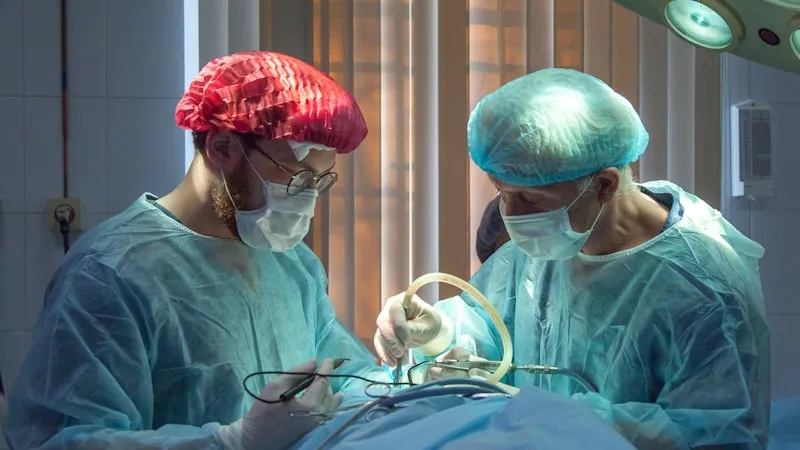
Russia's private medical sector has developed rapidly since the 1990s and now includes world-class clinics staffed by highly trained physicians, many of whom have studied or practiced abroad. Private healthcare in Moscow and Saint Petersburg is genuinely excellent, with modern equipment, English-speaking staff, and service standards comparable to Western Europe.
International Clinics in Moscow
Several clinics specifically cater to the expatriate community:
-
European Medical Centre (EMC): The largest and most comprehensive international clinic network in Moscow. Multiple locations, including a flagship hospital on Spiridonovka Street. Offers every major medical specialty, including surgery, obstetrics, paediatrics, dentistry, and diagnostics. Most doctors speak English, French, or German. EMC is the default choice for many diplomatic missions and multinational companies. Consultation fees typically range from 5,000 to 12,000 RUB (48-116 USD).
-
American Medical Center (AMC): Located on Prospekt Mira, AMC provides general practice, specialist consultations, and diagnostics with English-speaking staff. Slightly smaller than EMC but well-regarded. General consultations from 4,000 to 8,000 RUB.
-
GMS Clinic: A modern multi-specialty clinic in central Moscow, offering adult and paediatric care, dentistry, and diagnostics. English-speaking doctors available. Consultations from 5,000 to 10,000 RUB.
-
Medsi International: Part of Russia's largest private healthcare chain, the international division in Moscow offers English-language services and a wide range of specialties. Generally more affordable than EMC or AMC, with consultations from 3,000 to 7,000 RUB.
International Clinics in Saint Petersburg
-
American Medical Clinic: The leading English-language clinic in Saint Petersburg, offering general practice, dental, and specialist care. Consultations from 4,000 to 8,000 RUB.
-
Scandinavia Clinic (AVA-Peter): A large, modern clinic with some English-speaking staff. Strong in diagnostics, surgery, and reproductive medicine. Consultations from 3,000 to 6,000 RUB.
-
MEDSI Saint Petersburg: Similar to the Moscow branch, with English-language services for the international community.
Russian Private Clinics
For those with reasonable Russian language skills, or who are accompanied by a Russian-speaking colleague or friend, Russian-oriented private clinics offer excellent care at lower prices than international clinics. Networks like MEDSI, Chaika, and Doktor Ryadom maintain high standards with modern equipment. Consultations at these clinics cost 2,000-5,000 RUB, roughly half the price of international clinics.
Health Insurance
Employer-Provided Insurance (DMS)
Most multinational employers and many larger Russian companies provide voluntary medical insurance (DMS, Dobrovolnoye Meditsinskoye Strakhovaniye) as part of the employment package. DMS policies typically cover consultations, diagnostics, laboratory tests, and outpatient treatment at a network of private clinics. Better policies include hospitalisation, dental care, and emergency medical evacuation.
Key questions to ask your employer about DMS coverage:
- Which clinics are included in the network? (Ensure at least one international clinic with English-speaking staff is covered.)
- Is hospitalisation included?
- Is dental care included, and to what limit?
- Are pre-existing conditions covered?
- Is there coverage for medical evacuation?
- Are dependants (spouse, children) included?
Private Insurance
Expatriates without employer-provided insurance, or those seeking supplementary coverage, have several options:
Russian insurance companies (RESO-Garantia, Sogaz, Ingosstrakh, AlfaStrakhovanie) offer DMS policies that can be purchased individually. Annual premiums for a comprehensive policy covering major international clinics in Moscow range from 80,000 to 250,000 RUB (775-2,425 USD) per year, depending on age, coverage level, and clinic network.
International insurance providers (Cigna, Allianz Care, Aetna International, BUPA Global) offer expatriate health insurance policies that cover treatment in Russia and internationally. These policies are more expensive (1,500-5,000 USD per year for an individual) but provide global coverage, which is valuable if you travel frequently or may need treatment outside Russia. They also typically include medical evacuation coverage, which Russian domestic policies often do not.
Recommended Approach
The optimal strategy for most expatriates is:
- Employer DMS as the primary insurance for routine care at private clinics in Russia.
- International expatriate insurance for catastrophic coverage, international treatment, and medical evacuation.
- OMS registration as a free safety net (register even if you never expect to use it).
Pharmacies
Russian pharmacies (apteki) are abundant, generally well-stocked, and staffed by trained pharmacists. Many medications that require prescriptions in Western countries are available over the counter in Russia, including certain antibiotics, anti-inflammatories, and allergy medications. This is convenient but requires caution: self-medicating with antibiotics, for example, contributes to resistance and is medically inadvisable.
Practical Details
- Chains: Major pharmacy chains include 36.6, Gorzdrav, Planeta Zdorovya, and Rigla. They are found on virtually every major street.
- 24-hour pharmacies: Most neighborhoods in Moscow and Saint Petersburg have at least one 24-hour pharmacy. Search "apteka kruglosutochno" on Yandex Maps.
- Prices: Common medications are affordable. Paracetamol (a pack of 20 tablets) costs 30-80 RUB. Ibuprofen is similarly priced. Prescription medications vary widely.
- Imported vs. domestic: Both imported and Russian-manufactured medications are available. Russian generics are significantly cheaper but may have different brand names. If you take a specific medication regularly, bring enough supply for the first month and identify the Russian equivalent (ask your pharmacist or doctor).
- Prescriptions: Certain medications (strong painkillers, some psychotropic drugs, and specific antibiotics) require a prescription. The prescription must be from a Russian-licensed doctor; foreign prescriptions are not accepted.
Bringing Medications into Russia
If you take prescription medication regularly, bring a supply for at least your first month. Carry a letter from your prescribing doctor (ideally translated into Russian) describing the medication, dosage, and medical necessity. Narcotic and psychotropic substances require specific import documentation; check current regulations with the Russian embassy before travelling.
Dental Care
Dental care in Russia is well-developed in the private sector. International clinics offer dental services, and dedicated dental clinics provide high-quality care at prices significantly below Western European equivalents.
A routine dental cleaning costs 3,000-6,000 RUB (29-58 USD). A filling costs 3,000-8,000 RUB. A porcelain crown costs 15,000-30,000 RUB (145-290 USD), roughly a third of the UK equivalent.
Dental care is often excluded from basic DMS policies or subject to annual limits (typically 30,000-50,000 RUB). Check your policy carefully and budget for dental expenses separately if needed.
Emergencies
Emergency Number
Dial 103 for ambulance services (skoraya pomoshch). The service is free and operates around the clock. Response times in central Moscow and Saint Petersburg average 10-20 minutes. Ambulance crews typically speak only Russian; having a Russian speaker call on your behalf is helpful.
112 is the universal emergency number (police, fire, ambulance) and operators may have basic English capability.
Emergency Rooms
Public hospital emergency departments treat all patients regardless of insurance status. The quality of emergency care in major Moscow and Saint Petersburg hospitals is generally competent for trauma, cardiac, and acute conditions. However, the facilities can be crowded, the environment austere, and communication difficult without Russian.
Private hospitals with emergency departments include EMC (Moscow) and the American Medical Clinic (Saint Petersburg). If your condition is not immediately life-threatening, calling your insurance company's assistance line first can help direct you to an appropriate facility and ensure coverage.
Medical Evacuation
For serious conditions requiring treatment unavailable in Russia, or in situations where a patient prefers treatment in their home country, medical evacuation may be necessary. International insurance policies typically cover this; domestic Russian policies often do not. Evacuation to Western Europe costs 20,000-50,000 USD or more depending on the destination and medical requirements. This is the single strongest argument for maintaining international insurance coverage alongside domestic DMS.
Vaccinations and Preventive Care
Before travelling, ensure your visa paperwork includes the required medical insurance documentation. No specific vaccinations are required for entry to Russia, but the following are recommended for long-term residents:
- Tick-borne encephalitis: Particularly important if you plan to spend time in rural areas, forests, or Siberia between April and October. The vaccination series requires two doses over a month, with a booster at one year.
- Hepatitis A and B: Standard travel vaccinations.
- Routine boosters: Ensure tetanus, diphtheria, and measles vaccinations are current.
Preventive health check-ups are available at all major private clinics. Annual comprehensive check-ups (including blood tests, ECG, ultrasound, and specialist consultations) cost 15,000-40,000 RUB at private clinics and are often covered by DMS policies.
Mental Health
Access to mental health services in Russia has improved but remains more limited than in Western Europe. Private clinics in Moscow and Saint Petersburg offer English-language therapy and psychiatry. The Zigmund.Online platform connects patients with Russian-speaking therapists online. International providers like BetterHelp and Talkspace can supplement local options for English-speaking expats.
The stigma around mental health treatment in Russia is greater than in most Western countries but is diminishing, particularly among younger generations.
Summary of Key Actions for New Expats
- Register for OMS within your first month, even if you plan to use private healthcare exclusively.
- Confirm your employer's DMS coverage in detail: clinic network, hospitalisation, dental, dependants.
- Consider international insurance for evacuation coverage and global portability.
- Identify your nearest international clinic and register as a patient before you need urgent care.
- Locate a 24-hour pharmacy near your home.
- Save emergency numbers in your phone: 103 (ambulance), 112 (universal emergency), and your insurance company's assistance hotline.
- Bring essential medications with appropriate documentation for the first month.
Healthcare in Russia is not the obstacle that some prospective expatriates fear. The private system, accessed through proper insurance, provides care that is clinically excellent, increasingly convenient, and significantly cheaper than equivalent services in Western Europe or North America. The key is preparation: arrange insurance before you arrive, identify your clinics, and maintain the basic documentation that allows the system to work for you.