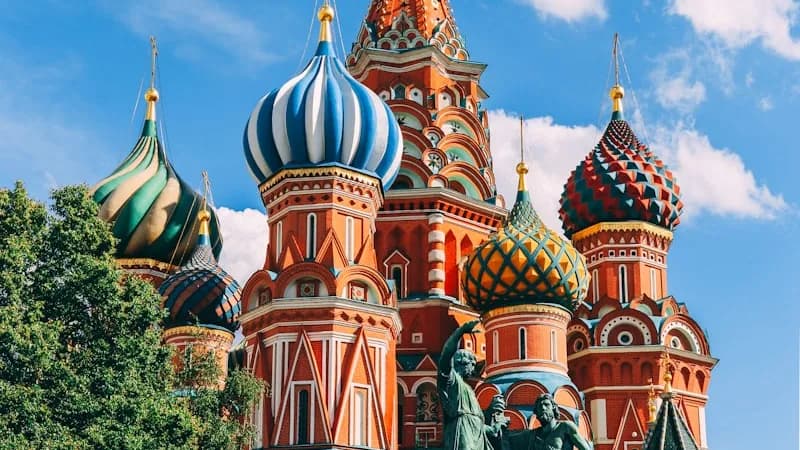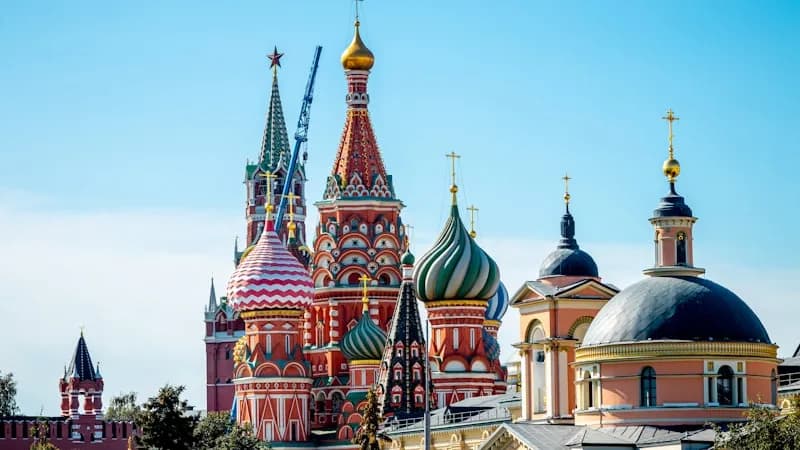
The Golden Ring is Russia's most celebrated historical touring route, a loose circle of ancient cities northeast of Moscow that predates the capital itself. These towns, with their white-stone churches, fortress kremlins, and onion-domed monasteries, preserve a Russia that existed centuries before Peter the Great turned his gaze westward. For travellers seeking to understand Russian identity beyond Moscow and Saint Petersburg, the Golden Ring is essential. All major Golden Ring cities are fully accessible with a standard tourist visa.
The term was coined in 1967 by journalist Yuri Bychkov, who drove the route and published a series of articles describing the towns. The name stuck, and the circuit has since become one of Russia's most important cultural tourism itineraries. There is no single official list of Golden Ring cities, but the core group includes Sergiev Posad, Pereslavl-Zalessky, Rostov Veliky, Yaroslavl, Kostroma, Ivanovo, Suzdal, and Vladimir.
The Main Cities
Sergiev Posad
Distance from Moscow: 75 km (1-1.5 hours by car or train)
The closest Golden Ring city to Moscow and the easiest to visit as a day trip. Its centrepiece is the Trinity Lavra of Saint Sergius, Russia's most important Orthodox monastery and a UNESCO World Heritage Site. Founded in 1337 by Saint Sergius of Radonezh, the lavra is the spiritual heart of Russian Orthodoxy and remains an active monastery with hundreds of monks.
The architectural ensemble is extraordinary: the blue-and-gold Cathedral of the Assumption (modelled on its Moscow Kremlin namesake), the white Trinity Cathedral containing the relics of Saint Sergius, the soaring bell tower, and the fortified walls that withstood a sixteen-month Polish siege in the 17th century.
Time needed: Half a day to a full day. Admission: The lavra grounds are free; individual museums within charge 100-300 RUB.
Pereslavl-Zalessky
Distance from Moscow: 140 km (2-2.5 hours)
A small, quiet town on the shores of Lake Pleshcheyevo, Pereslavl-Zalessky is associated with Alexander Nevsky, who was born here in 1221. The Botik Museum, housing a boat built by the young Peter the Great, sits on the lake's southern shore. Several monasteries dot the town, including the Goritsky Monastery, now a museum with excellent views over the lake.
The town has a rural, unhurried character that offers a sharp contrast to Moscow. It is particularly appealing in summer, when the lake allows swimming and sailing.
Time needed: Half a day to one day.
Rostov Veliky (Rostov the Great)
Distance from Moscow: 200 km (3-3.5 hours)
Not to be confused with Rostov-on-Don in southern Russia, Rostov Veliky is one of the oldest cities in the country, first mentioned in chronicles in 862. Its kremlin, a white-walled fortress on the shore of Lake Nero, is among the most photogenic sites on the entire Golden Ring. The ensemble of churches, towers, and covered galleries dates primarily to the 17th century and was famously used as a filming location in the 1973 Soviet comedy Ivan Vasilievich Changes Profession.
The kremlin's interior museums house an important collection of enamelwork (finift), a traditional Rostov craft. The town itself is small and can feel neglected, but the kremlin alone justifies the visit.
Time needed: Half a day to one day. Admission: Kremlin grounds 100 RUB; combined museum ticket 800 RUB.
Yaroslavl
Distance from Moscow: 270 km (3.5-4.5 hours)
The largest and most developed city on the Golden Ring, Yaroslavl has a population of approximately 600,000 and serves as the route's de facto capital. Its entire historic centre is a UNESCO World Heritage Site, featuring the 17th-century Church of Elijah the Prophet (with exceptionally well-preserved frescoes), the Spaso-Preobrazhensky Monastery, and a handsome embankment along the Volga River.
Yaroslavl has the best tourist infrastructure on the Golden Ring: reliable hotels, good restaurants, and a functioning public transport system. It makes an excellent base for exploring the eastern half of the route.
Time needed: One to two days. Admission: Church of Elijah the Prophet 250 RUB; monastery 200 RUB.
Kostroma
Distance from Moscow: 340 km (4.5-5.5 hours)
Kostroma sits at the confluence of the Volga and Kostroma rivers. Its central trading arcades, a vast 18th-century marketplace, remain in commercial use and are architecturally unique among Russian provincial cities. The Ipatiev Monastery, where the first Romanov tsar was reportedly invited to take the throne in 1613, is the city's most important historical site.
The Museum of Wooden Architecture, located across the river, displays relocated wooden churches and peasant houses from the Kostroma region. It is one of several such open-air museums in Russia but among the best curated.
Time needed: One day.
Ivanovo
Distance from Moscow: 300 km (4-5 hours)
Historically known as the textile capital of Russia, Ivanovo is the least architecturally distinguished of the traditional Golden Ring cities. However, it contains interesting examples of Soviet constructivist architecture and serves as a practical overnight stop between Suzdal and Kostroma. The city's Museum of Ivanovo Chintz traces the textile industry's history and is more engaging than it sounds.
Time needed: Half a day (primarily as a transit stop).
Suzdal
Distance from Moscow: 220 km (3.5-4 hours)
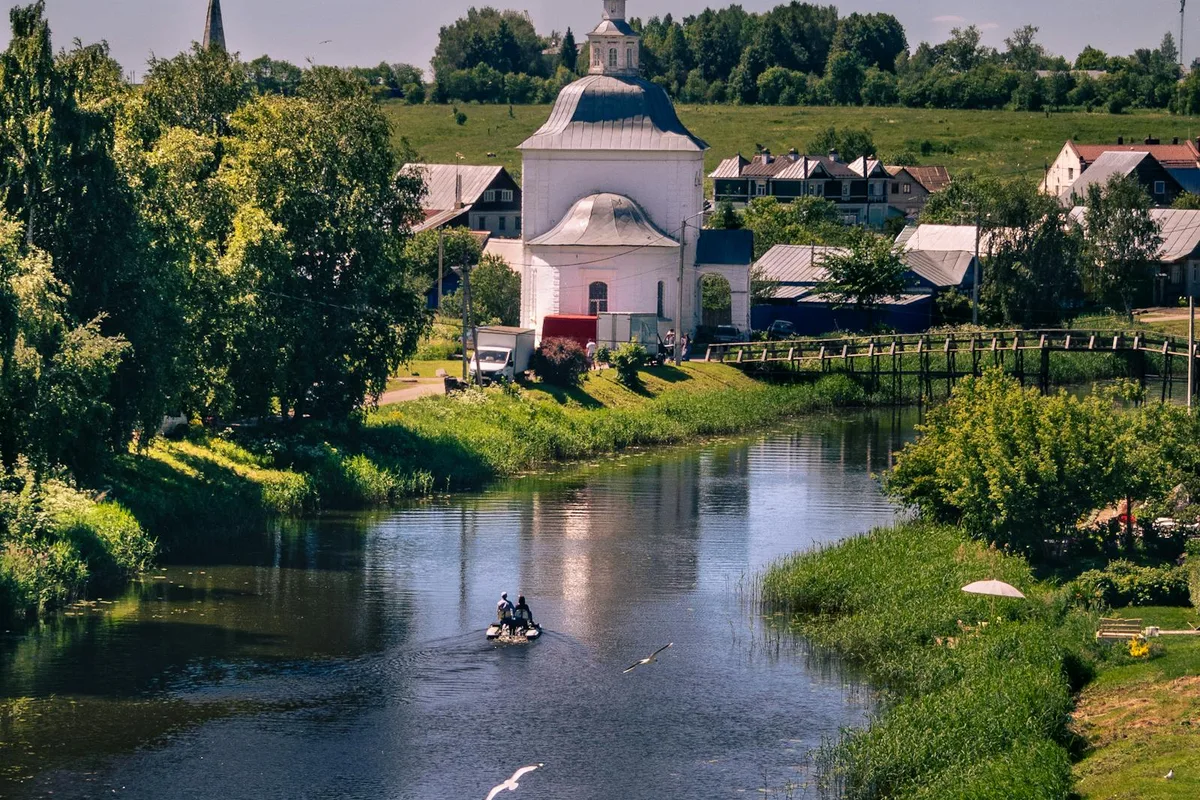
If you visit only one Golden Ring town beyond Sergiev Posad, make it Suzdal. This small town (population under 10,000) has preserved its historical character more completely than any other settlement on the route. Over forty churches and five monasteries are packed into a landscape of meadows, wooden houses, and gentle hills along the Kamenka River. There are no high-rise buildings and virtually no industrial intrusions.
The Kremlin (free to enter, museum ticket 400 RUB), the Museum of Wooden Architecture (400 RUB), and the Monastery of Saint Euthymius (500 RUB) are the headline attractions, but Suzdal's greatest appeal is its atmosphere. Walking its quiet streets, past painted wooden houses and white churches, offers a glimpse of a Russia that has largely vanished elsewhere.
Medovukha, a traditional honey-based alcoholic drink, is a Suzdal speciality. Every other shop sells it, and sampling the various flavours is a minor but genuine pleasure.
Time needed: One to two days.
Vladimir
Distance from Moscow: 190 km (2.5-3.5 hours)
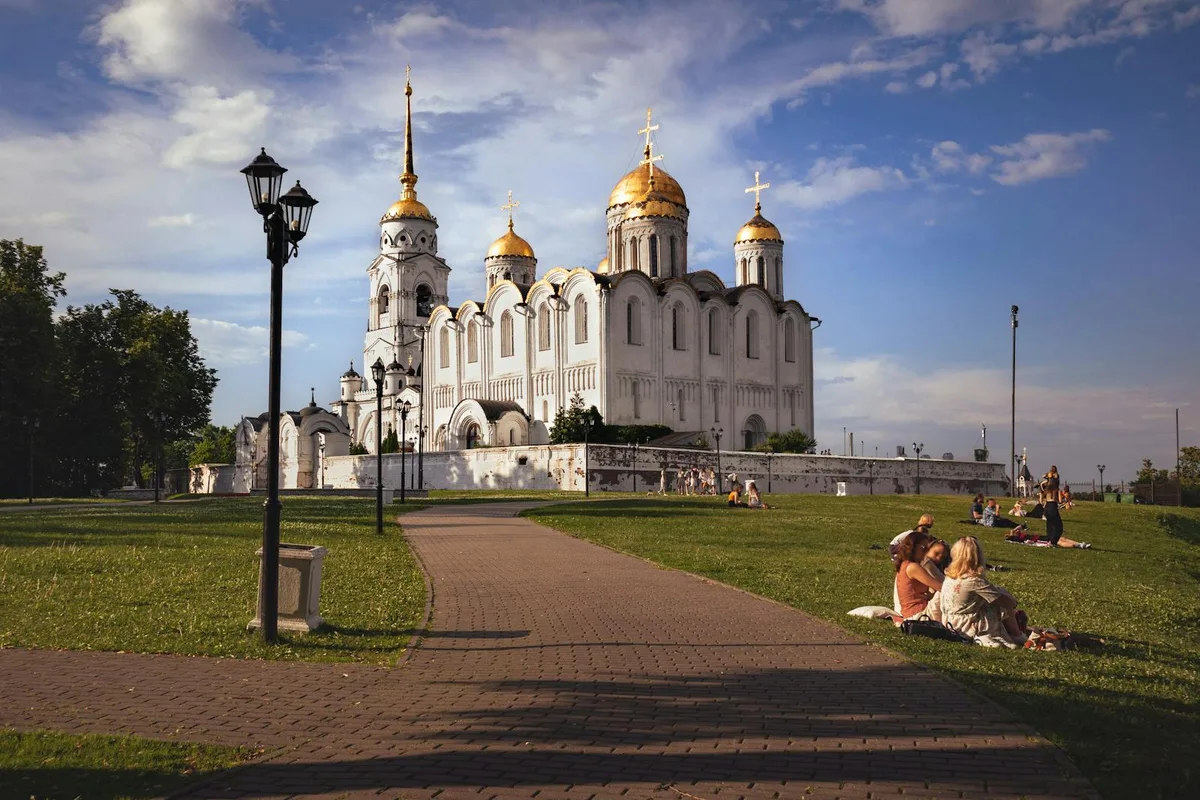
Vladimir was the capital of medieval Russia before Moscow's rise, and its 12th-century white-stone churches are among the oldest surviving in the country. The Cathedral of the Assumption, built in 1158 and expanded in 1189, contains frescoes by Andrei Rublev and served as the model for its namesake in the Moscow Kremlin. The Cathedral of Saint Demetrius, with its extraordinary carved stone facade depicting saints, animals, and mythical creatures, is a masterpiece of pre-Mongol Russian architecture.
Both cathedrals are UNESCO World Heritage Sites. The Golden Gate, a triumphal arch and defensive tower from 1164, marks the western entrance to the old city.
Time needed: Half a day to one day. Admission: Cathedral of the Assumption 200 RUB.
If you have only a weekend, prioritise Suzdal and Vladimir — a 2-day Moscow-Suzdal-Vladimir loop covers the three most impressive sites on the route without exhaustion.
Itineraries
The Weekend Trip (2 Days)
Day 1: Moscow to Sergiev Posad (morning), drive to Suzdal (afternoon, 3 hours). Overnight in Suzdal. Day 2: Suzdal (morning), drive to Vladimir (30 minutes), explore Vladimir (afternoon), return to Moscow (evening, 3 hours).
This itinerary covers the three most impressive sites on the route and is manageable without exhaustion.
The Classic Route (4-5 Days)
Day 1: Moscow to Sergiev Posad to Pereslavl-Zalessky. Overnight in Pereslavl. Day 2: Pereslavl to Rostov Veliky to Yaroslavl. Overnight in Yaroslavl. Day 3: Yaroslavl to Kostroma. Overnight in Kostroma. Day 4: Kostroma to Ivanovo to Suzdal. Overnight in Suzdal. Day 5: Suzdal to Vladimir. Return to Moscow.
The Comprehensive Tour (7+ Days)
Add an extra night in Yaroslavl and Suzdal, include smaller towns such as Tutayev and Plyos, and travel at a pace that allows for countryside walks, local dining, and unhurried monastery visits.
Getting There and Around
By Car
The most flexible option. Roads from Moscow to the Golden Ring cities are generally well-maintained two-lane highways. Driving times from Moscow range from 1.5 hours (Sergiev Posad) to 5.5 hours (Kostroma). Fuel costs approximately 55 RUB per litre (0.53 USD). Parking in the towns is rarely a problem.
Rental cars in Moscow start at 2,500-4,000 RUB per day (24-39 USD) for a basic sedan. International driving permits are technically required for foreign licences, though enforcement is inconsistent.
By Train
Suburban trains (elektrichki) connect Moscow to Sergiev Posad (1.5 hours, 250 RUB from Yaroslavsky station). Yaroslavl, Vladimir, and Kostroma are served by long-distance trains from Moscow (3-6 hours, 700-2,500 RUB depending on class).
By Bus
Regular bus services connect Moscow (departing from Shchyolkovsky bus station) to all Golden Ring cities. Buses to Vladimir take 3-3.5 hours and cost 600-900 RUB. To Yaroslavl: 4-5 hours, 800-1,200 RUB. Services are generally punctual.
Organised Tours
Several Moscow-based agencies offer one-day to multi-day Golden Ring tours with English-speaking guides. A one-day group tour to Sergiev Posad and Suzdal costs 4,000-8,000 RUB per person. Multi-day private tours with accommodation, transport, and a guide run 15,000-30,000 RUB per day.
Where to Stay
Accommodation on the Golden Ring ranges from Soviet-era hotels (functional, inexpensive, often depressing) to charming guesthouses and renovated boutique properties.
Suzdal has the best selection: the Pushkarskaya Sloboda hotel complex (4,000-8,000 RUB per night), the Art Hotel (3,500-6,000 RUB), and numerous private guesthouses (2,000-4,000 RUB).
Yaroslavl offers the widest range: Park Inn by Radisson (5,000-8,000 RUB), Ibis (3,500-5,500 RUB), and smaller independent hotels from 2,500 RUB.
Other towns have more limited options. Rostov Veliky's hotels are basic but functional at 2,000-4,000 RUB. Pereslavl has guesthouses and small hotels at similar prices. Booking in advance is advisable for summer weekends, when domestic tourists drive high demand.
Budget
A self-driven Golden Ring tour for two people over four days, staying in mid-range hotels and eating at local restaurants, costs approximately:
- Fuel: 3,000-5,000 RUB
- Accommodation (3 nights): 12,000-24,000 RUB
- Meals: 8,000-15,000 RUB
- Museum admissions: 3,000-5,000 RUB
- Total: 26,000-49,000 RUB (252-475 USD) for two people
This represents excellent value for a multi-day cultural tour. The Golden Ring is one of the most affordable significant historical itineraries in Europe.
Practical Tips
- Best season: Late May to September for warm weather and green landscapes. Winter (December-February) offers snow-covered churches and a magical atmosphere but requires cold-weather preparation.
- Language: English is rarely spoken outside the largest hotels and museums in Yaroslavl. Basic Russian or a translation app is essential.
- Cash: Carry cash. While card payment is increasingly accepted in Yaroslavl and Suzdal, smaller towns and rural establishments may be cash-only.
- Dress code for churches: Women should cover their heads and shoulders; men should remove hats. Skirts below the knee are expected for women entering active churches and monasteries. Scarves are often available to borrow at the entrance.
- Photography: Most churches and monasteries allow exterior photography freely. Interior photography may require a permit (usually 100-200 RUB) or be prohibited entirely, particularly in spaces containing frescoes or icons.
The Golden Ring is Russia distilled. Its churches and monasteries embody the aesthetic and spiritual traditions that shaped the nation. Its small towns offer a pace of life that Moscow has long since abandoned. For any traveller willing to venture beyond the two capitals, it is the essential next step.