Moscow is not a city that deals in half measures. It is the political, economic, and cultural capital of the largest country on Earth, home to nearly thirteen million people, and the seat of power that has shaped European and global affairs for centuries. The Kremlin walls have witnessed the rise and fall of tsars, Soviet general secretaries, and post-Soviet presidents. The city's skyline juxtaposes onion-domed cathedrals with Stalinist skyscrapers and the glass towers of the Moscow City business district. It is, by turns, overwhelming, exhilarating, and deeply rewarding.
For the visitor, Moscow presents a particular kind of challenge. It is enormous — the third-largest city in Europe by area — and its rhythms are not immediately legible to outsiders. The language barrier is real, the winters are formidable, and the distances between sights can be considerable. But the infrastructure for travellers has improved markedly in recent years, and the city's cultural riches are genuinely world-class. This guide provides the practical information necessary to navigate Moscow with confidence and make the most of a visit, whether for a long weekend or an extended stay.
Must-See Sights
The Moscow Kremlin
The Kremlin is the historic heart of both Moscow and Russia itself. This fortified complex on the banks of the Moskva River has served as the centre of Russian power since the 15th century. Within its distinctive red walls, visitors will find an extraordinary concentration of cathedrals, palaces, and state buildings.
The principal attractions within the complex include the Assumption Cathedral, where Russian tsars were crowned; the Armoury Chamber, which houses the imperial regalia, Faberge eggs, and a stunning collection of ceremonial weaponry and carriages; and the Diamond Fund, a separate exhibition of state jewels. The Tsar Bell and Tsar Cannon, both famously too large to have served their intended purposes, sit in Cathedral Square.
Practical details: The Kremlin grounds are open Friday to Wednesday, 10:00-17:00 (closed Thursdays). A basic territory ticket costs 700 RUB (approximately 6.80 USD). The Armoury Chamber requires a separate timed ticket at 1,000 RUB, and the Diamond Fund adds another 500 RUB. Buy tickets online through the Kremlin museum website to avoid queues that can stretch to ninety minutes during peak season. Budget at least three hours to see the grounds and Armoury properly.
Red Square
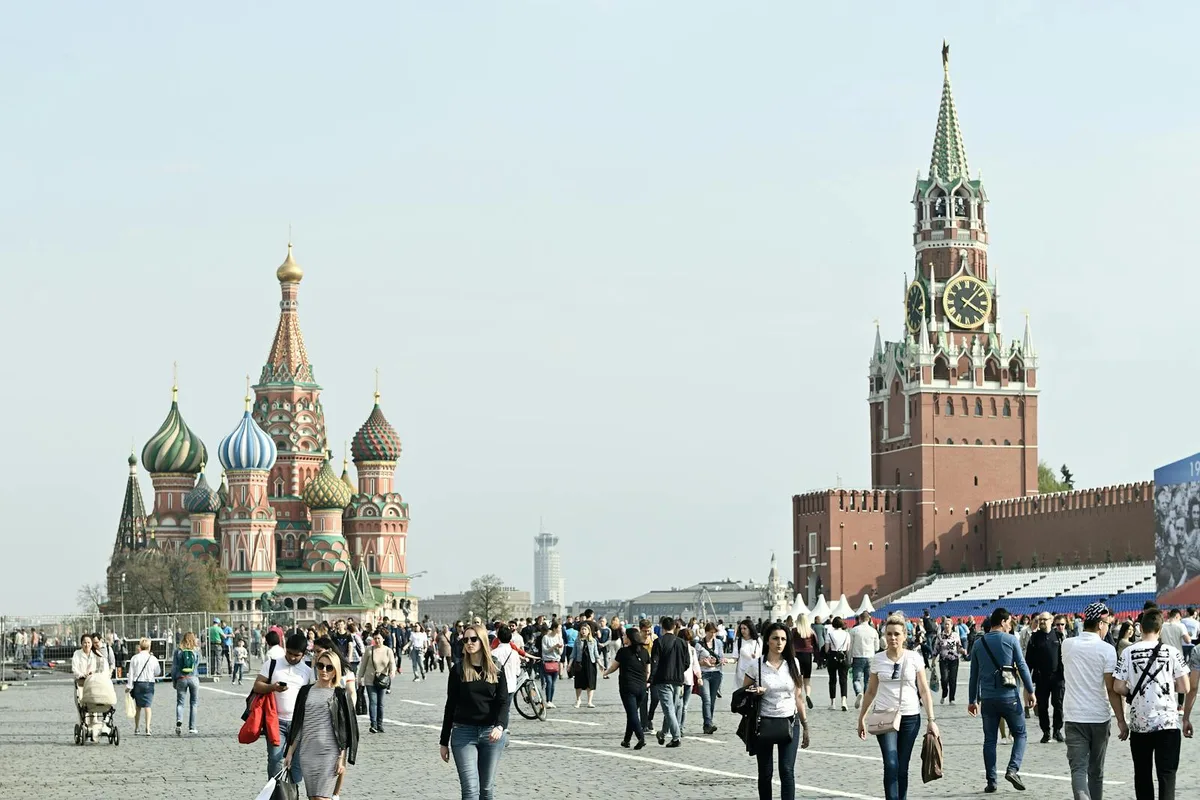
Adjacent to the Kremlin's eastern wall, Red Square is arguably the most recognisable public space in Russia. The name derives from the old Russian word "krasnaya," which meant both "red" and "beautiful." The square is flanked by the State Historical Museum to the north, the GUM department store to the east, and Saint Basil's Cathedral to the south. Lenin's Mausoleum sits against the Kremlin wall.
The square is free to enter and open at all hours, though it is occasionally closed for state events or concerts. GUM, far from the grey Soviet emporium its name might suggest, is now a lavish shopping arcade with a beautiful interior and worthwhile even for those with no intention of buying Italian handbags. The food hall on the ground floor sells excellent ice cream for around 100-200 RUB.
Saint Basil's Cathedral
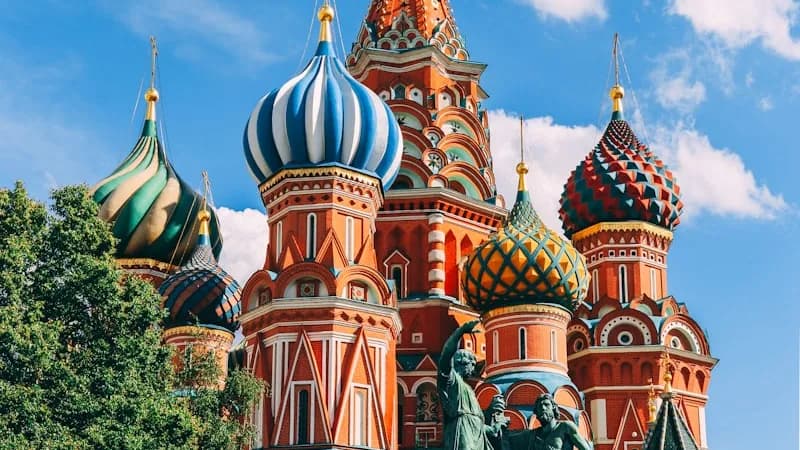
The cathedral's riot of coloured domes has served as the visual shorthand for Russia for centuries. Commissioned by Ivan the Terrible in 1555 to commemorate the conquest of Kazan, the building is in fact nine separate chapels arranged around a central tower. The interior is surprisingly intimate — narrow passageways connect small, heavily frescoed chambers — and well worth the entrance fee of 500 RUB. Open daily 10:00-18:00 (extended to 19:00 in summer). Arrive early or late in the day to avoid the densest crowds.
The Bolshoi Theatre
Russia's most celebrated theatre has staged opera and ballet since 1776. The current building, a neoclassical masterpiece on Teatralnaya Square, was extensively restored between 2005 and 2011, and its gilded auditorium is stunning. A performance here is among the finest cultural experiences Moscow offers.
Tickets for the historic main stage range from 2,000 RUB for upper-balcony seats to 15,000+ RUB for premium stalls on gala nights. The smaller New Stage, adjacent to the main building, offers productions at somewhat lower prices. Book through the Bolshoi's official website well in advance; popular performances sell out weeks or months ahead. Even if tickets are unavailable, the exterior and Teatralnaya Square are worth seeing.
Cathedral of Christ the Saviour
The largest Orthodox church in Russia, this white marble cathedral overlooking the Moskva River has a turbulent history. The original, completed in 1883 after forty years of construction, was dynamited on Stalin's orders in 1931. The current building is a faithful reconstruction completed in 2000. Its scale is imposing — the main dome rises 103 metres — and the interior, decorated with frescoes and gilt, is genuinely impressive. Admission is free. An observation deck circles the base of the dome and offers panoramic views of the city for 400 RUB.
The Tretyakov Gallery
Russia's foremost collection of Russian art is split across two sites. The original Tretyakov Gallery in Lavrushinsky Lane houses Russian art from the 11th to the early 20th century, including Andrei Rublev's medieval icons, the Wanderers' realist paintings, and Vrubel's haunting symbolist works. The New Tretyakov Gallery on Krymsky Val covers 20th-century art, from the Russian avant-garde (Malevich, Kandinsky, Rodchenko) through Socialist Realism to contemporary work.
The original gallery: Open Tuesday to Sunday, 10:00-18:00 (Thursday and Friday until 21:00). Admission 600 RUB. The collection is extraordinary and merits a minimum of two to three hours.
The New Tretyakov: Open Tuesday to Sunday, 10:00-18:00 (Thursday and Friday until 21:00). Admission 500 RUB. The avant-garde collection alone justifies the visit.
Gorky Park
Moscow's central park stretches along the south bank of the Moskva River for several kilometres. Once a somewhat run-down Soviet-era amusement park, it was comprehensively redesigned in 2011 and is now one of the finest urban parks in Europe. There are no entrance fees, no fairground rides, and no litter. Instead, there are landscaped gardens, outdoor yoga classes, beach volleyball courts, bicycle rental stations, and a series of excellent cafes and food stalls. In winter, a large section of the park is flooded to create one of the city's best ice-skating rinks (skate rental approximately 500 RUB per session). The Muzeon sculpture park, adjacent to Gorky Park's western edge and home to hundreds of discarded Soviet-era monuments, is a fascinating open-air museum.
Moscow City (Moscow International Business Centre)
This cluster of glass-and-steel skyscrapers on the western bank of the Moskva River is Moscow's answer to Canary Wharf or La Defense. The towers include some of the tallest buildings in Europe. The principal attraction for visitors is the observation deck at the Panorama 360 complex on the 89th floor of the Federation Tower, which offers 360-degree views of the city and includes unlimited ice cream and chocolate at the entrance price of 1,200 RUB. The area is also home to several shopping centres and restaurants. It is architecturally striking but feels detached from the historical city — visit for the views, not the atmosphere.
VDNKh (Exhibition of Achievements of National Economy)
This vast Soviet-era exhibition park in the north of the city is one of Moscow's most underrated attractions. Originally built in 1939 to showcase the achievements of Soviet agriculture and industry, VDNKh covers nearly 240 hectares and features dozens of ornate pavilions, fountains (including the spectacular Friendship of Peoples fountain with its gilded statues), and broad avenues. The park has been extensively restored and now hosts museums, exhibition spaces, and seasonal events. The Cosmonautics Museum, located near the park entrance beneath a soaring titanium rocket monument, is excellent and costs 500 RUB. Free to enter the grounds. Plan at least half a day.
Pre-book Kremlin Armoury and Bolshoi tickets online weeks ahead — the Armoury runs on timed slots with 90-minute walk-up queues in peak season, and Bolshoi premieres sell out months in advance.
Getting Around
Moscow's public transport network is extensive, efficient, and remarkably affordable. A detailed breakdown is available in our guide to Moscow transport, but here is the essential summary.
The Metro
The Moscow Metro is the backbone of the city's transport system and one of the finest underground railways in the world. Its 259 stations across 15 lines carry approximately nine million passengers daily. Many of the central stations, particularly those on the Ring Line and the early stretches of Lines 1, 2, and 3, are architectural showpieces decorated with mosaics, sculptures, chandeliers, and marble. Riding the metro is both practical and an attraction in its own right.
A single ride costs 50 RUB with a Troika card — a reloadable contactless card available at any metro station for a 50 RUB deposit. The Troika card also works on buses, trams, and the MCC. Trains run from approximately 05:30 to 01:00, with headways of 90 seconds to three minutes during peak hours. Signage in stations is bilingual (Russian and English), and the Yandex Metro app provides route planning with English support.
Yandex Go (Taxis)
Yandex Go is the dominant ride-hailing service and is the only taxi option worth considering. Fares are metered and transparent: a typical cross-centre ride costs 300-500 RUB, while a trip from the centre to the airports runs 1,500-2,500 RUB. The app works in English. Never accept rides from unlicensed taxi drivers who may approach you at airports or tourist sites.
Buses, Trams, and MCC
Surface transport fills gaps in the metro network. The Moscow Central Circle (MCC), an overground rail loop roughly following the path of the old industrial ring railway, is useful for reaching areas between metro lines. It operates on the same Troika card fare system. Buses are frequent and cover the entire city, though route maps can be confusing without Russian.
Where to Stay
Moscow's accommodation ranges from backpacker hostels to some of the most luxurious hotels in Europe. Location matters enormously in a city this large. The following areas offer the best balance of convenience, character, and access to sights. For an in-depth look at residential areas, consult our Moscow neighborhoods guide.
Tverskaya and the Centre
The stretch along Tverskaya Street from the Kremlin to Mayakovskaya metro station is the most convenient base for first-time visitors. It places you within walking distance of Red Square, the Bolshoi, and the Pushkin Museum, with excellent metro connections to everything else. Hotels here skew upmarket: the Ritz-Carlton Moscow and the National Hotel are landmarks in themselves. Mid-range options exist but are less numerous. Expect to pay 8,000-15,000 RUB per night for a decent three-star hotel; 20,000-50,000+ RUB for luxury.
The Arbat District
Old Arbat Street, one of Moscow's oldest pedestrianised streets, is surrounded by a quiet, historic neighbourhood with good mid-range accommodation. It is a fifteen-minute walk from the Kremlin and well connected by the Arbatskaya and Smolenskaya metro stations. Budget hotels and apartment rentals here cost 4,000-8,000 RUB per night, making it a strong choice for cost-conscious travellers who want a central location.
Kitay-Gorod
Immediately east of Red Square, Kitay-Gorod is a compact area of narrow streets, churches, and restaurants. It is walkable to all the major central sights and served by its own metro station. Boutique hotels and guesthouses are the predominant accommodation style, typically costing 6,000-12,000 RUB per night. The neighbourhood has genuine character and is excellent for evening dining.
Budget Options
Hostels in central Moscow charge 800-2,000 RUB per night for a dormitory bed. The Godzillas and HM Hostel chains are reliable. Apartment rentals through local platforms (Sutochno or CIAN) offer studio flats in the centre for 3,000-5,000 RUB per night and are a particularly good option for stays of a week or longer.
Budget Breakdown
Moscow is not an expensive city by Western European or North American standards, though it is significantly more expensive than Russia's provincial cities. The following daily budgets are per person.
Budget Traveller (4,000-7,000 RUB / 39-68 USD per day)
- Accommodation: Hostel dormitory or shared apartment (800-2,500 RUB)
- Food: Stolovaya (canteen-style) lunches at 300-500 RUB, supermarket dinners, street food (total 1,200-2,000 RUB)
- Transport: Metro and buses via Troika card (200-400 RUB for 4-8 rides at 50 RUB each)
- Sights: One major museum (500-1,000 RUB), free sights (Red Square, parks, churches)
Mid-Range Traveller (10,000-18,000 RUB / 97-175 USD per day)
- Accommodation: Three-star hotel or quality apartment (5,000-9,000 RUB)
- Food: Cafe lunches and restaurant dinners (3,000-5,000 RUB)
- Transport: Metro plus occasional taxis (500-1,000 RUB)
- Sights: Multiple museums, Bolshoi tickets (1,500-4,000 RUB)
High-End Traveller (25,000+ RUB / 242+ USD per day)
- Accommodation: Four or five-star hotel (12,000-30,000+ RUB)
- Food: Fine dining (6,000-12,000 RUB)
- Transport: Taxis and private transfers (1,500-3,000 RUB)
- Sights: Premier museum access, theatre, private tours (3,000-10,000 RUB)
Key Prices at a Glance
| Item | Cost (RUB) | Cost (USD) |
|---|---|---|
| Metro single ride (Troika) | 50 | 0.49 |
| Business lunch (cafe) | 400-700 | 3.90-6.80 |
| Dinner at a mid-range restaurant | 1,500-3,000 | 14.55-29.10 |
| Cappuccino | 200-350 | 1.94-3.40 |
| Domestic beer (0.5L, bar) | 300-500 | 2.91-4.85 |
| Kremlin grounds ticket | 700 | 6.80 |
| Tretyakov Gallery admission | 600 | 5.82 |
| Bottle of water (shop) | 40-80 | 0.39-0.78 |
For first-time visitors, the Tverskaya corridor or Kitay-Gorod give the best mix of walking access and metro connections — expect 8,000-15,000 RUB/night for a solid three-star hotel in either area.
Food and Restaurants
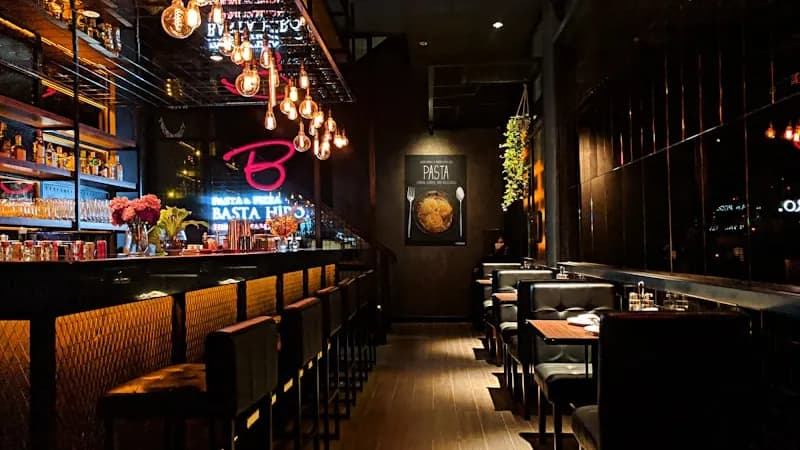
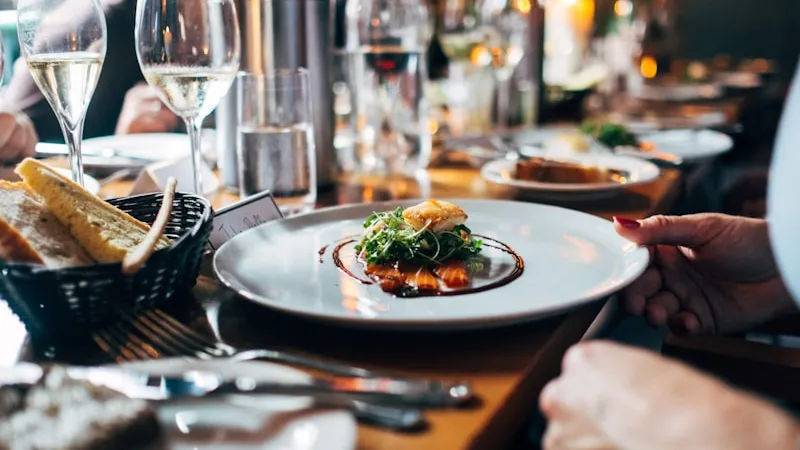
Moscow's dining scene has undergone a transformation in the past decade. The city now offers everything from street-level shawarma joints and Soviet-nostalgia canteens to Michelin-level fine dining. Our full guide to eating in Moscow covers the subject in detail, but here are the essentials.
Stolovayas (Canteens)
These self-service cafeterias are the budget traveller's best friend. Chains such as Stolovaya 57 (located inside GUM on Red Square, of all places) and Mu-Mu serve hearty Russian staples — soups, pelmeni, buckwheat, cutlets, and salads — at prices that rarely exceed 400-600 RUB for a full meal. The food is honest, filling, and far better than the setting might suggest.
Mid-Range Restaurants
For a sit-down meal with table service, Moscow offers excellent value. Georgian restaurants (look for khachapuri, khinkali, and grilled meats) are ubiquitous and reliably good; a full meal with wine costs 1,500-2,500 RUB per person. Russian cuisine restaurants such as Cafe Pushkin (upmarket, theatrical, and worth the splurge at 3,000-5,000 RUB per person) and Dr. Zhivago (overlooking Red Square) offer traditional dishes in refined settings. Central Asian plov, Uzbek lagman, and Armenian barbecue are other strong options for flavourful, affordable dining.
Fine Dining
Moscow's top restaurants compete credibly with those of any European capital. White Rabbit (frequently ranked among the world's best), Sakhalin (seafood), and Twins Garden (farm-to-table) represent the summit. Expect to pay 5,000-15,000 RUB per person before drinks. Reservations are essential.
Street Food and Markets
Danilovsky Market and Depo Food Mall are two of the best indoor food markets, offering dozens of stalls serving cuisines from across the former Soviet Union and beyond. Meals at these markets cost 400-800 RUB. They are particularly useful for groups with divergent tastes.
Safety
Moscow is a safe city for tourists by the standards of any major European capital. Violent crime against visitors is rare. The principal risks are the same as in London, Paris, or Rome: pickpocketing on crowded metro trains and at tourist sites, and taxi scams involving unlicensed drivers.
Practical precautions:
- Keep wallets and phones in front pockets or zipped bags on the metro and at Red Square.
- Use only Yandex Go for taxis. Never negotiate fares with drivers who approach you.
- Avoid engaging with overly friendly strangers near tourist landmarks who may be running confidence tricks.
- The areas around major train stations (Kazansky, Yaroslavsky, Leningradsky) can be less savoury late at night; exercise normal caution.
- Emergency services can be reached by dialling 112 from any phone.
- Carry a photocopy of your passport and visa at all times. Police can legally request to see identification documents, though this is infrequent for tourists in central areas.
Practical Information
Visa Requirements
Most foreign nationals require a visa to enter Russia. The standard tourist visa is valid for up to 30 days and requires an invitation letter from a Russian travel agency or hotel. The application process typically takes one to two weeks through the Russian consulate or an authorised visa centre. Some nationalities are now eligible for electronic visas (e-visas) with a simpler application process. Begin the visa process at least one month before your intended travel date.
SIM Cards and Connectivity
Purchase a Russian SIM card on arrival for affordable mobile data. The three major operators — MTS, Beeline, and MegaFon — all sell prepaid tourist SIM packages at airport kiosks and city-centre shops. A 30-day package with 15-30 GB of data costs 500-900 RUB (approximately 4.85-8.75 USD). You will need to present your passport for registration. Free Wi-Fi is available throughout the Moscow Metro (after a one-time registration via SMS) and in most cafes, restaurants, and hotels. 4G/LTE coverage is excellent throughout the city.
Payments and Currency
The Russian rouble (RUB) is the only legal tender. As of early 2026, the approximate exchange rate is 103 RUB to 1 USD. International bank cards (Visa and Mastercard) issued by non-Russian banks have limited functionality in Russia owing to international sanctions; do not rely on them. Bring cash in USD or EUR and exchange it at banks or licensed exchange offices (obmennik) in the city centre. Rates at airport exchange offices are typically unfavourable. Some travellers use the UnionPay network or local bank cards obtained through a Russian bank account. ATMs dispense roubles and are widely available.
Language Barrier
English is spoken at major international hotels, upmarket restaurants, and the principal museums, but it is not widely spoken by the general population. The metro has bilingual signage, and the Yandex Metro and Yandex Maps apps work in English. For everything else, the Yandex Translate app with its camera-translation feature (point your phone at a menu, sign, or document and receive an instant translation) is indispensable. Learning the Cyrillic alphabet before your trip — a task that requires only a few hours — will dramatically improve your ability to read signs, metro maps, and menus. Even a handful of Russian phrases (spasibo for thank you, pozhaluysta for please, skolko stoit for how much does it cost) will be appreciated.
Weather and What to Pack
Moscow's continental climate produces hot summers and bitterly cold winters. Summer (June-August) brings temperatures of 20-30C, long daylight hours, and occasional thunderstorms; pack light layers and a rain jacket. Winter (November-March) is a serious proposition: temperatures regularly drop to -15C to -25C in January and February, and snow cover lasts from late November to March. Insulated waterproof boots, a heavy winter coat, thermal layers, a hat, a scarf, and gloves are not optional. Spring (April-May) and autumn (September-October) are pleasant but unpredictable; pack layers for both warm and cool conditions.
Best Time to Visit
Summer (June-August)
Peak tourist season, and with good reason. Long days, warm weather, and outdoor events transform the city. Gorky Park, VDNKh, and the embankments come alive. The drawback is higher hotel prices and longer queues at major sights. Book Kremlin and Bolshoi tickets well in advance.
Autumn (September-October)
Moscow in September is arguably at its most beautiful. Temperatures are comfortable (10-18C), the parks are golden with autumn foliage, and the cultural season (theatre, ballet, concerts) begins in earnest. Crowds thin noticeably after mid-September. This is an excellent time to visit.
Winter (December-February)
Cold, dark, and magical. Moscow does winter exceptionally well: the city is blanketed in snow, Red Square hosts a Christmas market and ice-skating rink, and the illuminated streets are genuinely spectacular. Hotel prices drop (except around New Year, which Russians celebrate with extraordinary enthusiasm from December 31 to January 8). You must be prepared for the cold, but a winter visit is a memorable experience.
Spring (April-May)
The thaw begins in April and can be messy — melting snow and mud are prevalent. By May, the city is green, pleasant, and relatively uncrowded. Victory Day celebrations on May 9 are a significant national event. Spring is a solid shoulder season with moderate prices.
Frequently Asked Questions
How many days do I need in Moscow?
A minimum of three full days is necessary to see the major sights (Kremlin, Red Square, Tretyakov, one or two other museums) without rushing. Five days allows a more comfortable pace and time for VDNKh, Gorky Park, Moscow City, and a performance at the Bolshoi. A week permits excursions to nearby destinations such as Sergiev Posad on the Golden Ring.
Is Moscow safe for solo travellers?
Yes. Moscow is safe for solo travellers, including women travelling alone. The metro is well lit and staffed until closing, and the central areas are busy and well policed at all hours. The standard precautions that apply in any large city are sufficient.
Do I need to speak Russian?
Not strictly, but some preparation helps enormously. Learn the Cyrillic alphabet (it takes two to three hours), memorise a dozen basic phrases, and install Yandex Translate on your phone. This combination will get you through virtually any situation.
Can I use my credit card?
International Visa and Mastercard cards issued outside Russia have limited acceptance owing to sanctions. Bring cash (USD or EUR) and exchange it locally. UnionPay cards have broader acceptance. Contactless payment via Russian bank apps (Mir cards) is ubiquitous for those with local accounts.
How do I get from the airport to the city centre?
From Sheremetyevo (SVO), the Aeroexpress train runs to Belorusskaya station in 35-50 minutes for 600 RUB. From Domodedovo (DME), the Aeroexpress reaches Paveletskaya station in 45 minutes for 600 RUB. From Vnukovo (VKO), the Aeroexpress terminates at Kievskaya station in 35 minutes for 600 RUB. All three stations connect to the metro network. Alternatively, a Yandex Go taxi from any airport to the centre costs 1,500-2,500 RUB and takes 40-90 minutes depending on traffic.
What is the best neighbourhood to stay in?
For first-time visitors, the Tverskaya corridor or Kitay-Gorod offer the best combination of access and atmosphere. The Arbat district is a strong budget-friendly alternative. All three are well served by the metro.
Is the tap water safe to drink?
Moscow's tap water is technically treated to potable standards, but most residents and visitors drink bottled or filtered water. Bottled water is cheap (40-80 RUB for 0.5L) and available everywhere. Avoid drinking tap water directly unless filtered.