Moscow's dining scene has undergone a transformation that would have been unthinkable two decades ago. A city once defined by Soviet-era canteens and imported hotel restaurants now supports a culinary ecosystem that runs from 200 RUB lunch specials in basement stolovayas to tasting menus at 15,000 RUB per head in converted industrial spaces. The range is vast, the quality uneven, and the value, for those who know where to look, genuinely remarkable.
This guide maps the landscape for visitors and new residents alike, covering restaurant types, key neighborhoods, realistic budgets, and the apps that make eating in Moscow considerably easier. For a deeper dive into the traditions behind the food, see our guide to Russian cuisine and must-try dishes.
Understanding the Restaurant Landscape
Stolovayas: The Cafeteria Tradition
The stolovaya (canteen) is a Soviet inheritance that endures because it works. These self-service cafeterias offer trays of prepared food at prices that hover near cost. A typical lunch of soup, a meat dish with a side, bread, and a drink costs 350-500 RUB (3.40-4.85 USD). Chains like Mu-Mu, Grabli, and Stolovaya 57 (inside GUM on Red Square) maintain consistent quality. The food is unpretentious: borscht, pelmeni, cutlets, buckwheat porridge, compote. For travellers on a budget, stolovayas are indispensable.
Casual Dining and Chain Restaurants
Mid-range restaurants in Moscow typically charge 800-2,000 RUB per person for a full meal with a drink. Russian chains like Teremok (blini and Russian fast food), Khachapuri (Georgian cuisine), and Varenichnaya No.1 (Ukrainian dumplings) offer reliable food in comfortable settings. International chains are present but less dominant than in Western European capitals; local brands tend to offer better value.
Fine Dining
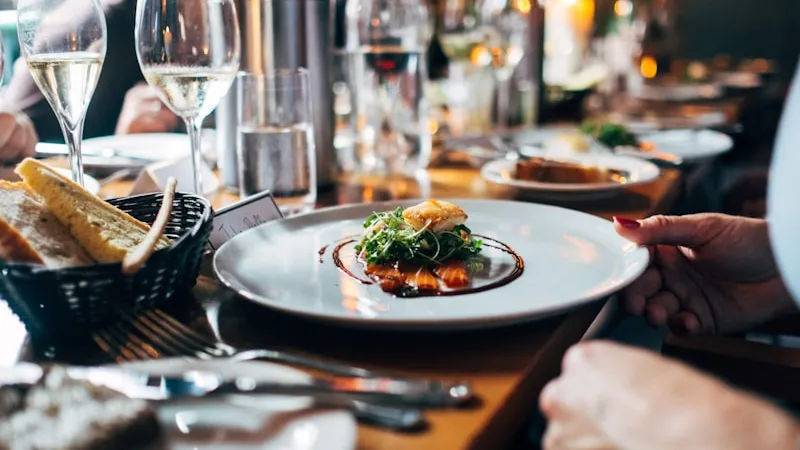
Moscow's high-end restaurant scene has matured considerably. Restaurants like White Rabbit (consistently ranked among the world's best), Selfie, Sakhalin, and Twins Garden operate at international fine-dining standards. Expect to pay 5,000-15,000 RUB per person without wine. Reservations are essential, particularly on Friday and Saturday evenings. Dress codes are enforced: jackets for men at the most formal establishments, smart casual as a minimum elsewhere.
Georgian Restaurants
Georgian cuisine deserves its own category because it occupies a unique position in Moscow's food culture. Russians consider Georgian food a national favourite, and Georgian restaurants are ubiquitous. Khachapuri (cheese-filled bread), khinkali (large dumplings), lobio (bean stew), and satsivi (walnut sauce over chicken) are staples. Reliable chains include Khachapuri, Genatsvale, and Suliko. A generous Georgian meal for two with wine costs 2,500-4,000 RUB (24-39 USD).
Uzbek and Central Asian Cuisine
Plov (pilaf), lagman (noodle soup), samsa (meat pastries), and manti (steamed dumplings) are available at dedicated Central Asian restaurants throughout the city. Chaihona No.1 is the largest chain, offering a broad menu in ornately decorated interiors. Budget 1,000-1,800 RUB per person.
The biznes lanch between 12:00 and 16:00 on weekdays delivers a three-course meal for 400-800 RUB at almost every mid-range restaurant — the single best value slot in Moscow dining.
Gastro Neighborhoods
Patriarshiye Prudy (Patriarch's Ponds)
This leafy neighborhood in central Moscow has become the city's most concentrated dining district. Within a ten-minute walk of the famous pond, you will find dozens of restaurants spanning every cuisine. Notable addresses include Pinch (modern European), Saxon + Parole (steakhouse), and I Like Wine (natural wines and sharing plates). The area skews upmarket: expect 2,000-4,000 RUB per person at most venues. For details on each district's character and housing, see our Moscow neighborhoods guide. Evening reservations are advisable, especially on weekends.
Kitay-Gorod and Maroseyka Street
The streets east of Red Square, particularly Maroseyka and Pokrovka, harbour a mix of bars, cafes, and restaurants catering to a younger crowd. Prices are more moderate than Patriarch's Ponds, with many places offering business lunches for 400-600 RUB. Look for craft beer bars, ramen shops, and Georgian restaurants alongside more traditional Russian establishments.
Krasny Oktyabr (Red October)
The former chocolate factory on an island in the Moscow River has been converted into a cultural and dining complex. Strelka Bar, with its terrace overlooking the Cathedral of Christ the Saviour, is a perennial favourite in summer. Several galleries and restaurants share the space. Budget 1,500-3,000 RUB per person for dinner.
Depo Food Mall (Belorusskaya)
Depo is a massive food hall in a converted bus depot near Belorusskaya station. Over 70 food stalls offer everything from Vietnamese pho to Argentine empanadas to Dagestan chudu. It is an excellent place for groups with differing tastes. Most dishes cost 400-800 RUB. The space also houses a farmers' market on weekends.
Danilovsky Market
Originally a traditional food market, Danilovsky has been partially converted into a gastro market with food stalls alongside the original produce vendors. The quality is excellent, the atmosphere less polished than Depo, and prices are comparable. The Vietnamese pho stall is widely considered the best in the city.
A Realistic Budget
Budget Traveller (1,500-2,500 RUB per day / 14.50-24 USD)
Breakfast at your accommodation or a bakery (200-350 RUB). Lunch at a stolovaya (400-500 RUB). Afternoon coffee and pastry (300-400 RUB). Dinner at a casual restaurant or food market (600-1,000 RUB). This budget allows three solid meals daily without deprivation.
Mid-Range (3,000-5,000 RUB per day / 29-48 USD)
Breakfast at a cafe (400-600 RUB). Lunch at a casual restaurant with a business lunch deal (500-800 RUB). Afternoon coffee at a specialty roaster (250-400 RUB). Dinner at a mid-range restaurant with a glass of wine (1,500-2,500 RUB). This budget allows considerable comfort and variety.
High-End (8,000-15,000+ RUB per day / 77-145+ USD)
Breakfast at a hotel or upscale cafe (800-1,500 RUB). Lunch at a quality restaurant (1,500-3,000 RUB). Dinner at a fine-dining establishment with wine (5,000-10,000+ RUB). Moscow's top restaurants are expensive by any standard, though generally cheaper than equivalent establishments in London or Paris.
Essential Dishes to Try
No visit to Moscow is complete without sampling the following:
- Borscht: Beetroot soup, served hot with sour cream and fresh dill. Every restaurant has its own version. 300-600 RUB at most places.
- Pelmeni: Small dumplings filled with meat (usually pork and beef), boiled and served with sour cream or butter. A standard portion costs 350-700 RUB.
- Beef Stroganoff: Strips of beef in a creamy mushroom sauce, typically served with mashed potatoes or rice. Despite its international fame, the dish is genuinely Russian and widely available. 500-1,200 RUB.
- Blini with caviar: Thin pancakes topped with red (salmon) or black (sturgeon) caviar and sour cream. Red caviar blini cost 400-800 RUB; black caviar versions start at 2,000 RUB and climb steeply.
- Olivier salad: The Russian potato salad, made with boiled potatoes, carrots, peas, pickles, eggs, and mayonnaise, usually with chicken or ham. Ubiquitous and beloved. 250-500 RUB.
- Shashlik: Grilled meat skewers, usually pork or lamb, marinated and cooked over charcoal. Best eaten at Georgian or Caucasian restaurants. 500-1,200 RUB per portion.
Coffee Culture
Moscow has embraced specialty coffee with notable enthusiasm. Independent roasters and third-wave cafes are scattered across the centre. Skuratov Coffee, a chain originating from Omsk, offers consistently excellent single-origin pour-overs and espresso drinks at 250-450 RUB. Other strong options include Cooperative Black, Camera Obscura, and Double B. A flat white or cappuccino at a specialty cafe typically costs 280-400 RUB (2.70-3.90 USD), significantly cheaper than London or Paris equivalents.
Delivery Apps
Moscow's food delivery infrastructure is remarkably efficient. Three apps dominate:
Yandex Eats (Yandex Eda)
The market leader, integrated into the Yandex ecosystem. Delivery times in central Moscow average 25-40 minutes. The app is available in English. Delivery fees typically run 0-199 RUB depending on distance and order size. A Yandex Plus subscription (299 RUB per month) waives delivery fees on orders over 800 RUB.
Delivery Club
The second-largest platform, now merged with Yandex Eats operationally but maintaining a separate app. Similar restaurant selection and pricing. Useful as a backup when Yandex Eats shows long wait times.
Samokat
Primarily a grocery delivery service (delivery within 15-30 minutes from dark stores), Samokat also offers prepared meals and snacks. Excellent for breakfast items, drinks, and quick bites delivered to your door in under twenty minutes.
Practical Considerations
Tipping
Tipping is expected at sit-down restaurants. Ten to fifteen percent is standard. Some restaurants add a service charge automatically; check the bill. At stolovayas and fast-food venues, tipping is not expected. Cash tips are preferred, though many restaurants allow adding a tip to a card payment.
Payment
Card payment is nearly universal in Moscow. Visa and Mastercard are accepted at most establishments, though international cards issued outside Russia may occasionally be declined due to sanctions-related processing restrictions. Carrying some cash (1,000-2,000 RUB) as a backup is prudent. UnionPay and Mir cards work without difficulty.
Reservations
For popular restaurants on Friday and Saturday evenings, book at least two to three days ahead. Many restaurants accept reservations through their websites, via social media direct messages, or through the Yandex Maps app (which shows availability and allows booking). Calling remains the most reliable method; restaurants rarely ignore a phone reservation.
Business Lunches
Between 12:00 and 16:00 on weekdays, a large proportion of Moscow's restaurants offer a "biznes lanch" (business lunch): a set menu of soup, main course, and sometimes a drink for a fixed price, typically 400-800 RUB. The quality is usually good, and the value is excellent. This is how most Muscovites eat during the working day.
Vegetarian and Vegan Options
Moscow's vegetarian scene has expanded significantly. Dedicated vegetarian restaurants include Avocado (with multiple locations) and Fresh. Most mainstream restaurants offer at least one or two vegetarian options. Georgian restaurants are particularly accommodating, with dishes like lobio, adjarian khachapuri, and various vegetable preparations. Fully vegan options remain less common outside dedicated establishments, but the situation improves each year.
Alcohol
Beer, wine, and spirits are available at virtually all sit-down restaurants. Russian beer (Baltika, Zhigulyovskoye) costs 200-400 RUB per half-litre. Imported craft beers run 400-700 RUB. Wine by the glass starts at 350 RUB at casual restaurants and 600-1,200 RUB at fine-dining establishments. Russian wines from Krasnodar and Crimea have improved dramatically in recent years and offer good value. Vodka, naturally, is widely available, typically 200-500 RUB for a 50ml shot of premium brands.
Alcohol sales in shops are prohibited between 23:00 and 08:00, though restaurants and bars are unaffected by this restriction.
Where to Start
For a first-time visitor with limited days, the following itinerary offers a solid introduction to Moscow's food scene:
- Day 1 lunch: Stolovaya 57 in GUM (budget, iconic setting). Dinner: A Georgian restaurant near Patriarch's Ponds.
- Day 2 lunch: Depo food hall near Belorusskaya. Dinner: A mid-range Russian restaurant for pelmeni and borscht.
- Day 3 lunch: Business lunch at any restaurant in the Kitay-Gorod area. Dinner: Splurge at a fine-dining establishment (book ahead).
Moscow's restaurants reward exploration. The best meals are often found not in the most obvious locations but in the side streets and courtyards where local knowledge trumps tourist guidebooks. Ask your hotel concierge, your taxi driver, or the barista at your morning coffee spot. Muscovites love recommending restaurants, and their suggestions are almost always worth following.