Moscow is a city of formidable distances. The MKAD ring road encircles an area of over 870 square kilometres, and the urban area extends well beyond it. Getting from one side of the city to another can take anywhere from thirty minutes to two hours depending on your mode of transport, the time of day, and the particular cruelty of Moscow's traffic. The good news is that the city has invested heavily in its transport infrastructure, and the options available in 2026 are more varied, more integrated, and more user-friendly than at any point in the city's history.
This guide covers every practical mode of transport, from the metro to electric scooters, with realistic costs, timings, and the advice needed to move through Moscow efficiently.
The Troika Card: Your Universal Pass
Before discussing individual transport modes, every visitor and resident should understand the Troika card. This rechargeable contactless card works on the metro, buses, trams, the Moscow Central Circle (MCC), and the Moscow Central Diameters (MCD). It costs 80 RUB as a refundable deposit and reduces the cost of every journey.
| Transport | Single ticket price | Troika price |
|---|---|---|
| Metro | 57 RUB | 50 RUB |
| Bus/Tram | 57 RUB | 50 RUB |
| MCC | 57 RUB | Free transfer within 90 min of metro |
| MCD (Zone 1) | 57 RUB | 50 RUB |
| MCD (Zone 2) | 57 RUB | 65 RUB |
Top up at any metro station ticket machine (English interface available), at ticket windows, through the Moscow Metro app, or via online banking. Credit remains valid for five years.
For stays of several days, consider unlimited passes loaded onto the Troika: 285 RUB for one day, 540 RUB for three days, 2,540 RUB for 30 days. These cover metro, buses, trams, and the MCC.
The Metro
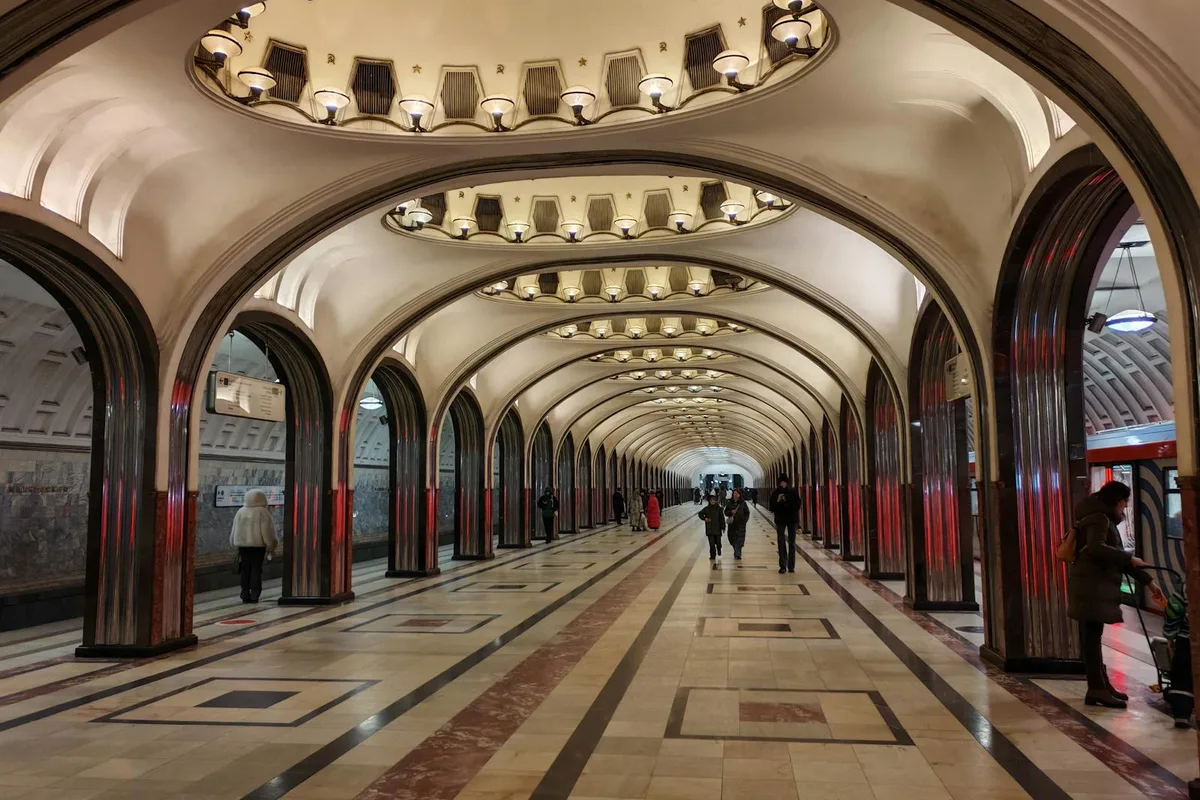
Moscow's metro is the backbone of the city's transport system and, for most journeys within the central area, the fastest option available.
Key Facts
- 14 lines, more than 250 stations, over 400 km of track
- Operating hours: 05:30 to 01:00 daily
- Frequency: Every 90 seconds during peak hours, every 2-5 minutes off-peak
- Average journey time: 40 minutes for a typical cross-city trip including one transfer
Navigating the System
For an in-depth look at the system's history and architectural highlights, see our dedicated Moscow Metro guide. Download the Yandex Metro app (iOS and Android) before your first journey. It calculates routes, shows transfer points, estimates travel times, and indicates which carriage to board for optimal exit positioning. The app works offline.
Stations are announced in Russian and English on most trains. Platform signs show the line name, direction (terminal station), and transfer options. Colour-coded lines and numbered stations make the system learnable within a few days.
Key Lines for Visitors
- Line 1 (Red): Connects the southwest (Universitet, Vorobyovy Gory with its river views) to the northeast, passing through the centre (Biblioteka imeni Lenina for the Kremlin, Okhotny Ryad for Red Square).
- Line 2 (Green): Runs north-south through Teatralnaya (Bolshoi Theatre area) and Mayakovskaya.
- Line 5 (Brown, Circle Line): The ring connecting all radial lines. Essential for transfers.
- Line 11 (Big Circle Line): The outer ring, reducing congestion on Line 5 and connecting newer areas.
- Line 14 (MCC): An overground ring, useful for reaching Moscow City, Luzhniki Stadium, and other peripheral destinations.
Tips
- Rush hour (07:30-09:30 and 17:30-19:30) on central stations is intense. Avoid if possible.
- Stand right, walk left on escalators. This rule is enforced by social pressure.
- Free Wi-Fi (MT_FREE) is available throughout the system but requires Russian phone number verification on first connection.
Buses, Trams and Trolleybuses
Surface transport fills gaps in the metro network and serves areas where stations are far apart.
Buses
Moscow's bus network is extensive, covering virtually every major road. Modern buses (many electric or hybrid) operate from approximately 05:30 to 01:00. Payment is via Troika card (tap on entry) or contactless bank card. Route information is displayed at stops and on the Moscow Transport app.
Buses are most useful for:
- Short trips within a neighborhood
- Routes along major avenues not directly served by metro (parts of Kutuzovsky Prospekt, Leninsky Prospekt)
- Night buses (labelled "N" routes), which operate from 01:00 to 05:30 along key corridors when the metro is closed
Trams
Moscow has retained and modernised its tram network. Trams operate primarily in the northeastern and southeastern parts of the city. They are slower than the metro but offer scenic routes and serve specific neighborhoods well. The same Troika card and pricing apply.
The Moscow Transport App
The official Moscow Transport app (Moskva Transport) provides real-time tracking of buses, trams, and trolleybuses, including estimated arrival times at your stop. Available in English.
A 30-day unlimited Troika pass costs 2,540 RUB (about 24.50 USD) and covers metro, buses, trams and MCC — unbeatable value for any stay longer than a long weekend.
Taxis: Yandex Go and Alternatives
Ride-hailing apps have transformed Moscow's taxi landscape. The days of haggling with private drivers are largely over (though gypsy cabs still operate near railway stations and airports).
Yandex Go
The dominant ride-hailing app, equivalent to Uber (which merged with Yandex Taxi in Russia). Yandex Go is reliable, affordable, and available in English.
Typical fares (2026 estimates):
- Short trip within the centre (3-5 km): 250-450 RUB (2.40-4.35 USD)
- Cross-city trip (15-20 km): 600-1,200 RUB
- Centre to airport: 1,000-2,500 RUB depending on which airport and traffic
Service classes:
- Economy: The cheapest option. Cars are basic but clean. Wait times: 3-8 minutes.
- Comfort: Newer, larger cars. 20-30% more expensive than Economy.
- Comfort+: Higher-end vehicles, experienced drivers. 50-80% more than Economy.
- Business: Premium vehicles (Mercedes, BMW). 100-150% more than Economy.
- Minimum: A budget option for very short trips, often in compact cars.
Surge pricing: During rush hours, bad weather, and late-night periods, prices increase by 1.5x to 3x. The app shows the estimated fare before you confirm. If the surge is too high, wait ten to fifteen minutes and check again.
Payment
Yandex Go accepts Russian bank cards linked in the app. International Visa and Mastercard may work but are unreliable due to sanctions-related processing issues. Cash payment is available as a fallback. For visitors with international cards, linking a Russian bank card (available from some banks with minimal documentation) or using cash is the most reliable approach.
Alternatives
- Citymobil: The second-largest ride-hailing service. Similar pricing to Yandex Go, sometimes cheaper during Yandex surge periods. Available in Russian only.
- Uber Russia: Still technically operational but redirects to Yandex Go for most rides.
Electric Scooters and Bikes
Moscow has embraced micromobility with enthusiasm. Several scooter and bike-sharing services operate from April to October.
Electric Scooters
Companies like Whoosh, Urent, and Yandex operate thousands of electric scooters across the city. To use them:
- Download the app (Whoosh is the most widely available)
- Register with a Russian phone number
- Scan the scooter's QR code to unlock
- Ride, then park in designated areas
Pricing: Unlock fee of 30-50 RUB plus 5-8 RUB per minute. A typical 20-minute ride costs 130-210 RUB.
Regulations: Speed is limited to 25 km/h on roads and 20 km/h in pedestrian areas. Riding on pavements is technically restricted but widely practiced. Helmets are recommended but not required. Two riders on one scooter is prohibited.
Bike Sharing
Velobike is Moscow's public bike-sharing system, with stations across the central area. Rides under 30 minutes are free with a daily pass (150 RUB) or seasonal subscription (600 RUB for 30 days). Bicycles are heavy, single-speed, and designed for casual riding rather than speed.
Moscow has expanded its network of dedicated bike lanes, though they remain fragmented. Cycling is pleasant along the embankments and through parks but inadvisable on major roads where aggressive driving makes conditions hazardous.
Yandex Go accepts Russian bank cards and cash as a fallback — but foreign Visa/Mastercard in the app is unreliable, and linking a Russian card (or booking via hotel) is the only truly smooth path for visitors.
Airport Connections
Moscow is served by three major airports, each connected to the city centre by Aeroexpress trains and road transport.
Sheremetyevo (SVO) — North
Aeroexpress: From Belorusskaya station. Journey time 35-50 minutes. Fare: 500 RUB (one way), 950 RUB (return). Trains run every 30 minutes from approximately 05:30 to 00:30.
Taxi: 1,200-2,500 RUB to the centre via Yandex Go, 45-90 minutes depending on traffic.
Metro + Bus: The metro now extends closer to Sheremetyevo via Line 11 stations, with connecting bus services. This is the cheapest option (under 100 RUB total) but takes 60-90 minutes.
Domodedovo (DME) — South
Aeroexpress: From Paveletskaya station. Journey time 45-50 minutes. Same pricing as Sheremetyevo.
Taxi: 1,500-3,000 RUB to the centre, 60-100 minutes.
Vnukovo (VKO) — Southwest
Aeroexpress: From Kiyevskaya station. Journey time 35-40 minutes. Same pricing.
Taxi: 1,000-2,000 RUB to the centre, 40-80 minutes.
Advice
The Aeroexpress is the most reliable option in terms of timing: Moscow traffic is unpredictable, and a taxi journey that takes 45 minutes at 06:00 can take two hours at 17:00. For early-morning or late-night flights, when traffic is light, taxis may be more convenient.
Book Aeroexpress tickets online or through the app for a small discount. The trains have ample luggage space and free Wi-Fi.
Driving
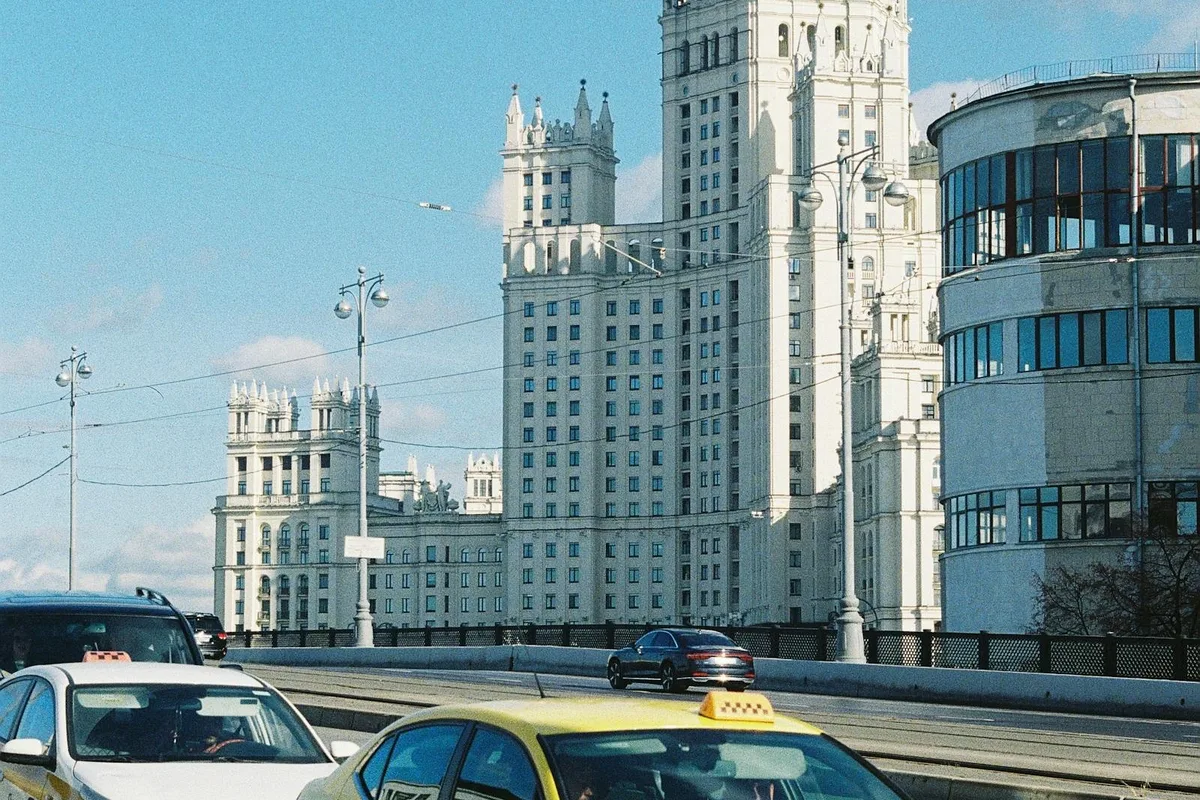
Driving in Moscow is possible but inadvisable for most expatriates, particularly newcomers. Traffic congestion is severe: average speeds on Moscow's roads during rush hours can drop below 15 km/h. Parking in the centre costs 200-400 RUB per hour in paid zones (enforced by camera). Russian driving culture is aggressive, with lane discipline, turn signals, and speed limits treated as suggestions rather than rules.
If you must drive, a foreign licence is valid for the first six months after arrival. After that, a Russian licence is required (obtainable by converting your foreign licence, which involves a medical exam and a theory test in Russian). Car rental starts at 2,500-4,000 RUB per day for a basic sedan.
For most residents, the combination of metro, Yandex Go, and occasional car sharing (Yandex Drive, BelkaCar) covers every transport need more efficiently and less stressfully than car ownership.
The Integrated Approach
The best approach to Moscow transport is intermodal: use the metro for long cross-city journeys, buses for neighborhood-level travel, Yandex Go for door-to-door convenience, and scooters or bikes for short warm-weather trips. A typical day might involve a metro ride to work, a scooter to lunch, a taxi home after a late dinner, and a bus to the supermarket on the weekend.
Keep your Troika card topped up, keep the Yandex Go app loaded on your phone, and accept that Moscow's distances, while formidable, are manageable with the right tools. The city's transport system is, by any global standard, impressive in its scale and increasingly impressive in its execution.