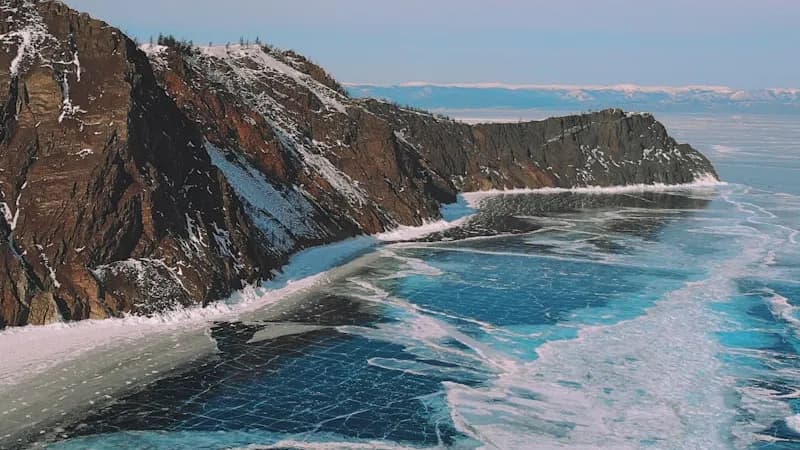
Lake Baikal is the oldest, deepest, and most voluminous freshwater lake on Earth. Situated in southeastern Siberia, it holds approximately 20% of the world's unfrozen surface freshwater, reaches a maximum depth of 1,642 metres, and stretches 636 kilometres from north to south. It is between 25 and 30 million years old. These are not merely impressive statistics; they describe a body of water so vast and so clear that standing on its shore, watching the surface shift from cobalt to jade to silver, feels less like visiting a lake than encountering something geological and ancient.
Getting to Baikal requires effort. Make sure your visa covers the full length of your trip, as the journey alone can take several days. The lake sits more than 5,000 kilometres east of Moscow, in a region where winter temperatures reach -30C and the nearest major city, Irkutsk, has a population of 600,000. But the journey is part of the experience, and the lake rewards those who make it with scenery and silence that cannot be found in European Russia.
Getting There
By Air to Irkutsk
Irkutsk International Airport (IKT) is the gateway to Lake Baikal. Direct flights from Moscow take approximately 5.5 hours. Aeroflot, S7 Airlines, and Ural Airlines operate daily services, with round-trip fares typically ranging from 15,000 to 35,000 RUB (145-340 USD) when booked two to four weeks ahead.
From Irkutsk, the nearest point of Lake Baikal (the village of Listvyanka) is 70 kilometres southeast, about 1-1.5 hours by car or bus.
By Train (Trans-Siberian)
The Trans-Siberian Railway from Moscow to Irkutsk takes approximately 3.5 days (roughly 80 hours). If you are starting your journey in the capital, our Moscow transport guide explains how to reach the main railway stations. Third-class (platskart) costs 5,000-8,000 RUB; second-class (kupe, four-berth compartment) costs 10,000-18,000 RUB; first-class (SV, two-berth compartment) costs 20,000-35,000 RUB. The journey is an experience in itself, crossing the Ural Mountains, the Western Siberian plain, and the taiga forests.
For those with limited time, a one-way flight combined with a return by train (or vice versa) offers the best of both worlds.
Getting from Irkutsk to the Lake
- To Listvyanka: Minibuses (marshrutkas) depart from Irkutsk's central bus station every 30-60 minutes. The journey takes 1-1.5 hours and costs 200-250 RUB. Taxis cost 1,500-2,500 RUB.
- To Olkhon Island: Minibuses depart daily from Irkutsk (book through your accommodation or at the bus station). The journey takes 5-6 hours including a short ferry crossing. Cost: 1,000-1,500 RUB. The ferry is free and operates from May to December. In winter, vehicles drive directly across the frozen lake.
Combine a one-way flight from Moscow to Irkutsk (5.5 hours, 15,000-35,000 RUB) with a return by Trans-Siberian to experience both the speed and the 80-hour crossing — the best of both worlds for time-limited travellers.
When to Visit
Summer (June-August)
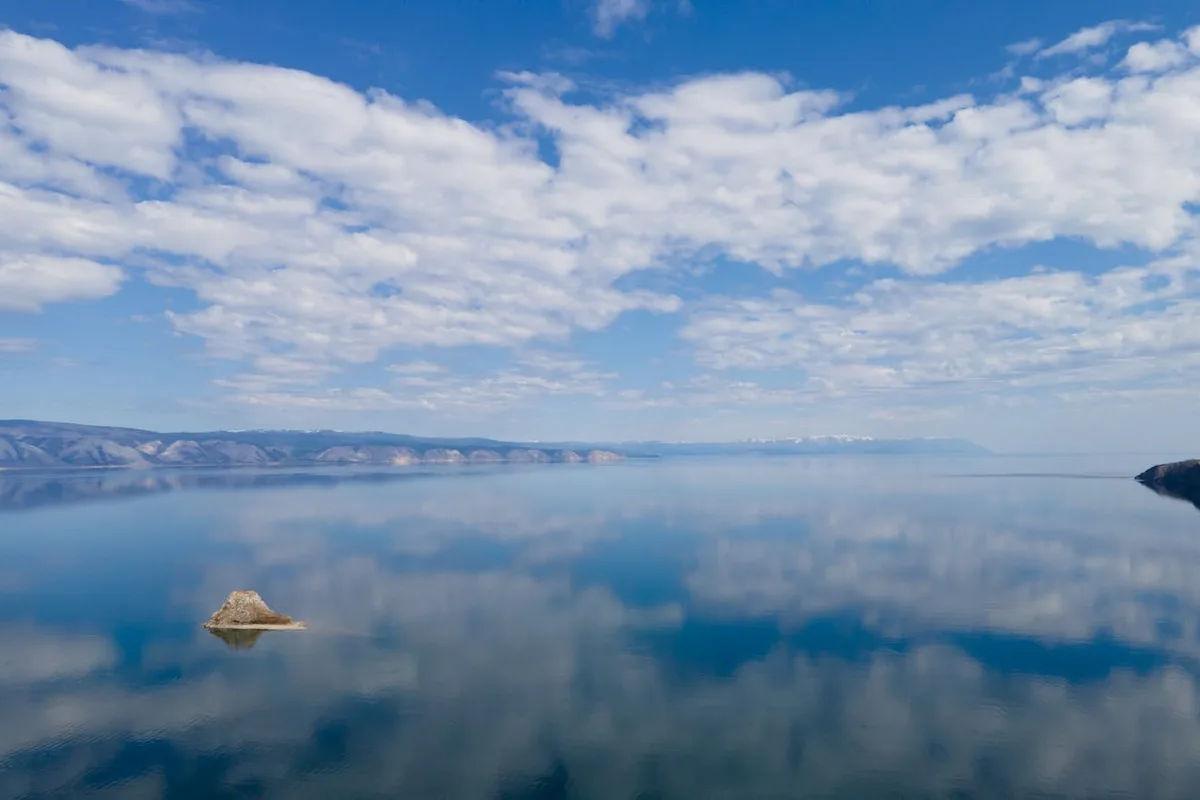
The warmest season, with temperatures reaching 20-28C in Irkutsk and 15-22C on the lakeshore. The water remains cold (10-14C near shore, colder further out), but swimming is possible in sheltered bays in July and August. This is peak season: Listvyanka and Olkhon are busy with Russian tourists, and accommodation should be booked well in advance. The landscape is green and lush, with wildflowers covering the steppe on Olkhon Island.
Winter (December-March)
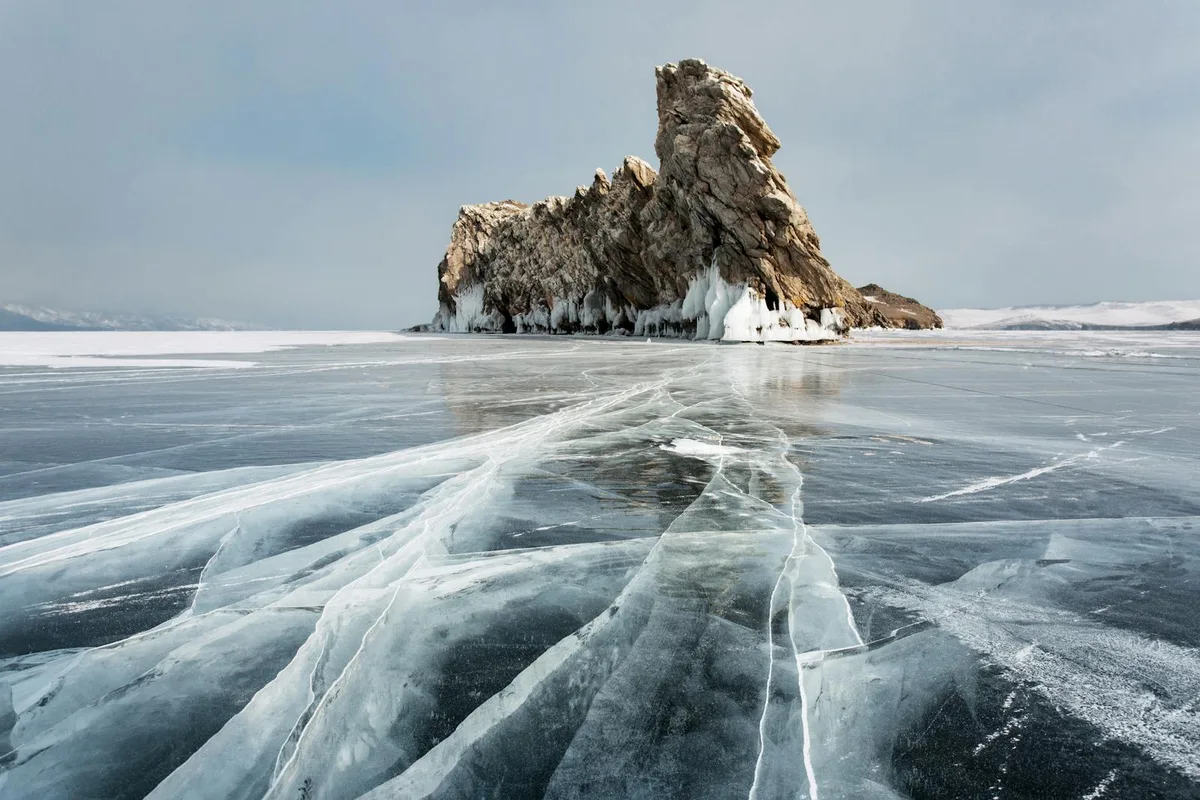
Baikal freezes completely by late January, creating a surface of crystalline ice that is both visually stunning and structurally sound enough to drive vehicles across. Ice thickness reaches 1-2 metres. The lake's ice is famous for its transparency: in many places, you can see straight through to the depths below.
Winter activities include ice walking, hovercraft excursions, ice fishing, and visiting ice caves and grottoes along the shoreline. Temperatures range from -15C to -30C, and proper cold-weather gear is non-negotiable. The sky is often brilliantly clear, making this season arguably the most photogenic.
February and early March are considered the best winter period: the ice is fully formed, days are lengthening, and temperatures are slightly less severe than in January.
Shoulder Seasons
September-October: Autumn brings golden larch forests, empty trails, and cool but manageable temperatures (5-15C in September, dropping below zero in October). Accommodation prices fall. This is an excellent time for hiking.
April-May: The ice begins to break up in April, creating dramatic but dangerous conditions. Late May sees the lake open but the landscape still brown and muddy. Generally not the ideal time to visit unless you specifically want to witness the ice breakup.
Listvyanka vs. Olkhon Island
These are the two primary bases for visiting Baikal, and they offer fundamentally different experiences.
Listvyanka
Character: A small tourist village directly on the lakeshore, 70 km from Irkutsk. Listvyanka is the most accessible point on Baikal and can be visited as a day trip from Irkutsk, though staying overnight is recommended.
What to do:
- The Baikal Museum: interactive exhibits on the lake's ecology, including live nerpa (Baikal seals) in aquariums. Admission 400 RUB.
- Chersky Stone viewpoint: a short hike or chairlift ride to panoramic views over the lake and the Angara River outlet.
- The fish market: smoked omul (a fish endemic to Baikal) is the local speciality. A whole smoked omul costs 200-400 RUB.
- Boat excursions along the shoreline (1,500-3,000 RUB for 1-2 hours).
Accommodation: Hotels and guesthouses range from 2,000 to 8,000 RUB per night. The Mayak Hotel (waterfront, comfortable, 4,000-7,000 RUB) and Legend of Baikal (modern, 5,000-10,000 RUB) are reliable options.
Pros: Easy to reach, basic tourist infrastructure, suitable for short visits. Cons: Touristy, small, limited activities beyond one to two days.
Olkhon Island
Character: The largest island on Lake Baikal (72 km long, 15 km wide), Olkhon combines Siberian steppe, taiga forest, sandy beaches, and dramatic cliffs. The island is sacred in Buryat shamanic tradition, and its landscapes have a wild, otherworldly quality that Listvyanka cannot match.
What to do:
- Shamanka Rock (Cape Burkhan): The island's most sacred site and most photographed landmark. A pair of rocky outcrops connected to the shore, traditionally associated with shamanic ceremonies.
- Cape Khoboy: The island's northern tip, accessible by UAZ (Russian off-road vehicle) excursion across unpaved roads. The journey itself is an adventure. Full-day tours cost 2,000-3,500 RUB per person.
- Beaches: Sandy coves on the island's west side offer swimming in summer (water remains cold but bearable in July-August).
- Hiking: Trails along the island's cliffs and through its forests are unmarked but rewarding. A topographic map or GPS is advisable.
- Ice excursions (winter): Guided trips across the frozen lake to ice caves, blue ice formations, and Ogoy Island. Unforgettable.
Accommodation: The main settlement, Khuzhir (population 1,500), has guesthouses, small hotels, and homestays. Expect 1,500-5,000 RUB per night. Nikita's Homestead is the most famous, a sprawling guesthouse compound that has hosted travellers for decades. It books out in summer; reserve well ahead. Meals are often included or available at the guesthouse for 300-600 RUB.
Pros: Stunning landscapes, authentic atmosphere, excellent for multi-day stays, unique winter experiences. Cons: Remote (5-6 hours from Irkutsk), limited infrastructure, roads are unpaved and rough, electricity supply can be unreliable.
The Verdict
Visit Listvyanka if you have one to two days and want an accessible Baikal experience. Visit Olkhon if you have three or more days and want the full impact of the lake's scale and wildness. Ideally, do both: one night in Listvyanka on arrival, then three to four nights on Olkhon.
For a first trip, spend one night in Listvyanka on arrival, then three to four nights on Olkhon Island — Listvyanka alone exhausts itself in a day, while Olkhon needs time to reveal its scale.
The Circum-Baikal Railway
One of the most scenic railway journeys in Russia, the Circum-Baikal Railway runs along the lake's southwestern shore from Slyudyanka to Port Baikal, passing through dozens of tunnels, over stone bridges, and along cliff faces directly above the water. The line was part of the original Trans-Siberian route before a dam altered the landscape.
Tourist trains operate in summer (typically April-October), with excursion trips costing 3,000-6,000 RUB per person including lunch. The journey takes 5-7 hours one way. Some travellers combine the Circum-Baikal with a ferry from Port Baikal to Listvyanka, creating a loop.
Activities by Season
Summer
- Hiking along the Great Baikal Trail (segments near Listvyanka and along the eastern shore)
- Kayaking and boat tours
- Swimming in sheltered bays
- Fishing (permits required, 500-1,000 RUB)
- Visiting Buryat cultural sites and hot springs on the eastern shore (Arshan, Goryachinsk)
Winter
- Walking and driving on the ice
- Ice caves and grottos near Olkhon
- Dog sledding (organised from Listvyanka and Olkhon, 3,000-8,000 RUB)
- Ice fishing for omul and grayling
- Hovercraft excursions (5,000-10,000 RUB per person)
Budget
Budget Traveller (3,000-5,000 RUB per day / 29-48 USD)
Guesthouse accommodation (1,500-2,500 RUB), meals at guesthouses or simple cafes (800-1,500 RUB), public transport, one activity per day.
Mid-Range (6,000-12,000 RUB per day / 58-116 USD)
Comfortable hotel (3,000-6,000 RUB), restaurant meals (1,500-3,000 RUB), guided excursions, occasional taxi transfers.
High-End (15,000-25,000+ RUB per day / 145-242+ USD)
Premium accommodation (8,000-15,000 RUB), private guided tours, helicopter excursions, fine dining in Irkutsk.
A one-week trip to Baikal (flights from Moscow, mixed Listvyanka/Olkhon itinerary, mid-range accommodation) typically costs 60,000-100,000 RUB per person (580-970 USD) excluding the flight.
Practical Tips
- Altitude and weather: The lake's microclimate means temperatures can drop suddenly, even in summer. Bring layers regardless of season.
- Water: Baikal's water is famously pure. Locals drink directly from the lake in remote areas, though bottled water is advisable for visitors with sensitive stomachs.
- Connectivity: Mobile coverage exists in Listvyanka and Khuzhir but is absent on much of the lakeshore and in rural areas. Download offline maps before departing Irkutsk.
- Cash: Carry sufficient cash. ATMs exist in Listvyanka (unreliably) and Khuzhir (one ATM, often out of service). Card payment is accepted at some hotels but not universally.
- Insects: Mosquitoes and biting flies can be fierce in June and July, particularly in forested areas. Bring strong repellent.
- Respect sacred sites: Olkhon Island contains numerous sites sacred to Buryat shamanism. Do not climb on Shamanka Rock, leave offerings, or disturb ritual markers (coloured ribbons tied to trees and poles). Observe from a respectful distance.
- Omul: The Baikal omul, a salmonid fish endemic to the lake, has been subject to fishing restrictions due to population decline. It remains available smoked and in restaurants, but be aware that conservation concerns are real.
Beyond the Lake: Irkutsk
Do not overlook Irkutsk itself. The city has an attractive wooden-house quarter (the 130th Quarter, restored for tourism), several good museums, and a lively restaurant scene that serves as a welcome counterpoint to the rustic simplicity of the lakeshore. The Decembrists' Museum, housed in the preserved homes of 19th-century political exiles, is particularly worth visiting. Budget at least half a day for the city before or after your lake excursion.
Lake Baikal is not a destination for those who demand convenience. It is remote, its infrastructure is basic, and its weather is uncompromising. But it is also one of the most remarkable natural sites on the planet, a place where the scale of the landscape reduces human concerns to their proper proportion. The effort of getting there is repaid many times over.