Grocery shopping in Moscow is, for the newly arrived expatriate, a surprisingly charged experience. The abundance is real: Moscow's supermarkets are well-stocked, competitively priced, and open long hours. But the brands are unfamiliar, the labels are in Cyrillic, and the products you relied on at home may be absent, replaced by Russian equivalents that range from excellent to puzzling. Navigating this landscape is one of the first practical challenges of life in Moscow, and mastering it contributes disproportionately to feeling settled.
This guide covers the supermarket chains, the markets, the delivery services, and the prices you should expect. For a broader overview of settling in the capital, see our complete guide to moving to Moscow.
Supermarket Chains
Moscow's grocery retail sector is dominated by a handful of large chains, each occupying a distinct market position.
Budget Chains
Pyatyorochka (Pyaterochka, the "Five"): The most ubiquitous supermarket in Moscow, with thousands of locations. Pyatyorochka is a discount chain: small stores, basic fit-out, competitive prices. The product range covers everyday essentials, including bread, dairy, meat, fruit, vegetables, and household goods. Quality is acceptable. This is where most Muscovites buy their daily groceries.
Magnit: Russia's largest retailer by store count, though less dominant in Moscow than in smaller cities. Similar positioning to Pyatyorochka: budget pricing, basic range, functional stores.
Diksi: Another budget chain with a significant Moscow presence. Comparable to Pyatyorochka in pricing and range.
Typical prices at budget chains (early 2026):
- Bread (white loaf): 40-70 RUB (0.39-0.68 USD)
- Milk (1 litre): 80-120 RUB
- Eggs (10): 90-140 RUB
- Chicken breast (1 kg): 300-450 RUB
- Rice (1 kg): 80-130 RUB
- Butter (200g): 130-200 RUB
- Apples (1 kg): 100-180 RUB
- Potatoes (1 kg): 30-60 RUB
Moscow's grocery tiers are genuinely distinct — a weekly basket at Pyatyorochka runs roughly 2,500-3,500 RUB, the same basket at Azbuka Vkusa climbs to 6,000-9,000 RUB. Most settled expatriates end up splitting: Perekryostok or Vkusvill for daily shopping, Azbuka Vkusa for imported cheese and wine, farmers' markets on Saturday for produce.
Mid-Range Chains
Perekryostok: The mid-range chain of the X5 Group (which also owns Pyatyorochka). Perekryostok stores are larger, better designed, and stock a wider range, including more imported products, better-quality fresh produce, and a more extensive deli section. Prices are 15-30% higher than Pyatyorochka. This is the chain most expatriates gravitate toward for regular shopping.
Vkusvill: A distinctive Russian chain that focuses on natural, short-shelf-life products with transparent ingredients lists. Vkusvill stocks its own-brand dairy, meat, bread, and prepared foods, all emphasising freshness and minimal processing. The quality is consistently high, and the concept has a loyal following among health-conscious Muscovites. For restaurant recommendations beyond your kitchen, see our Moscow restaurants and cafes guide. Prices are comparable to Perekryostok. Highly recommended for dairy products, which are excellent.
Premium Chains
Azbuka Vkusa (Alphabet of Taste): Moscow's leading premium supermarket, roughly equivalent to Waitrose or Whole Foods. Azbuka Vkusa stocks imported cheeses, wines, specialty ingredients, organic produce, and premium Russian products. The stores are well-designed, the staff is knowledgeable, and the range includes many products you will not find elsewhere. Prices are 30-80% higher than mid-range chains.
Typical premium prices:
- Italian pasta (imported, 500g): 200-400 RUB
- Imported cheddar cheese (per kg): 1,500-3,000 RUB
- Olive oil (extra virgin, 500ml): 400-800 RUB
- Imported wine (bottle): 600-2,500 RUB
Globus Gourmet: A high-end food hall in central Moscow (near Tverskaya), featuring imported delicacies, artisanal products, and a prepared food section. Prices are the highest in the city, but the range of imported and specialty products is unmatched.
Hypermarkets
Auchan: The French hypermarket chain operates large stores (typically in suburban shopping centres) with a vast range of groceries, household goods, electronics, and clothing. Prices are competitive, and the bulk-buying options are useful for families. The stores are located primarily along or outside the MKAD ring road, making them car-dependent.
Lenta: A Russian hypermarket chain with large stores offering wide selection and competitive pricing. Similar concept to Auchan.
Metro Cash & Carry: A wholesale-oriented store requiring a membership card (free to obtain). Useful for bulk purchases. The range includes imported products at prices below retail.
Markets
Farmers' Markets
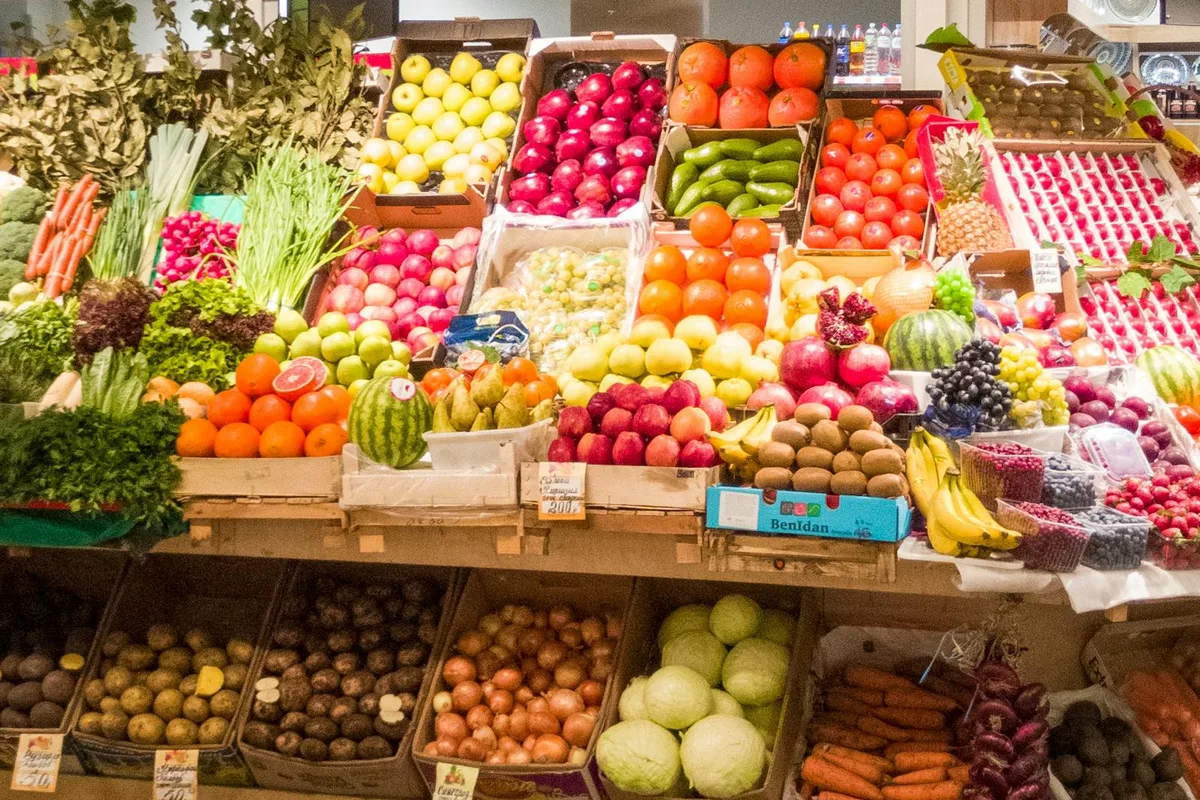
Moscow's farmers' markets offer fresh, seasonal produce, meats, dairy, and specialty foods that surpass supermarket quality. The experience is also more personal: vendors will let you sample cheese, honey, and cured meats before buying, and relationships with regular vendors develop quickly.
Danilovsky Market: The best-known farmers' market in Moscow, located near Tulskaya metro. The original produce section features stalls selling fruits, vegetables, meats, cheeses, spices, and honey from across Russia and the CIS countries. Prices are higher than supermarkets (perhaps 20-40% more) but the quality is visibly superior. The adjoining gastro market features prepared food stalls. Open daily, 08:00-21:00.
Dorogomilovsky Market: Near Kiyevskaya metro, this large covered market specialises in Caucasian products: Georgian cheeses, Armenian dried fruits, Azerbaijani pomegranates, and Central Asian spices. The meat section is particularly strong. Bargaining is expected and can reduce prices by 10-20%.
Usachyovsky Market: In the Khamovniki district, this smaller market has been partially gentrified but retains good produce vendors alongside trendy food stalls. A pleasant shopping experience in a residential neighborhood.
Seasonal outdoor markets: Throughout summer and autumn, street markets selling berries, mushrooms, and vegetables from dachas (country houses) appear near metro stations and in residential areas. The produce is hyper-local and seasonal: strawberries in June, cucumbers in July, mushrooms in September. Prices are often lower than supermarkets, and the quality can be exceptional.
Central Market at Tsvetoy Bulvar
A large, modern food hall near Tsvetnoy Bulvar metro. Part farmers' market, part gastro market, with high-quality vendors selling everything from craft cheeses to specialty coffee. The prices are on the higher end, but the quality and variety are excellent.
Grocery Delivery
Moscow's grocery delivery infrastructure is remarkably efficient and has become a primary shopping method for many residents.
Samokat
The fastest option: delivery from neighbourhood dark stores within 15-30 minutes. The range covers everyday staples, fresh produce, dairy, snacks, beverages, and household items (roughly 3,000-4,000 products). Prices are comparable to Perekryostok. Minimum order is low (often no minimum). Delivery is free or 49-99 RUB on small orders. The app is available in Russian only, but the interface is intuitive.
Yandex Lavka
Similar to Samokat: ultrafast delivery (15-30 minutes) from micro-warehouses. Comparable range and pricing. Part of the Yandex ecosystem, so it integrates with Yandex Plus subscriptions (299 RUB/month for free delivery benefits). The app has some English-language support.
Supermarket Online Delivery
Perekryostok, Vkusvill, and Azbuka Vkusa all offer online ordering through their apps and websites, with delivery slots ranging from same-day to next-day. The full in-store range is available. Delivery fees are typically 99-299 RUB, often waived on orders above 2,000-3,000 RUB. This is the best option for large weekly shops.
Sbermarket
An aggregator that delivers from multiple stores (including Auchan, Metro, Lenta, and others). A personal shopper selects your items in-store and delivers them. Useful for accessing hypermarket prices without visiting the store. Delivery fees from 99 RUB.
Finding Imported Products
International sanctions and import restrictions have reduced the availability of some Western European products in Russia. However, Moscow's supermarkets have adapted by sourcing alternatives from Turkey, China, Latin America, and Russian domestic producers.
What is easy to find: Italian pasta and olive oil (from various brands), Turkish and Russian cheeses (some excellent), Chinese and Chilean wines, Indian spices, Japanese soy sauce and noodles, and a wide range of fruits and vegetables from Turkey, Egypt, and Central Asia.
What is harder to find: Specific Western European brands (certain British, French, or German products), American processed foods, specific breakfast cereals, and some specialty items. Azbuka Vkusa and Globus Gourmet have the best selection of imported products, though at premium prices.
Expat Facebook and Telegram groups are useful resources for finding specific products. Members regularly share tips on where to find particular items.
Asian and Ethnic Groceries
Moscow has a growing number of Asian grocery stores, particularly in the areas around Lublinskaya street (southeast Moscow) and near Chinese/Vietnamese communities. These stock rice noodles, fish sauce, tofu, specialty vegetables, and other ingredients hard to find in mainstream supermarkets. The online store 4fresh.ru offers organic and specialty international products with delivery.
Monthly Grocery Budget
A realistic monthly grocery budget for one person in Moscow:
| Lifestyle | Monthly RUB | Monthly USD |
|---|---|---|
| Budget (cooking at home, budget stores) | 15,000-20,000 | 145-194 |
| Mid-range (mix of stores, some premium products) | 22,000-35,000 | 213-340 |
| Premium (Azbuka Vkusa, imported products, markets) | 35,000-55,000 | 340-533 |
For a couple, multiply by 1.6-1.8. For a family with children, double the single-person budget.
Moscow's grocery prices are, overall, significantly lower than London, Paris, or New York for staple items. The gap narrows for imported products and closes entirely for premium items.
Practical Tips
- Bags: Bring your own reusable bags. Plastic bags at supermarkets cost 5-15 RUB each. Some stores charge for bags at the checkout; others have them available in dispensers near the produce section.
- Weighing produce: At most supermarkets (except the most modern), you must weigh fruits and vegetables on scales in the produce section and print a price sticker before going to the checkout. Forgetting this step will result in being sent back by the cashier.
- Payment: Card payment is universal at supermarkets. Contactless payment (tap-to-pay) is widely accepted. Markets may prefer cash, particularly at smaller stalls.
- Loyalty cards: Perekryostok (card or app), Pyatyorochka (Vyručai-karta), and Vkusvill (app) all operate loyalty programmes that provide meaningful discounts (5-15% on many items). Signing up is free and worthwhile for regular shoppers.
- Best times to shop: Weekday mornings (09:00-11:00) are the quietest. Evenings after 18:00 and weekends are the most crowded, particularly at popular locations.
- Expiry dates: Russian date format is DD.MM.YYYY. Check expiry dates carefully, particularly on dairy products. Vkusvill is notable for its transparency about production and expiry dates.
Grocery shopping in Moscow quickly becomes routine. Within a few weeks, you will have identified your preferred stores, learned to read the key Cyrillic labels, and developed the habits that make daily provisioning effortless. The initial disorientation passes; the quality and value of Russian groceries endures.