The Russian language is spoken natively by approximately 150 million people and understood by a further 110 million across the former Soviet Union and its diaspora. It is one of six official languages of the United Nations, the lingua franca of Central Asia, and the key to one of the world's richest literary and scientific traditions. For English speakers, the US Foreign Service Institute classifies it as Category IV, requiring roughly 1,100 classroom hours to reach professional working proficiency.
That figure, while sobering, conceals an important truth: functional competence, enough to navigate daily life, sustain conversations, and read straightforward texts, is achievable in far less time. With disciplined study and the right methods, most learners reach a comfortable intermediate level within 12 to 18 months. This guide provides a structured roadmap from absolute beginner to advanced proficiency, with concrete recommendations at every stage.
Why Russian Is More Accessible Than Its Reputation Suggests
The Phonetic Alphabet Advantage
Unlike English or French, Russian spelling is largely phonetic. Once you learn the 33 letters of the Cyrillic alphabet, you can sound out virtually any word. There are minor reduction rules (unstressed "o" is pronounced closer to "a"), but nothing approaching the chaos of English orthography, where "cough," "though," "through," and "rough" all end differently. This phonetic consistency is a genuine advantage that pays dividends from day one.
Logical Grammar
Russian grammar is complex, with six cases, three genders, two verb aspects, and a system of prefixes that modify verb meanings. But this complexity is largely systematic. Case endings follow predictable patterns. Verb conjugations, while numerous, are regular in the overwhelming majority of instances. The language rewards pattern recognition, and once you internalise the core rules, new vocabulary slots into existing structures without much difficulty.
No Articles, Flexible Word Order
Russian has no definite or indefinite articles. There is no equivalent of "the" or "a." Word order is flexible because case endings, rather than position in the sentence, convey grammatical relationships. This means you can often be understood even when your sentences are imperfectly constructed, a quality that makes early conversation less intimidating than in languages where a single misplaced word changes meaning entirely.
Cognates and Internationalisations
While Russian shares fewer cognates with English than French or Spanish does, the modern language has absorbed thousands of international words. "Restaurant" is ресторан (restoran), "telephone" is телефон (telefon), "computer" is компьютер (kompyuter), "coffee" is кофе (kofe). In technical, scientific, and business contexts, the overlap is even greater.
The Cyrillic Crash Course
Mastering the Cyrillic alphabet is the essential first step and should take no longer than three to five days of focused study. The 33 letters divide into three practical categories.
Category 1: Familiar Friends (10 Letters)
These letters look like Latin letters and represent similar sounds:
А (a), Е (ye), К (k), М (m), О (o), Т (t) are immediately recognisable. С sounds like "s" (not "c"). Three vowels, Э (open "e" as in "set"), У (oo), and И (ee), have shapes that may differ from expectations but sounds that are straightforward.
Category 2: False Friends (7 Letters)
These are the trap letters. They look familiar but represent entirely different sounds:
В looks like "B" but sounds like "v." Н looks like "H" but sounds like "n." Р looks like "P" but sounds like a rolled "r." С looks like "C" but sounds like "s." У looks like "Y" but sounds like "oo." Х looks like "X" but sounds like a guttural "kh." Р is the single most confusing letter for beginners because it appears in extremely common words (Россия, ресторан, работа).
Category 3: New Letters (16 Letters)
These have no Latin equivalent and must be learned fresh:
Б (b), Г (g), Д (d), Ж (zh, as in "pleasure"), З (z), Й (short "y"), Л (l), П (p), Ф (f), Ц (ts), Ч (ch), Ш (sh), Щ (shch), Ъ (hard sign, silent), Ы (a unique vowel, roughly "ih"), Ь (soft sign, softens the preceding consonant).
The Learning Method
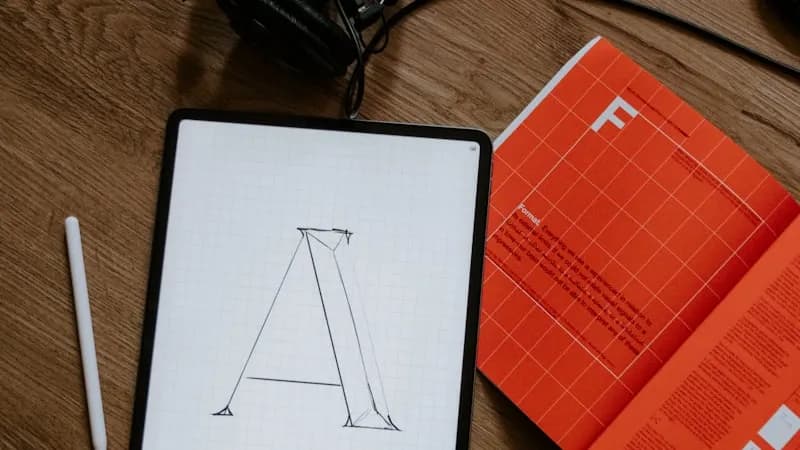
Write each letter by hand at least 20 times. Pair each letter with a common word: Б for борщ (borshch), Г for город (gorod, city), Д for дом (dom, house). Within three days, you should be able to read shop signs, metro station names, and restaurant menus, even without understanding the words. This ability to decode text is enormously motivating and provides constant real-world practice.
Budget three to five days for Cyrillic, not three weeks. The alphabet is a finite, concrete skill — move on to vocabulary and grammar as soon as you can sound out menu items, and refine accuracy through daily reading rather than isolated drills.
The Four Stages of Russian Mastery
Stage 1: Survival Russian (A1 — Months 1 to 3)
Objective: Navigate basic daily situations, introduce yourself, ask simple questions, understand short written signs and messages.
Grammar focus: Present tense of common verbs (быть, говорить, знать, хотеть, мочь). Nominative and prepositional cases. Personal pronouns. Numbers 1 to 100. Basic question words (кто, что, где, когда, сколько, почему).
Vocabulary target: 500 to 800 words. Prioritise high-frequency survival vocabulary: greetings, directions, food, transport, shopping, time expressions, weather.
Key phrases to master: Speak slowly so you can be understood when asking for help. Learn to say "I don't understand" (Я не понимаю) and "Could you repeat that?" (Повторите, пожалуйста) early, as these two phrases will be your most-used tools.
Recommended daily study: 30 to 45 minutes. At this stage, consistency matters more than duration. A 30-minute daily session is worth more than a three-hour weekend marathon.
Milestone test: You should be able to order food in a restaurant, ask for directions, introduce yourself and describe your work, and handle a simple transaction in a shop without resorting to English or gestures.
Stage 2: Functional Independence (A2-B1 — Months 4 to 12)
Objective: Sustain conversations on familiar topics, understand the gist of news broadcasts, read simple articles, write short messages and emails.
Grammar focus: All six cases in singular and plural. Verbal aspect (perfective vs imperfective), the single most important grammatical concept in Russian. Past and future tenses. Comparative and superlative adjectives. Verbs of motion (идти/ходить, ехать/ездить and their prefixed forms), a notoriously difficult subsystem that requires dedicated study.
Vocabulary target: 2,000 to 3,500 words. Expand into topics you personally care about: your profession, hobbies, current events, relationships.
Study approach: This is where many learners plateau. The initial excitement of decoding Cyrillic fades, and the grammar becomes demanding. The antidote is varied input: start watching Russian YouTube channels with subtitles, listen to podcasts designed for learners (Russian Progress, Russian with Max), and begin reading graded readers or children's books.
Critical milestone: The ability to speak in the past tense and express intentions about the future. Without this, conversation remains stuck in an eternal present tense that severely limits what you can communicate.
Recommended daily study: 45 minutes to 1 hour, plus passive exposure (Russian music, podcasts during commutes, changing your phone's language to Russian).
Stage 3: Confident Communication (B2 — Months 12 to 24)
Objective: Participate in discussions on complex topics, understand most spoken Russian at natural speed, read newspapers and non-specialist literature, write structured texts.
Grammar focus: Participles and verbal adverbs (деепричастия). Indirect speech. Complex sentence structures with conjunctions and relative clauses. Refinement of aspect usage in nuanced contexts. Idiomatic expressions and phrasal verbs.
Vocabulary target: 5,000 to 7,000 words. At this level, vocabulary acquisition becomes increasingly passive, absorbed through reading and listening rather than deliberate memorisation.
Study approach: Transition from learning materials to authentic content. Read Russian news sites (Meduza offers accessible journalism). Watch Russian films without subtitles or with Russian subtitles only. If in Russia, attend lectures, cultural events, or join clubs. Find a language exchange partner or tutor for weekly conversation practice.
Key indicator of progress: You stop translating in your head and begin thinking directly in Russian for common topics. Conversations feel less like exercises and more like genuine exchanges of ideas.
Stage 4: Near-Native Proficiency (C1-C2 — Year 2 and Beyond)
Objective: Understand virtually all spoken and written Russian, including slang, humour, and cultural references. Express yourself with precision, nuance, and stylistic awareness. Read literature in the original.
Grammar focus: At this stage, grammar study per se becomes less relevant. The focus shifts to register awareness (formal vs informal vs literary Russian), stylistic variation, and the kind of subtle errors that distinguish a fluent foreigner from a native speaker: stress patterns in obscure words, the correct use of particles (же, ведь, ли, мол, дескать), and aspectual nuance in contexts where both aspects are grammatically correct but carry different implications.
Study approach: Read extensively. Engage with Russian culture in its own language. Attend theatre, follow political debates, read opinion columns. Consider formal study of Russian literature or history. At C2 level, TORFL certification becomes a meaningful credential.
Realistic timeline: Reaching C1 typically requires three to five years of sustained engagement. C2 is a lifetime pursuit that even many native speakers do not fully achieve in written form.
Methods: What Works and What Wastes Time
Structured Courses vs Self-Study
Formal courses provide accountability, systematic grammar instruction, and error correction that self-study cannot replicate. The most effective courses follow a communicative approach, emphasising practical language use rather than abstract grammar drills.
University courses in Russian (available at most major institutions across Europe, North America, and Australasia) typically cover A1 to B1 in two academic years. Intensive summer programmes can compress A1 to A2 into six to eight weeks.
Self-study works well for motivated learners who supplement it with regular conversation practice. The risk is developing gaps: self-taught learners often have strong reading skills but weak listening comprehension, or adequate vocabulary but shaky grammar.
The optimal approach for most adults: Combine a structured course or regular tutor sessions (two to three times per week) with daily self-study using apps and authentic materials.
Textbooks That Actually Work
"Russian: A Self-Teaching Guide" by Kathryn Szczepanska — Concise, practical, and available in many library systems. Good for A1.
The "Beginner's Russian" series by Anna Kudyma, Frank Miller, and Olga Kagan (Routledge) — Comprehensive and well-structured. Covers A1 through B1 across two volumes. Widely used in university programmes. Approximately $50 per volume.
"The New Penguin Russian Course" by Nicholas J. Brown — A classic that remains one of the best introductions to Russian grammar. Dense but thorough. Around $20.
"Colloquial Russian" (Routledge) — Good audio materials, communicative approach. Suitable for self-study at A1 to A2.
For grammar reference: "A Comprehensive Russian Grammar" by Terence Wade (Wiley-Blackwell) is the standard English-language reference grammar. Expensive (around $60) but invaluable from B1 onward.
Apps and Digital Tools
For an in-depth comparison of every major app, see our best apps for learning Russian in 2026.
Duolingo — Useful for absolute beginners and daily vocabulary reinforcement. The gamification helps build a habit. Limited for grammar explanation and real communication skills. Free with ads; Duolingo Plus at $7 per month.
Pimsleur — Audio-based method that builds conversational reflexes through spaced repetition. Excellent for pronunciation and basic spoken fluency. Thirty-minute daily lessons. Subscription around $15 to $20 per month.
Anki — Spaced repetition flashcard system. Free on desktop, $25 one-time purchase on iOS. The shared deck "Russian Core 6000" provides frequency-ranked vocabulary with audio. The most efficient tool for vocabulary acquisition at any level.
italki / Preply — Platforms connecting learners with tutors. Russian tutors typically charge $10 to $25 per hour for community tutors, $20 to $50 per hour for professional teachers. Regular conversation practice with a tutor is one of the highest-value investments you can make.
Babbel — Structured courses with a focus on practical conversation. Better grammar explanations than Duolingo. Subscription around $7 to $13 per month depending on term length.
Free Resources Worth Your Time
Russian Progress (YouTube) — Comprehensible input method. Videos use simple Russian with visual context. Excellent for A2 to B1.
Be Fluent in Russian (YouTube) — Grammar explanations and cultural context. Fedor is a clear, patient teacher.
Meduza — Independent Russian-language news site. The "Simple Language" section uses simplified Russian for learners.
Russian Podcast (russianpodcast.eu) — Transcribed conversations at various levels. Free.
Wiktionary — The Russian entries include full declension and conjugation tables, stress marks, and example sentences. An underappreciated resource.
Forvo — Native speaker pronunciations of virtually any Russian word. Essential for checking stress patterns.
Learning Russian from France: Specific Considerations
France has a long historical connection with Russia. Russian was widely spoken in French aristocratic circles in the 18th and 19th centuries, and Paris hosted a significant Russian emigrant community after 1917. Today, several institutions offer high-quality Russian instruction.
INALCO (Institut National des Langues et Civilisations Orientales)
Located in Paris, INALCO offers degree programmes in Russian language and civilisation. Non-degree students can enrol in individual courses. Known for rigorous academic standards and excellent faculty. Annual fees for non-degree courses are modest by international standards (approximately 300 to 500 euros depending on the programme).
Alliance Francaise and Municipal Language Schools
Many cities offer evening Russian courses through municipal adult education programmes or cultural associations. Paris, Lyon, Marseille, Bordeaux, and Strasbourg all have established Russian-language instruction. Prices typically range from 200 to 600 euros per academic year.
The Assimil Method
The French publisher Assimil's "Le Russe" (also available as "Russian with Ease" in English) is arguably the best self-study course for beginners. It uses a "passive then active" approach: you first absorb texts with translations for 50 lessons, then begin actively reviewing earlier material. The method is particularly effective for French speakers because the grammar explanations assume familiarity with concepts like grammatical gender and case (which exist in a vestigial form in French pronouns). Approximately 70 euros for the book and audio package.
The French Advantage
French speakers have certain advantages in learning Russian that English speakers do not. French and Russian share a significant number of cognates borrowed from French during the 18th and 19th centuries (this cultural exchange is well documented). Grammatical concepts like gender agreement and verb conjugation patterns are already familiar from French. The French "r" is closer to the Russian "х" than any English sound. These advantages typically shave several months off the learning timeline compared to anglophone learners starting from scratch.
Immersion vs Home Study: The Honest Comparison
The Case for Immersion
Living in a Russian-speaking environment accelerates learning in ways that no amount of classroom study can replicate. Our guide to learning Russian through immersion in Russia explores this option in detail, including the student visa process for long-term study. You are forced to use Russian for survival tasks (shopping, bureaucracy, medical appointments). You hear natural speech at natural speed for hours every day. Social pressure motivates study in a way that self-discipline alone cannot sustain.
A three-month intensive programme in Russia, combining formal classes with daily immersion, typically produces gains equivalent to 12 to 18 months of home study. Moscow State University's Russian Language and Culture programme, the Pushkin Institute, and numerous private language schools in Moscow and Saint Petersburg offer structured immersion courses ranging from $300 to $800 per month for tuition, excluding accommodation.
The Limits of Immersion
Immersion without structure is inefficient. Simply "being in Russia" does not automatically teach you Russian. Expatriates who socialise primarily with other foreigners, work in English-language environments, and use translation apps for daily tasks can live in Moscow for years without progressing beyond elementary Russian.
Effective immersion requires deliberate engagement: enrolling in classes, seeking out Russian-speaking friends and colleagues, consuming Russian media, and resisting the temptation to retreat into English when conversations become difficult.
The Realistic Optimum
For most learners, the most effective approach combines periods of home study (building grammar foundations and core vocabulary) with periodic immersion (applying those foundations in real-world contexts). A pattern that works well: six months of intensive home study to reach A2, followed by a one-to-three-month immersion stay, followed by continued study at home with regular tutor sessions and authentic media consumption.
Realistic Timelines: What to Expect
These estimates assume 45 to 60 minutes of daily study plus regular conversation practice:
A1 (Survival): 2 to 4 months. You can read Cyrillic, handle basic transactions, and introduce yourself.
A2 (Elementary): 6 to 10 months cumulative. You can sustain simple conversations on familiar topics and understand the gist of clear, slow speech.
B1 (Intermediate): 12 to 18 months cumulative. You can handle most travel situations, describe experiences, express opinions on familiar subjects. This is the level where Russia begins to feel genuinely accessible.
B2 (Upper Intermediate): 18 to 30 months cumulative. You can follow news broadcasts, participate in workplace discussions, and read adapted literature. This is a practical target for most adult learners.
C1 (Advanced): 3 to 5 years cumulative. You can function professionally in Russian, engage with complex texts, and express yourself with nuance.
C2 (Mastery): 5+ years, with extensive reading and immersion. Near-native proficiency in most contexts.
These timelines vary enormously based on native language (Slavic language speakers progress much faster), aptitude, intensity of study, and access to immersion. They should be treated as rough guides, not rigid benchmarks.
B1 at 12–18 months is the realistic target for a working adult investing 45–60 minutes per day with weekly tutor sessions. It is the level at which conversation becomes genuine exchange rather than survival effort — the point at which the language stops being an obstacle and starts being a tool.
Common Mistakes and How to Avoid Them
Mistake 1: Spending Too Long on the Alphabet
The Cyrillic alphabet is a three-to-five-day project, not a three-week one. Some learners spend weeks perfecting their handwriting or memorising every possible pronunciation rule before moving on to actual words and phrases. This is unnecessary. Learn the letters, start reading simple texts immediately, and refine your understanding as you go.
Mistake 2: Ignoring Cases Until Later
Some courses and apps defer grammar instruction to avoid intimidating beginners. This creates problems later, because case usage is woven into every Russian sentence. Start with the nominative and prepositional cases in month one, add accusative and genitive in months two and three, and tackle dative and instrumental by month four. Early exposure, even imperfect, is far better than delayed introduction.
Mistake 3: Neglecting Listening Practice
Many self-taught learners develop a pattern where they can read reasonably well but cannot understand spoken Russian at natural speed. Russian speech is fast, with extensive vowel reduction and consonant assimilation. From the earliest stages, include listening practice: podcasts, YouTube videos, songs, or even Russian radio in the background.
Mistake 4: Over-Relying on Translation Apps
Google Translate and Yandex Translate are useful tools, but they become crutches that prevent genuine language acquisition if used for every interaction. Set yourself rules: no translation apps during meals, during social gatherings, or for the first attempt at understanding any text. Use them as a backup, not a default.
Mistake 5: Perfectionism
Russian grammar is complex enough that you will make mistakes for years. Native speakers make grammatical errors. The goal is communication, not perfection. Speak early, speak often, and accept that errors are an integral part of the learning process. Russians are generally encouraging toward foreigners who attempt their language and will not judge your grammar harshly.
Building a routine and measuring progress
Building a Daily Study Routine
A sustainable daily routine matters more than any specific method or resource. Here is a template that works well from A2 onward:
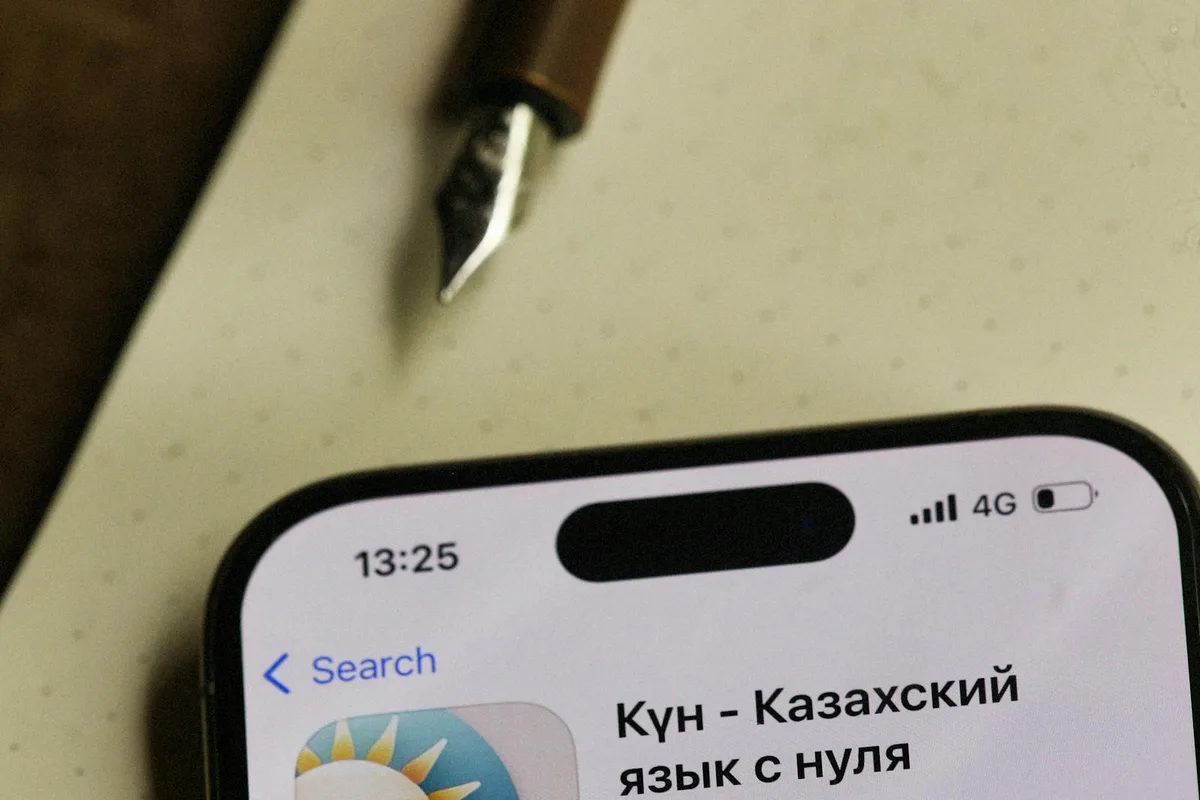
Morning (15 minutes): Anki flashcard review. This leverages spaced repetition to maintain and expand vocabulary with minimal time investment.
Commute or exercise (20 to 30 minutes): Russian podcast or audio lesson. Pimsleur works well here, as do podcasts like RussianPod101 or Russian Progress.
Evening (20 to 30 minutes): Active study. Grammar exercises, textbook chapter, or writing practice. Alternate between grammar-focused and reading-focused sessions.
Before bed (10 minutes): Light reading in Russian. A graded reader, a news article, or social media posts in Russian. This passive exposure reinforces the day's learning.
Weekly (60 to 90 minutes): Conversation session with a tutor or language exchange partner. This is where everything else comes together.
Total daily investment: 45 to 75 minutes on weekdays, with a longer session once a week. This is manageable alongside a full-time job and produces steady, measurable progress.
Measuring Your Progress
TORFL Certification
The Test of Russian as a Foreign Language (TORFL or ТРКИ) is the official certification system, with levels from A1 to C2. Our complete TORFL guide covers exam format, preparation, and test centres in detail. Taking a TORFL exam provides an objective benchmark and is required for university admission and certain employment in Russia. Exam fees range from approximately 100 to 250 euros depending on level and test centre.
Self-Assessment Benchmarks
At A1, you can read a restaurant menu and order without assistance.
At A2, you can have a 10-minute conversation with a patient native speaker on a familiar topic.
At B1, you can follow the main points of a news broadcast on a topic you know something about.
At B2, you can read a newspaper opinion column and summarise its argument.
At C1, you can watch a Russian film without subtitles and follow the plot, dialogue, and humour.
Language Exchange as a Mirror
Regular conversation with native speakers is the best way to gauge your progress. If you find that conversations are becoming longer, flowing more naturally, and covering a wider range of topics, you are advancing regardless of what any test says.
The Long View
Learning Russian is a multi-year project that rewards patience, consistency, and genuine curiosity about the culture it opens up. There will be plateaus, frustrations, and moments when the grammar feels deliberately hostile. There will also be breakthroughs: the first time you understand a joke in Russian, the first time a stranger does not switch to English when you address them, the first time you read a paragraph of Chekhov and realise you understood every word.
The practical benefits are substantial. In Russia, speaking the language transforms you from a tourist into a participant. Professional opportunities expand. Relationships deepen. The cultural landscape, from literature to cinema to music, becomes accessible in a way that translation can only approximate.
Start with the alphabet. Build from there. The journey is long, but the destination is worth the effort.