The idea is seductive: move to Russia, surround yourself with the language, and absorb it through osmosis. Every language-learning forum and travel blog repeats the same promise. Total immersion, they say, is the fastest path to fluency. Six months in Moscow will do what five years of evening classes cannot.
This is partly true and dangerously incomplete. Immersion in a Russian-speaking environment does accelerate learning, but it does so only under specific conditions that many aspiring learners fail to establish. This article examines what immersion in Russia actually looks like in practice, where it works, where it fails, and how to structure it for maximum effect. For a structured learning plan before you arrive, start with our complete guide to learning Russian.
The Immersion Myth vs the Immersion Reality
What Immersion Actually Provides
Living in Russia subjects you to Russian in every dimension of daily life. Metro announcements, shop signs, conversations overheard on the bus, bureaucratic forms, restaurant menus, medical appointments, and the casual remarks of strangers all constitute input. This ambient exposure trains your ear to the rhythm, intonation, and phonetic patterns of natural Russian speech in a way that no recording or classroom exercise can replicate.
Beyond passive exposure, immersion creates urgency. When you need to explain a medical symptom to a doctor who speaks no English, you learn the relevant vocabulary fast. When your landlord sends you a message about a plumbing problem, you decode it because you must. This survival pressure is a powerful accelerator.
What Immersion Does Not Provide
Immersion does not teach you grammar. Hearing the prepositional case used correctly ten thousand times does not explain why it is used or how it differs from the genitive. Without formal study, immersion produces learners who speak fluently but inaccurately, having absorbed patterns without understanding the rules behind them.
Immersion also does not guarantee interaction. It is entirely possible, and common, to live in Moscow for years while operating primarily in English. International companies, expat social circles, English-language media, and translation apps create a comfortable bubble that requires minimal Russian. Immersion must be actively constructed, not merely assumed.
Immersion teaches patterns, not rules. Arrive at A1 minimum — basic Cyrillic plus survival phrases — otherwise the first three weeks burn on material you could have learned at home in two months of Pimsleur or Assimil.
Moscow vs Saint Petersburg: Where to Immerse
Moscow
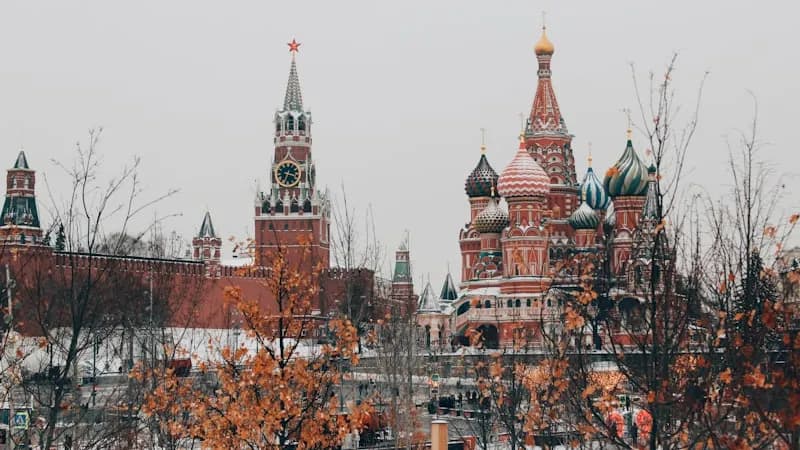
Moscow is Russia's largest city, with a population exceeding 13 million. English proficiency is higher here than anywhere else in Russia, particularly among young professionals, hospitality workers, and in the technology sector. This is both an advantage (a safety net when your Russian fails) and a disadvantage (less pressure to use Russian).
Advantages for language learners: If you need a visa for extended study, our student visa guide explains the process step by step. The widest selection of language schools, including the Pushkin Institute (state-run, approximately $350 to $500 per month for intensive courses), Moscow State University's preparatory faculty, and numerous private schools such as Liden & Denz (around $400 to $700 per month). Large international student community for peer support. Rich cultural life (theatres, museums, concert halls) that can supplement formal study.
Disadvantages: Higher cost of living (rent for a shared flat in a central area runs $500 to $900 per month). The city's international character means English is available as an escape route. The pace of life can be overwhelming for newcomers trying to navigate a new language simultaneously. Our guide to moving to Moscow covers the practical side of settling in.
Saint Petersburg
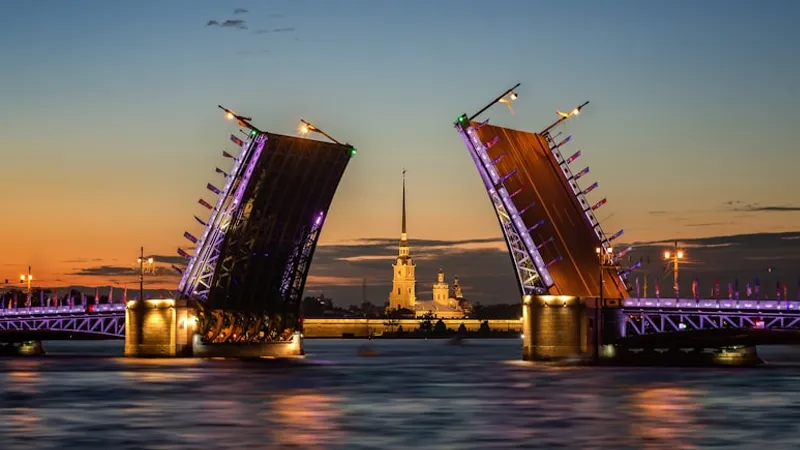
Saint Petersburg is smaller (population roughly 5.4 million), culturally distinct, and in many ways more accessible for language learners.
Advantages: Slightly lower cost of living than Moscow (shared accommodation from $350 to $650 per month). A more compact city centre that is walkable and navigable. The cultural density (Hermitage, Russian Museum, Mariinsky Theatre, Dostoevsky's neighbourhood) provides constant motivation. Several excellent language schools, including Derzhavin Institute (approximately $250 to $450 per month) and the Saint Petersburg State University Russian Language Centre.
Disadvantages: Fewer English-speaking expatriates, which is actually an advantage for immersion but can increase isolation during difficult early months. The climate is harsh: winter daylight lasts six hours, and the combination of cold, darkness, and language frustration can be genuinely demoralising.
Beyond the Two Capitals
Smaller Russian cities (Kazan, Novosibirsk, Ekaterinburg, Nizhny Novgorod) offer deeper immersion because English is rarely available. Language schools exist but are fewer and less sophisticated. The trade-off is stark: faster Russian acquisition at the cost of comfort, social infrastructure, and cultural distractions. This option suits adventurous learners with at least A2 level Russian and a tolerance for discomfort.
The Host Family Option
Living with a Russian host family is one of the most effective immersion strategies, though it requires careful selection and realistic expectations.
What Good Host Families Provide
Daily conversation in Russian over meals and domestic activities. Correction of errors in a supportive context. Exposure to colloquial, everyday Russian that textbooks omit. Cultural context and explanation of customs, traditions, and social norms. Practical assistance with bureaucracy, shopping, and navigation.
The Reality Check
Host families vary enormously in quality. Some are genuinely interested in cultural exchange and invest time in helping their guests learn. Others view hosting primarily as income (families typically receive $400 to $700 per month including meals) and provide minimal interaction beyond basic hospitality.
Language schools that arrange host family placements (most do) usually vet families, but standards vary. Request a family where at least one member speaks no English, which eliminates the temptation to default to your native language. Clarify meal arrangements in advance: shared meals are the primary opportunity for conversation and cultural exchange.
Potential Pitfalls
Privacy can be limited. Russian domestic spaces are often smaller than Western equivalents, and the concept of personal space differs. Host families may have expectations about meal times, guest hours, and household participation that feel restrictive. Communication about boundaries, when your Russian is still elementary, can be frustrating.
The emotional dynamics are also worth noting. Homesickness combined with language exhaustion is common in the first month. A supportive host family mitigates this; an indifferent one amplifies it.
Common Immersion Pitfalls
The English Bubble
The single most common failure mode. You arrive with good intentions, but your flatmate is German, your colleagues speak English, and your social life revolves around expat bars and international meetups. You use Russian for taxis and shopping but conduct all meaningful interaction in English. After a year, your Russian is A2 at best.
The fix: Deliberately construct a Russian-speaking social life. Join hobby groups conducted in Russian (sports clubs, book clubs, hiking groups). Use language exchange platforms (Tandem, HelloTalk) to find Russian friends who want to practise your native language. Accept social invitations from Russian colleagues even when you know the conversation will be exhausting.
The Translation App Crutch
Google Translate and Yandex Translate are extraordinary tools, but overuse prevents genuine language acquisition. If you translate every menu, every sign, every text message, you never develop the ability to infer meaning from context, a skill that is essential for real-world comprehension.
The fix: Impose rules on yourself. No translation apps during the first attempt at any interaction. Try to understand from context first. Use apps only as a last resort, and when you do use them, make a note of the word or phrase and review it later.
Passive Immersion Without Study
Listening to Russian all day without understanding it is not immersion; it is background noise. Research in second language acquisition consistently shows that comprehensible input, language that you can mostly understand with some effort, drives acquisition. Incomprehensible input, language where you understand nothing, produces no learning benefit regardless of duration.
The fix: Match your exposure to your level. At A1, listen to learner-oriented podcasts and graded materials, not native-speed news broadcasts. At B1, transition to authentic materials with support (subtitles, transcripts). At B2 and above, native content becomes genuinely useful.
Grammar Neglect
Some immersion enthusiasts argue that grammar study is unnecessary if exposure is sufficient. This is empirically wrong. Adults learning a second language benefit enormously from explicit grammar instruction, particularly for features that differ significantly from their native language. Russian case endings, verbal aspect, and verbs of motion are not features that most adults successfully acquire through exposure alone.
The fix: Maintain structured grammar study alongside immersion. Even 20 minutes per day with a textbook or grammar app makes a substantial difference. Hire a tutor for weekly sessions focused on error correction and grammatical explanation.
A well-structured three-month stay in Moscow or Saint Petersburg compresses roughly 12 to 18 months of home study. Budget $2,500–$5,000 per month all-in, and refuse the English bubble deliberately — share a flat with Russian speakers, not other expats.
The Optimal Immersion Formula
Based on the experiences of successful learners and the recommendations of applied linguists, the most effective immersion programme combines four elements:
Element 1: Formal Classes (15 to 20 Hours Per Week)
Enrol in an intensive language course at a reputable school. Group classes of four to eight students provide structured instruction, peer interaction, and accountability. Individual lessons (two to three per week) supplement group classes for personalised feedback. Budget $300 to $700 per month for tuition.
Element 2: Structured Self-Study (30 to 45 Minutes Daily)
Grammar review, vocabulary expansion (Anki flashcards), and reading practice. This reinforces what you learn in class and fills gaps that group instruction inevitably leaves.
Element 3: Social Immersion (Daily)
Active engagement with Russian speakers outside the classroom. Shared meals, social activities, errands, and casual conversations. The host family model facilitates this; solo apartment living requires more deliberate effort.
Element 4: Cultural Engagement (Weekly)
Theatre, cinema, museums, concerts, and excursions. These provide motivating context and expose you to Russian in varied registers. Attending a play at the Moscow Art Theatre or a concert at the Mariinsky is both culturally enriching and linguistically demanding.
Practical Planning
Duration
The minimum effective immersion stay is four weeks, which is enough to build confidence and establish habits but too short for dramatic progress. Eight to twelve weeks produces meaningful advancement, typically one full CEFR level. A semester (four to five months) is ideal for serious learners, allowing time to adjust, plateau, and break through. A full academic year transforms capabilities.
Budget
For a three-month immersion stay in Moscow or Saint Petersburg, including tuition, shared accommodation, food, local transport, and a modest social life, budget approximately $2,500 to $5,000 per month total, depending on accommodation standards and lifestyle. Saint Petersburg is roughly 15 to 20 percent cheaper than Moscow for comparable quality.
Visa
Most language learners enter Russia on a student visa, which requires an invitation letter from the educational institution. Processing takes two to four weeks through the relevant Russian consulate. The student visa is typically valid for the duration of the course and allows multiple entries. Details and procedures are covered in our separate student visa guide.
Before You Go
Arrive with at least A1 Russian, meaning basic Cyrillic literacy and survival phrases. Starting immersion at absolute zero is possible but wastes the first two to three weeks on material that can be learned more efficiently at home. The Assimil method or two months of Pimsleur provide an adequate foundation.
What Success Looks Like
A well-structured three-month immersion stay, combining formal classes with active social engagement, typically advances a motivated learner from A2 to B1 or from B1 to a solid B2. This represents roughly 12 to 18 months of progress compressed into a single quarter.
The less quantifiable gains are equally significant: confidence in speaking, an intuitive feel for natural phrasing, cultural understanding that no textbook can convey, and the knowledge that you can navigate a complex foreign environment in a language you are still learning.
Immersion works. But it works because of what you do with it, not simply because of where you are.