Saint Petersburg is the city Peter the Great willed into existence on a swamp at the edge of the Baltic Sea. Founded in 1703, it served as Russia's capital for more than two centuries and retains an imperial grandeur that Moscow, for all its energy, cannot replicate. The Hermitage, the Mariinsky Theatre, the canals, the white nights of summer: these are not tourist brochure cliches but lived realities that reward extended exploration.
If you are weighing up whether to base yourself here or in the capital, our Saint Petersburg vs Moscow comparison breaks down the key differences. The city presents particular challenges for visitors. Its climate is harsh, its geography sprawling, and its bureaucratic quirks occasionally baffling. This guide addresses all of these, offering practical information for planning a trip that does justice to one of Europe's most extraordinary cities.
When to Visit
Summer (June-August)
The peak season, and for good reason. Temperatures average 18-23C, daylight stretches to twenty or more hours during the White Nights in June, and the city's parks, palaces, and waterways are at their most beautiful. The Scarlet Sails festival in late June draws over a million spectators. Our White Nights guide covers the full festival calendar and practical tips for this extraordinary season. The drawback is crowds: the Hermitage, Peterhof, and Catherine Palace are besieged by tour groups, and hotel prices peak. Book accommodation and major museum tickets well in advance.
Autumn (September-October)
September offers pleasant temperatures (10-15C), reduced crowds, and golden foliage in the parks. October brings rain and darkening skies but also lower prices and a melancholy beauty that suits the city's literary associations. The cultural season (theatre, ballet, concerts) begins in earnest in September.
Winter (November-March)
Cold, dark, and magnificent. Temperatures drop to -10C to -20C in January and February. Daylight lasts barely six hours. But the frozen Neva River, snow-covered palaces, and illuminated facades create a beauty entirely distinct from summer. The Hermitage and Mariinsky are far less crowded. Hotel prices drop by 30-50%. Dress warmly: insulated boots, a proper winter coat, hat, and gloves are non-negotiable. Whichever season you choose, make sure to arrange your visa well in advance.
Spring (April-May)
The ice on the Neva breaks up in April, and the city gradually thaws. May is increasingly pleasant (10-18C) with longer days and blossoming parks. It is an excellent shoulder season: fewer tourists than summer, better weather than autumn, and lower prices. The only caveat is unpredictable rainfall.
Getting There
By Air
Pulkovo Airport (LED) is the city's sole commercial airport, located 23 kilometres south of the centre. International flights arrive from Istanbul, Dubai, Beijing, and various CIS capitals. Domestic flights from Moscow take approximately 90 minutes and cost 3,000-8,000 RUB (29-78 USD) if booked in advance.
From Pulkovo to the centre, options include:
- Bus 39: Runs to Moskovskaya metro station (30-40 minutes, 60 RUB). From there, the metro reaches the centre in 15 minutes.
- Taxi: 800-1,500 RUB to the centre (30-60 minutes depending on traffic). Use Yandex Go.
- Private transfer: Pre-booked services charge 1,500-2,500 RUB.
By Train from Moscow
The Sapsan high-speed train connects Moscow's Leningradsky station to Saint Petersburg's Moskovsky station in approximately 3 hours 45 minutes. Standard-class tickets cost 3,000-5,000 RUB; business class runs 6,000-10,000 RUB. The Sapsan is comfortable, punctual, and deposits you in the city centre. Overnight sleeper trains (the Red Arrow and Grand Express) take 8-9 hours and cost 2,500-15,000 RUB depending on class. They depart around 23:00 and arrive around 07:00-08:00, saving a night of hotel costs.
Book train tickets through the Russian Railways website (rzd.ru) or the RZD app, both available in English.
The Sapsan (Moscow Leningradsky to SPB Moskovsky) runs city-centre to city-centre in 3h45 for 3,000-5,000 RUB — a better choice than flying once airport transfers, security and weather delays are factored in.
Must-See Sights
The State Hermitage Museum
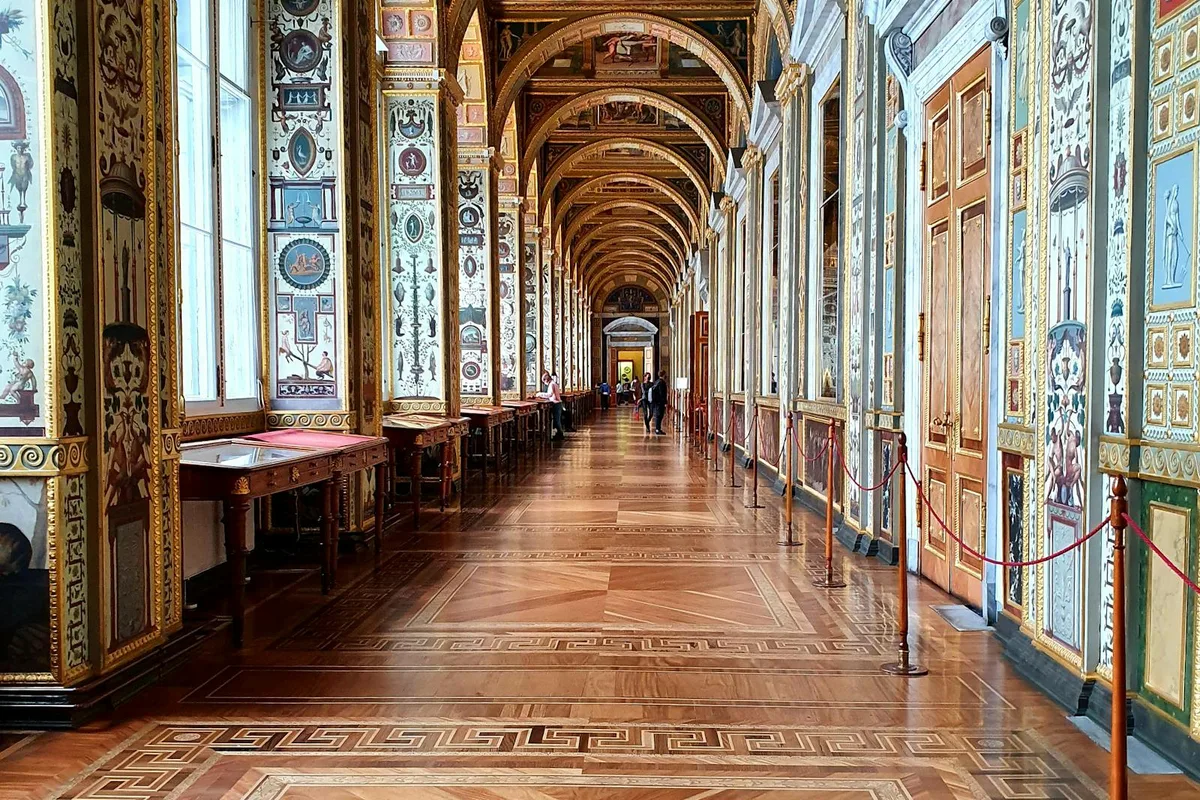
The Hermitage occupies five interconnected buildings along the Neva embankment, anchored by the Winter Palace. Its collection of over three million items includes works by Rembrandt, Leonardo da Vinci, Matisse, and Picasso, alongside vast holdings of ancient, decorative, and numismatic art. You could spend a week here and barely scratch the surface.
Practical details: Open Tuesday to Sunday, 10:30-18:00 (Wednesday and Friday until 21:00). Admission costs 500 RUB (about 4.85 USD) for foreign visitors. Buy tickets online in advance to skip the notorious queue, which can exceed two hours in summer. Budget a minimum of three hours for a focused visit.
The Peter and Paul Fortress
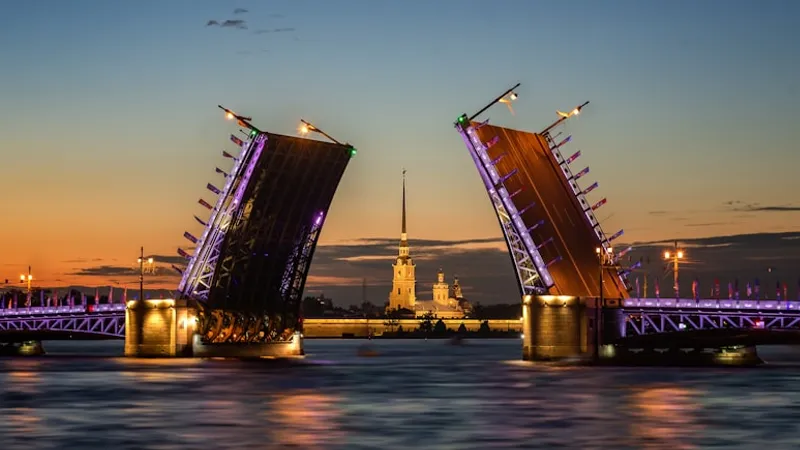
The original nucleus of the city, this fortress on Zayachy Island contains the Peter and Paul Cathedral (burial place of the Romanov dynasty from Peter the Great onward), a political prison, and several museums. The cathedral's golden spire is one of the city's defining landmarks.
Admission: A combined ticket for the fortress museums costs 750 RUB. The grounds are free to enter. Open 10:00-18:00, closed Wednesdays.
The Church of the Saviour on Spilled Blood
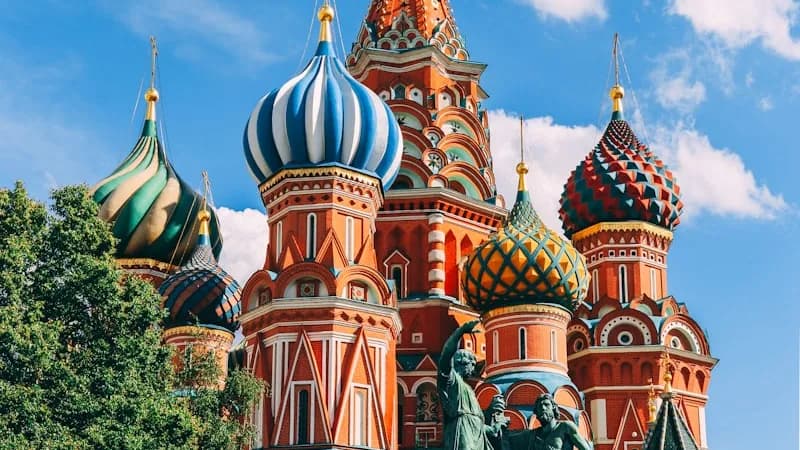
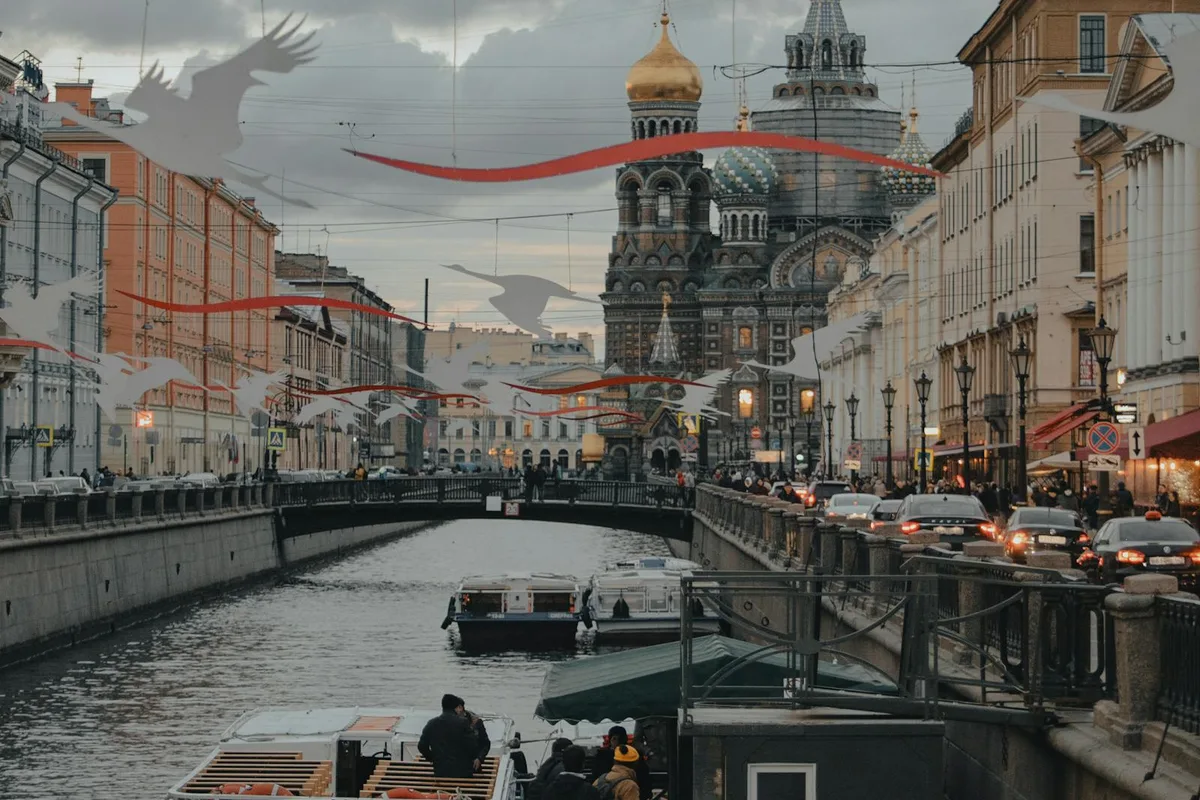
Built on the site where Tsar Alexander II was assassinated in 1881, this church is an explosion of colour and mosaics. The exterior, with its onion domes, resembles Moscow's Saint Basil's; the interior is covered in over 7,000 square metres of mosaics. Admission costs 400 RUB.
The Mariinsky Theatre
One of the world's great opera and ballet venues, the Mariinsky stages productions nightly from September through June. Tickets range from 800 RUB for upper balcony seats to 8,000+ RUB for stalls. The acoustics and stagecraft are world-class. Book well in advance for popular productions (The Nutcracker in December sells out months ahead).
Peterhof
Peter the Great's summer palace complex, 30 kilometres west of the city, is often called the Russian Versailles. The Grand Cascade, a series of 64 fountains and 200 bronze sculptures descending from the palace to the sea, is genuinely awe-inspiring. The fountains operate from mid-May to mid-October.
Getting there: The hydrofoil from the Hermitage embankment takes 30 minutes and costs 1,000-1,200 RUB one way. Alternatively, take the metro to Avtovo and then bus 200 (about 60-90 minutes total, under 100 RUB). Admission to the park is 600 RUB; the Grand Palace requires a separate ticket at 1,200 RUB.
Catherine Palace and Tsarskoye Selo
Located in Pushkin, 25 kilometres south of the city, Catherine Palace is famed for the Amber Room, a chamber panelled entirely in amber and gold leaf. The palace is lavish, the surrounding park beautiful. Admission to the palace costs 1,200 RUB and includes a timed entry. Reach Pushkin by suburban train (elektrychka) from Vitebsky station (50 minutes, 60 RUB) followed by a bus or minibus to the palace gates.
The Russian Museum
Often overshadowed by the Hermitage, the Russian Museum houses the world's largest collection of Russian fine art, from medieval icons to avant-garde works by Malevich, Kandinsky, and Chagall. Less crowded than the Hermitage and equally rewarding. Admission costs 500 RUB.
Neighborhoods to Explore
Nevsky Prospekt and the Centre
The city's main artery runs 4.5 kilometres from the Admiralty to the Alexander Nevsky Monastery. The western half (Admiralty to Vosstaniya Square) concentrates the major sights, luxury hotels, and tourist restaurants. The eastern half is grittier and more local. Walking Nevsky end to end takes about an hour and provides an excellent overview of the city's character.
Vasilievsky Island
The largest island in the Neva delta, Vasilievsky hosts the Kunstkamera (Peter the Great's curiosity cabinet), the old Stock Exchange, and the Strelka viewpoint. The residential streets (known as "lines") have a quieter, more local atmosphere.
Petrogradskaya Side
North of the Neva, this area includes the Peter and Paul Fortress, the Mosque, and a lively residential quarter with good restaurants and bars. The tree-lined Kamennoostrovsky Prospekt is one of the city's most pleasant streets for walking.
Kolomna
Southwest of the centre, Kolomna is a quiet, atmospheric neighborhood of canals and 19th-century apartment buildings. The Mariinsky Theatre is its anchor. Less touristy than the centre, it offers authentic Saint Petersburg character.
Buy Hermitage tickets online well in advance — the walk-up queue exceeds two hours in summer, and a focused three-hour visit after skipping the line is the difference between an enjoyable day and an exhausting one.
Getting Around
Metro
Saint Petersburg's metro has five lines and 72 stations. It is deep (many stations are 60-80 metres underground), efficient, and costs 70 RUB per ride with a Podorozhnik card (the local equivalent of Moscow's Troika). The system covers the main tourist areas adequately, though some key sights (Petrogradskaya Side, parts of Vasilievsky Island) require a walk from the nearest station.
Buses and Trams
Surface transport fills the gaps. Buses are the most useful; trams serve limited routes. The Podorozhnik card works on all public transport. Marshrutkas (minibuses) are fast but can be confusing for non-Russian speakers.
Taxis
Yandex Go is the standard. A ride across the centre costs 200-400 RUB. From the centre to Peterhof or Pushkin, expect 800-1,500 RUB.
Walking and Boats
Saint Petersburg is an excellent walking city, particularly along the embankments and canals. Canal boat tours (600-1,200 RUB for a 60-90 minute tour) offer a different perspective and are highly recommended in summer. Water taxis operate seasonal routes along the Neva.
Budget Planning
Budget (5,000-8,000 RUB per day / 48-78 USD)
Hostel or budget hotel (2,000-3,500 RUB). Meals at stolovayas and cafes (1,500-2,500 RUB). Public transport (200-400 RUB). One museum (400-750 RUB).
Mid-Range (10,000-18,000 RUB per day / 97-175 USD)
Three-star hotel or good Airbnb (5,000-8,000 RUB). Restaurant meals (3,000-5,000 RUB). Transport including occasional taxis (500-1,000 RUB). Museums and cultural events (1,000-3,000 RUB).
High-End (25,000+ RUB per day / 242+ USD)
Four or five-star hotel (10,000-25,000+ RUB). Fine dining (5,000-10,000 RUB). Private transfers (2,000-4,000 RUB). Premier museum access and Mariinsky tickets (3,000-8,000 RUB).
Practical Tips
Language
English is spoken at major hotels, museums, and tourist restaurants, but far less widely than in Western European cities. Learn basic Russian phrases: please (pozhaluysta), thank you (spasibo), how much (skolko stoit), and the names of your key metro stations. The Yandex Translate app with camera translation for signs and menus is invaluable.
Weather Preparedness
Regardless of season, pack a waterproof layer. Saint Petersburg's weather is changeable. In summer, a light rain jacket suffices. In winter, layering is essential: thermal base layers, a wool mid-layer, and an insulated waterproof outer layer. Waterproof boots are critical from October through April.
Bridge Schedule
Saint Petersburg's drawbridges open nightly from approximately April to November to allow maritime traffic through. The main bridges (Palace Bridge, Trinity Bridge, Liteyny Bridge) open between 01:20 and 05:00, effectively dividing the city. If you are on the wrong side when bridges go up, you will be stranded for several hours. Check the schedule and plan accordingly, especially after late nights out.
Safety
Saint Petersburg is a safe city for tourists. Petty theft (pickpocketing on crowded transport and at tourist sites) is the primary risk. The usual precautions apply: keep valuables secure, be wary of overly friendly strangers at tourist hotspots, and use official taxis.
Connectivity
Purchase a local SIM card upon arrival for affordable data. MTS, Beeline, and MegaFon all sell tourist SIM packages at the airport and in city-centre shops. A 30-day package with 15-20 GB of data costs 500-800 RUB (4.85-7.75 USD). Mobile coverage is excellent throughout the city.
Suggested Itineraries
Three Days
Day 1: Hermitage (morning and early afternoon), walk along the Neva embankment, Peter and Paul Fortress (late afternoon). Dinner on Petrogradskaya Side.
Day 2: Church of the Saviour on Spilled Blood, Russian Museum, walk down Nevsky Prospekt. Evening at the Mariinsky Theatre.
Day 3: Day trip to Peterhof (full day in summer) or Catherine Palace. Return for a farewell dinner and canal boat tour.
Five Days
Add to the above: Vasilievsky Island and the Kunstkamera (Day 4), the Yusupov Palace (where Rasputin was murdered), Kolomna neighborhood, and a second evening at the Mariinsky or another theatre. Day 5 could include Yelagin Island for a park walk, the Erarta Museum of Contemporary Art, and a rooftop tour of the city's famous skyline.
One Week
A full week allows a more relaxed pace: a second visit to the Hermitage (focusing on specific collections), day trips to both Peterhof and Pushkin, an evening river cruise, and time to explore neighborhoods like New Holland Island, the Aptekarsky Island botanical gardens, and the street art of the Ligovsky Prospekt area.
Saint Petersburg demands more than a weekend. Its treasures are not merely numerous but layered, revealing themselves gradually to those who give the city the time it deserves.
Frequently Asked Questions
When should I visit Saint Petersburg — summer or winter?
Summer (June-August) for the White Nights, drawbridges and terraces along the Neva. Winter (December-February) for snowy streets, Mariinsky opera and hot bathhouses. May and September strike a good balance of light and lower prices.
Do I need a different visa for Saint Petersburg?
No. The Russian e-visa and the classic visa both cover Moscow and Saint Petersburg. If you arrive by cruise ship from Finland, Estonia or Sweden, a 72-hour exemption applies provided you join a licensed tour operator.
How many days do I need in Saint Petersburg?
Three days for the Hermitage, the historic center, the Church of the Savior on Spilled Blood and Peterhof. Five days lets you add Tsarskoye Selo (Catherine Palace), Pavlovsk and explore the dvory courtyards of Petrogradsky district.
How do I get from Moscow to Saint Petersburg?
The Sapsan high-speed train covers 700 km in 4 hours for 4,000-9,000 RUB depending on class and lead time. Book on rzd.ru or Yandex Travel. The flight (1h10) is faster but once you add airport transfers, the train remains more convenient city-to-city.
Can I visit Peterhof and Tsarskoye Selo in one day?
Technically yes but you will rush 12 hours and shortchange both. Better to give each site a full day. Peterhof shines from June to September when fountains run; Tsarskoye Selo can be visited year-round (rich interiors even in winter).